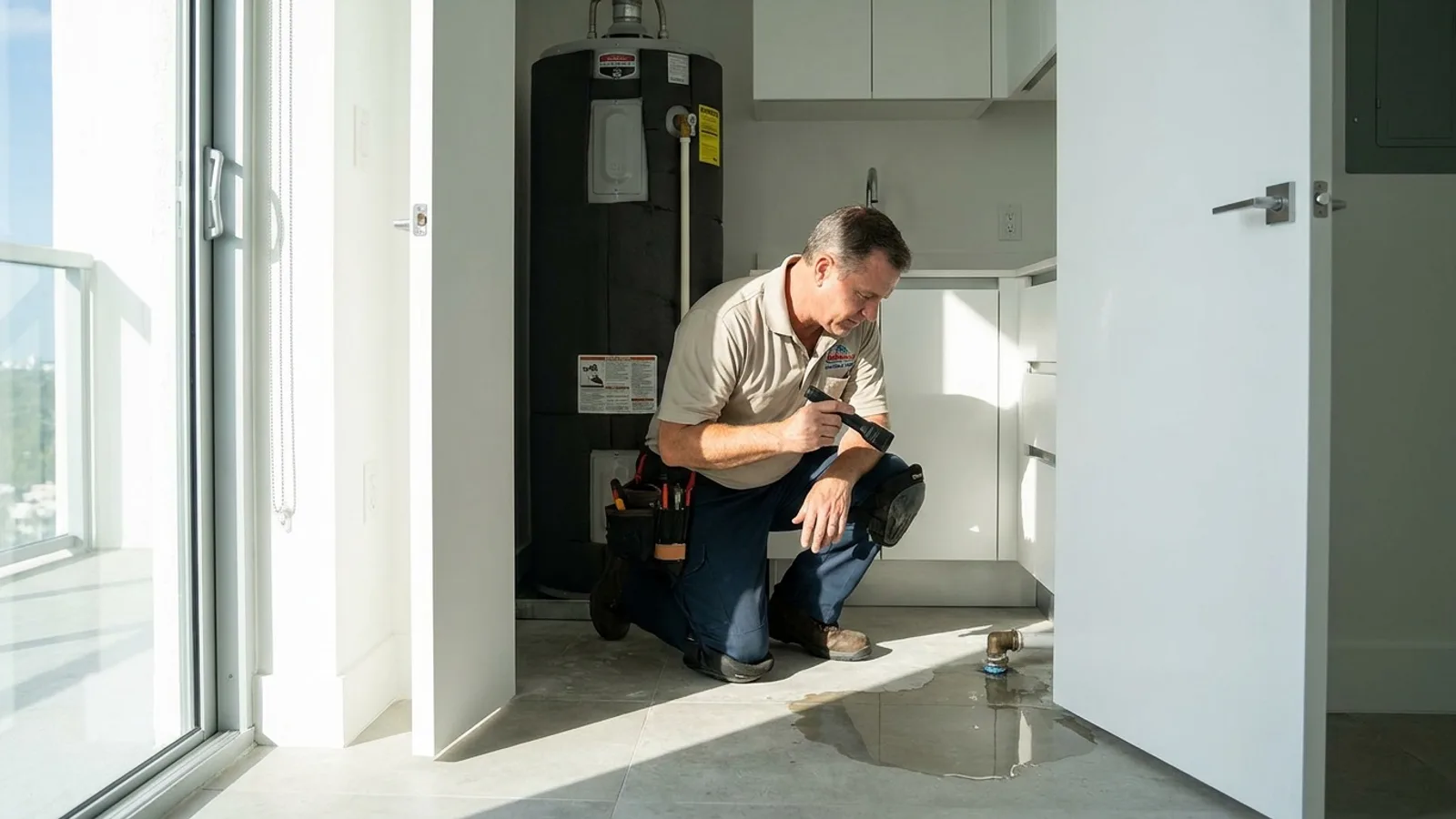
If your water heater is leaking, protect safety first. For major or nonstop leaks, turn off power and the water supply, then call a licensed plumber. Small drips from pipes or valves may be repairable, but leaks from the tank itself usually mean the heater needs to be replaced.
You walk into the garage, utility room or condo closet and see water under the heater. Now you are wondering how serious this water heater leak is, if you should shut it off, and how fast you need a plumber in Miami or Miami Beach.
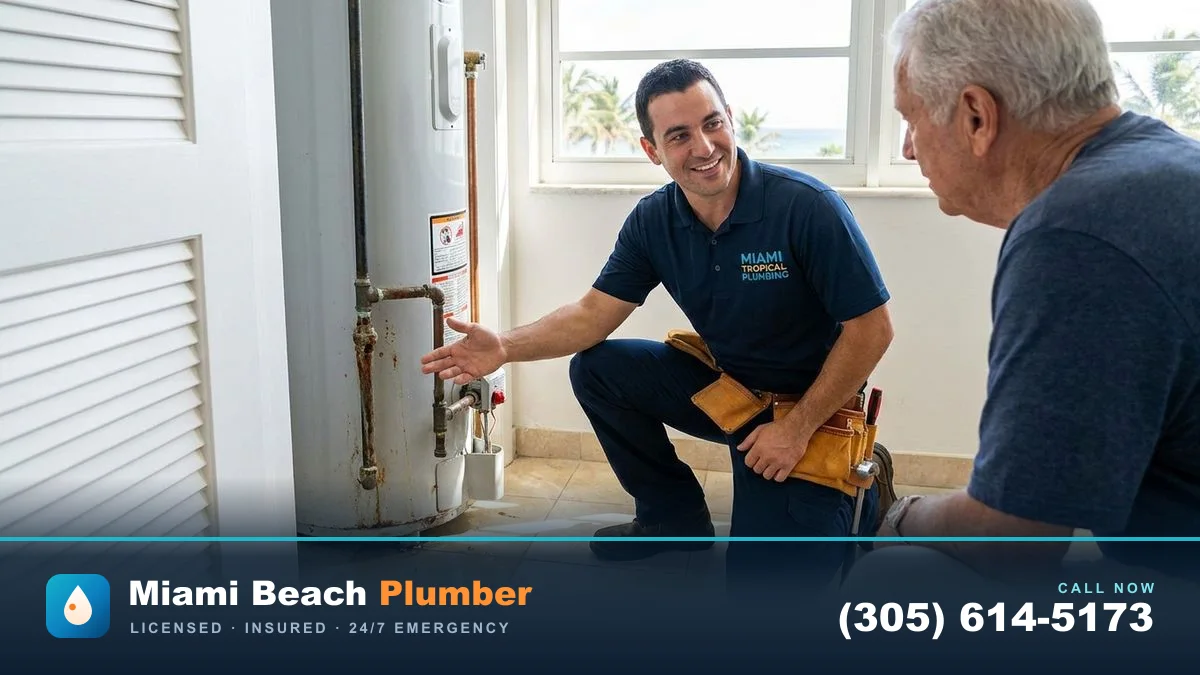
Should I turn off a leaking water heater?
The first decision is not where the water is coming from. It is how to keep your home or condo safe while you figure it out. A water heater leaking can range from a minor nuisance to a real electrical or flood hazard, especially in Miami condos stacked over neighbors.
Here is a simple rule: the heavier the flow, the faster you act. A slow drip in a drain pan is different from hot water pouring across the floor or into a hallway. You also handle gas and electric heaters differently.
| Situation | What you should do right away |
|---|---|
| Small drip, still have hot water, no standing water | Put a towel or container down, take photos, check where leak is, schedule a plumber soon. |
| Steady leak, puddle forming, or ceiling below getting wet | Turn off water to heater, shut off power, call a licensed plumber for same-day service. |
| Spraying water, rusted tank, or water near electrical panels | Shut off main water if needed, shut off power at breaker, keep people away, call emergency plumbing right away. |
In Miami-Dade, many water heaters are tucked into tight closets, under AC air handlers, or inside condos above finished units. Even a slow hot water heater leaking can cause mold, damage drywall, and trigger HOA or insurance issues. If you are unsure how serious it is, it is safer to shut the heater off and call a licensed and insured plumber for guidance.
How to safely shut off a leaking water heater in Miami homes and condos
Once you decide the leak is more than a tiny drip, you need to safely shut the heater down. The basic steps are similar across Miami houses, Miami Beach condos, and commercial spaces, but access can be tighter in high-rise mechanical rooms.
There are two things to shut off: power and water. Gas heaters are less common in Miami Beach and many Miami condos but you still see them in some single-family homes and townhomes.
- Electric water heater Turn off the water heater breaker in your electrical panel. It is usually a double breaker labeled "Water Heater" or "WH".
- Gas water heater Turn the gas control knob on the heater to OFF if it is safe and dry to reach. Do not try to work on any gas piping yourself.
- Cold water shutoff Look for a valve on the cold water pipe entering the top of the heater. Turn it clockwise until it stops. If it will not turn, or if it is corroded, do not force it.
- Main water shutoff If you cannot find or operate the valve at the heater, shut off the main water to the unit or building, then call a licensed plumber.
Once the water and power are off, avoid draining the tank yourself in a high-rise condo unless a plumber instructs you. Some Miami Beach buildings have strict rules about where you can discharge water and may require hoses to be run to specific drains to avoid flooding common areas.
For heavy active leaks, many owners in Miami-Dade call for emergency plumbing right away. A licensed plumber can quickly confirm the safest way to isolate, drain, and either repair or replace your water heater without making condo or HOA issues worse.
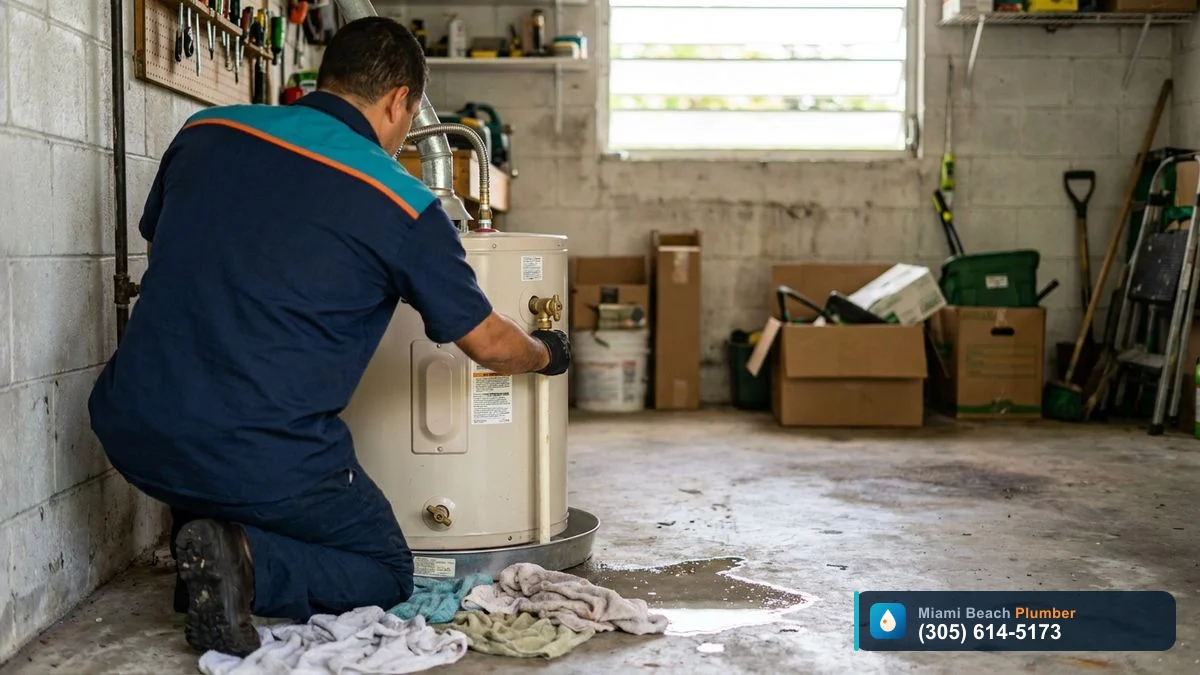
Water heater leaking from bottom vs top, and what each usually means
The fastest way to narrow down the problem is to see where the water is coming from. A water heater leaking from bottom often means something different from a water heater leaking from top, although splashing can be misleading.
Start by mopping up or soaking visible water, then use a flashlight. Look at the tank, the base, and the piping above.
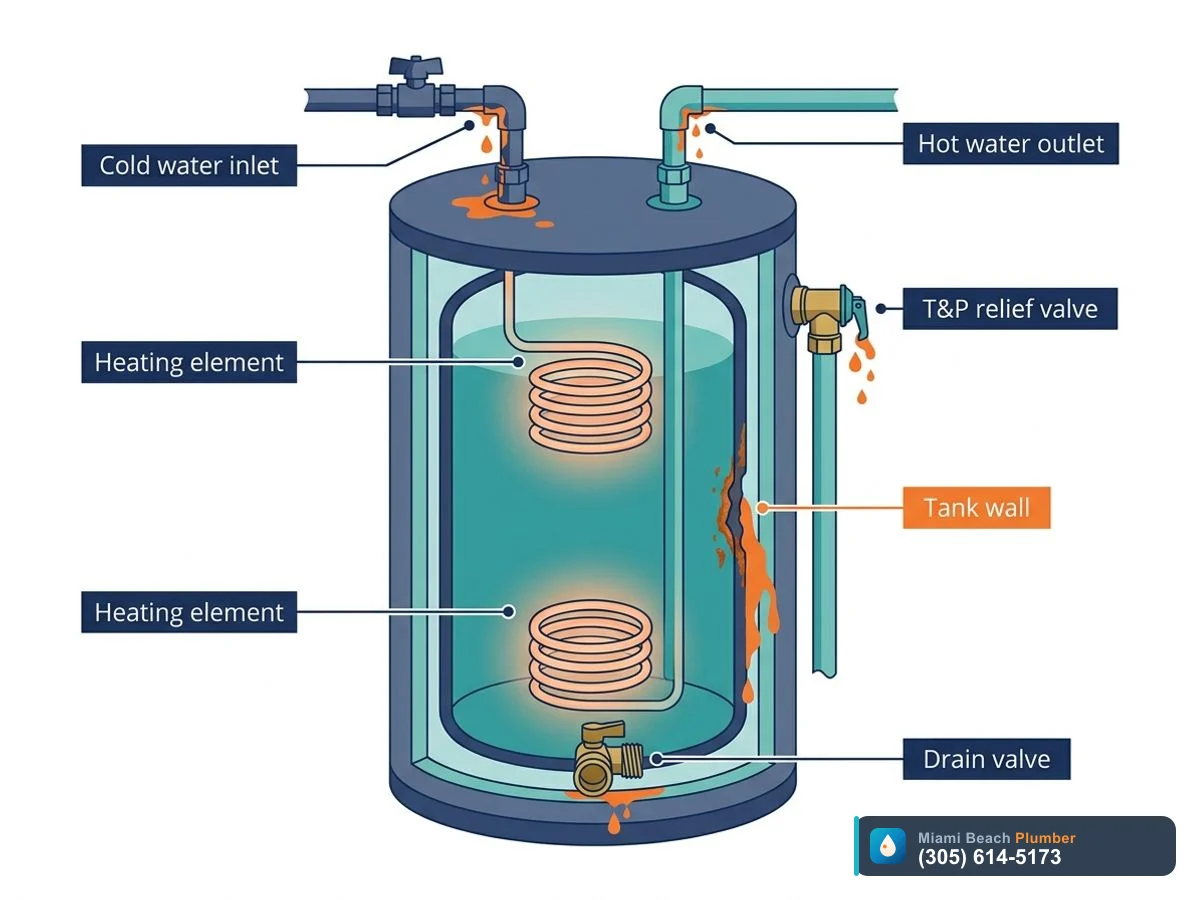
- Water heater leaking from bottom Often points to a rusted tank, a failed drain valve, or a leaking lower element gasket (on electric units). If the leak continues after you dry the area, and water is seeping from the tank body itself, the tank is usually at the end of its life and needs replacement.
- Water heater leaking from top Usually involves fittings, the cold inlet or hot outlet pipes, the temperature and pressure relief valve (T&P valve), or connected flexible hoses. These issues are more likely to be repairable without replacing the whole tank.
- Water in pan but no obvious drip Could be condensation, a slow intermittent T&P discharge, or a nearby AC condensate problem that just made its way under the heater.
Pay attention to rust stains. A hot water heater leaking for a long time often leaves orange or brown streaks on the tank, in the drain pan, or down nearby walls. That tells a licensed plumber that this is probably not a one-time event and may justify taking quicker action or talking about replacement.
Common causes of a hot water heater leaking in Miami-Dade
Once you know roughly where the water is, it helps to understand what usually fails in our area. Miami and Miami Beach have specific conditions that are hard on water heaters: very hard water (often 180 to 210 ppm), high humidity, and for coastal properties, salty air. Older Miami homes also still have cast iron drain lines that can back up and hide plumbing leaks.
- Corroded steel tanks Most tank-style water heaters last about 8 to 12 years in Miami-Dade. Hard water and constant use shorten that. Once the glass lining wears and the steel rusts through, water will seep from the tank body and usually show up as a water heater leaking from bottom.
- Loose or corroded fittings on top The hot and cold pipes, unions and flex connectors at the top of the heater can gradually loosen or corrode. This often explains a water heater leaking from top, especially in coastal buildings where salt air reaches mechanical closets.
- Temperature and pressure relief valve (T&P) This safety valve opens if pressure or temperature gets too high. If it is faulty, if the water pressure regulator for your home has failed, or if your heater is set too hot, the valve can drip steadily or discharge into the drain line.
- Leaking drain valve The spigot near the bottom of the tank used for flushing can start to seep. In Miami, many of these valves are cheap plastic and crack after years in a hot, humid closet.
- Condensation and nearby leaks In humid months, cold water entering a warm garage or closet can cause condensation on the tank or nearby pipes. Also, a nearby slab leak or AC drain backup can falsely look like a water heater leak until a proper leak detection is done.
For property managers and condo boards in Miami Beach and throughout Miami-Dade, repeated water heater leaks in a stack of units often point to bigger issues like excessive building water pressure or outdated installation methods. In those cases, a licensed plumber can evaluate if upgrades like expansion tanks, updated pans, or better drain routes are needed to protect multiple floors.
When is a leaking water heater repairable vs time to replace it?
Not every water heater leaking needs to be replaced on the spot. Some issues are minor and affordable to fix. Others are warning signs that you are throwing money at a unit that will soon fail completely.
As a rule in Miami-Dade, tank leaks from the metal body almost always mean replacement. Leaks from valves or connections may be repairable if the tank itself is still sound and not badly rusted.
| Leak source | Usually repair or replace? | Typical next step |
|---|---|---|
| Drip at top fittings or flex lines | Often repairable | Tighten or replace fittings, check for corrosion. |
| Slow drip from T&P valve | Repairable if pressure-related | Test/replace valve, check water pressure, adjust temperature. |
| Seeping from drain valve at bottom | Sometimes repairable | Cap or replace valve if threads are good. If tank is old and rusted, plan for replacement. |
| Water from tank seam or rust spots | Replace | Schedule water heater replacement, consider upgrading size/efficiency. |
| Repeated leaks plus unit 10+ years old | Replace | Get an upfront quote for new heater and any code upgrades. |
Ballpark, get an upfront quote from a licensed plumber before deciding. A small repair on a younger heater may be worth it. On an older unit near the beach with rust at the base, it usually makes more sense to invest in replacement rather than chase recurring leaks and water damage.
Potential damage from a leaking water heater in Miami homes and condos
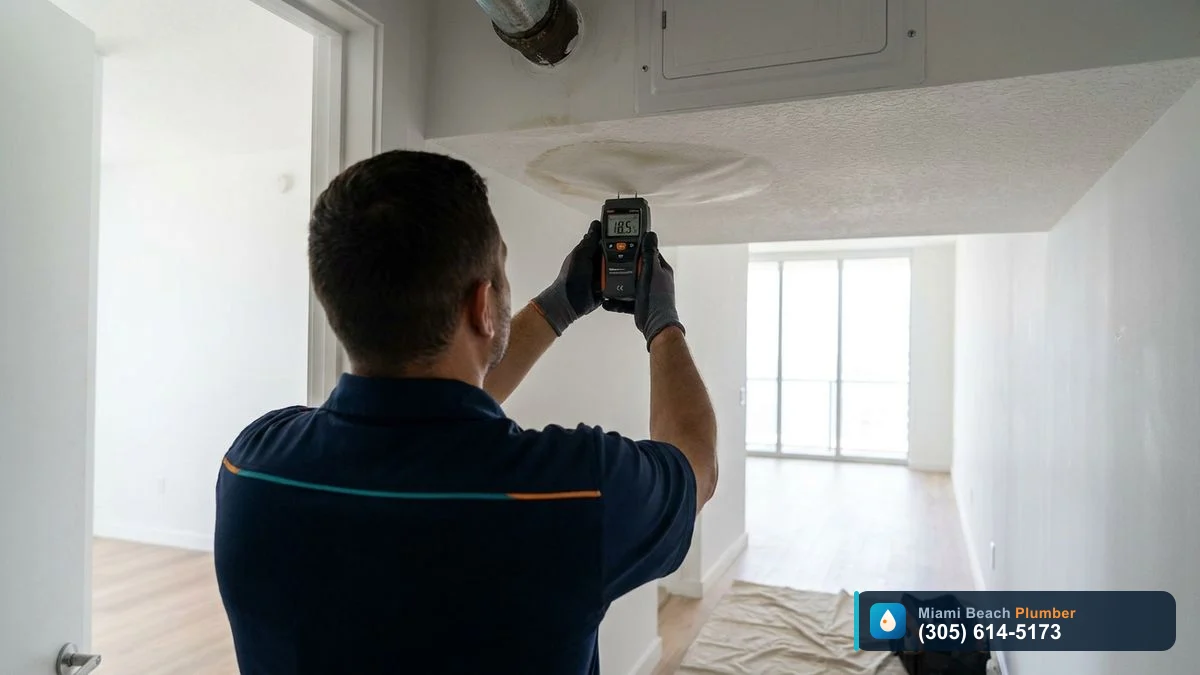
A water heater leak is not just about hot water. In Miami-Dade, the real risk is water damage, mold, and conflicts with HOAs, neighbors, and insurers. Our climate speeds all of that up because high humidity and warm temperatures let mold grow in as little as 24 to 48 hours on damp drywall or carpet.
- Flooring damage Laminate, engineered wood, and vinyl plank, common in Miami condos, do not like standing water. They can swell, buckle, and trap moisture underneath.
- Drywall and ceilings below In high-rises in Miami Beach and Brickell, even a small water heater leaking from bottom can drip through the slab into the unit below and stain or collapse their ceiling.
- Mold growth Warm, humid air plus a slow leak behind a wall is a recipe for mold. That creates health complaints and larger remediation bills later.
- Damage to cast iron drains In older Miami homes with cast iron sewer lines, constant leaks in one area can accelerate corrosion of nearby pipes and contribute to slab leaks or backups.
Taking quick action, even if it is just shutting off the heater and calling a pro for same-day water heater repair or leak detection, usually costs less than waiting and dealing with insurance deductibles, mold remediation, and angry neighbors downstairs.
What Miami-Dade owners can safely check themselves, and what needs a licensed plumber
It makes sense to do a quick check yourself before calling a plumber, especially if it is late at night or you manage multiple properties. The key is to stick to safe, basic observations and avoid anything that involves electrical work, gas, or opening pressurized lines.
Here are safe checks most Miami and Miami Beach owners can do:
- Look and listen. Use a flashlight to see if you can spot an obvious drip or spray and note whether it is at the top, side, or bottom.
- Feel for dampness around nearby pipes and the AC air handler (if they share a closet) to rule out other sources.
- Take clear photos or short videos of the leak area, labels on the heater, and any rust or damage.
- Place towels or a shallow pan to contain small drips temporarily.
- Carefully shut off power at the breaker and close the cold water valve if the area is dry and easy to reach.
You should call a licensed and insured plumber right away if you notice any of the following:
- Water spraying or running continuously from the heater or nearby pipes.
- Water around electrical outlets, panels, or junction boxes.
- Rust streaks and bulging areas on the tank.
- Recurring leaks in the same location, especially in a condo stack or commercial property.
- No hot water plus signs of leakage, burning smells, or tripped breakers.
In Miami-Dade, a qualified plumber can quickly determine whether this is a simple water heater repair, a bigger leak detection issue, or a full replacement that might need permits. For property managers and hotel or restaurant operators, having a relationship with a local plumber who offers emergency plumbing service is especially important, since hot water is essential for guests and operations.
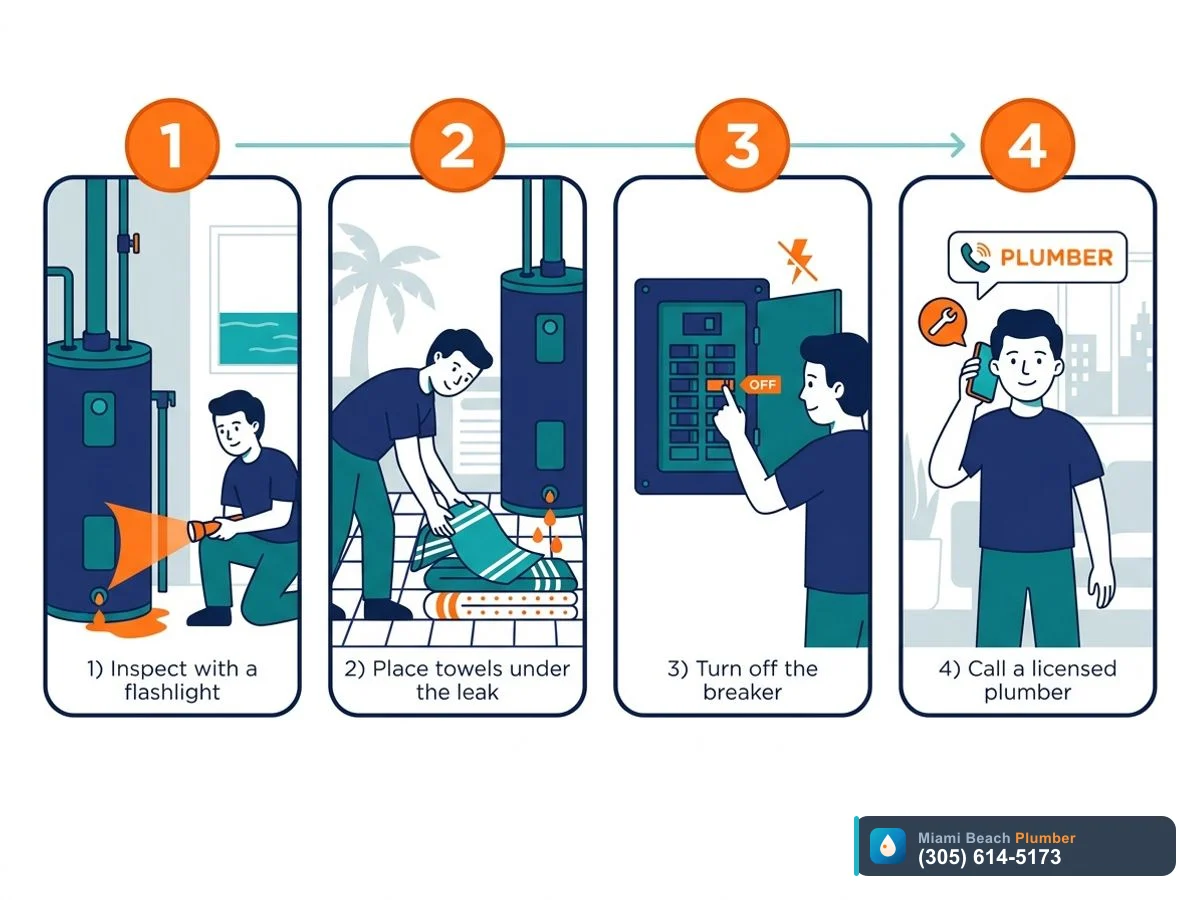
How to safely do a basic check on a leaking water heater before the plumber arrives
- Document the leak. Take clear photos or a short video of the water on the floor, the sides and top of the heater, and any visible drips to show your plumber.
- Check where water is coming from. Use a flashlight to see if the leak is from the top fittings, a valve, or the bottom area of the tank without touching any wiring.
- Contain minor drips. Place towels, a small tray, or a bucket under the leak if you can safely reach it, to limit damage to floors or ceilings below.
- Turn off power if leak is more than a drip. For electric heaters, switch off the labeled water heater breaker if the panel is dry. For gas, set the control knob on the heater to OFF if you can safely reach it.
- Shut off the cold water valve if needed. If the leak is steady and the valve above the heater is in good condition, turn it clockwise until it stops. Do not force a corroded or stuck valve.
- Call a licensed plumber. Contact a licensed and insured plumber in Miami-Dade, describe what you see, and share your photos so they can prioritize same-day service if needed.
If any step involves gas, electrical wiring, sewage or opening a wall, stop and call a licensed pro at (305) 614-5173.