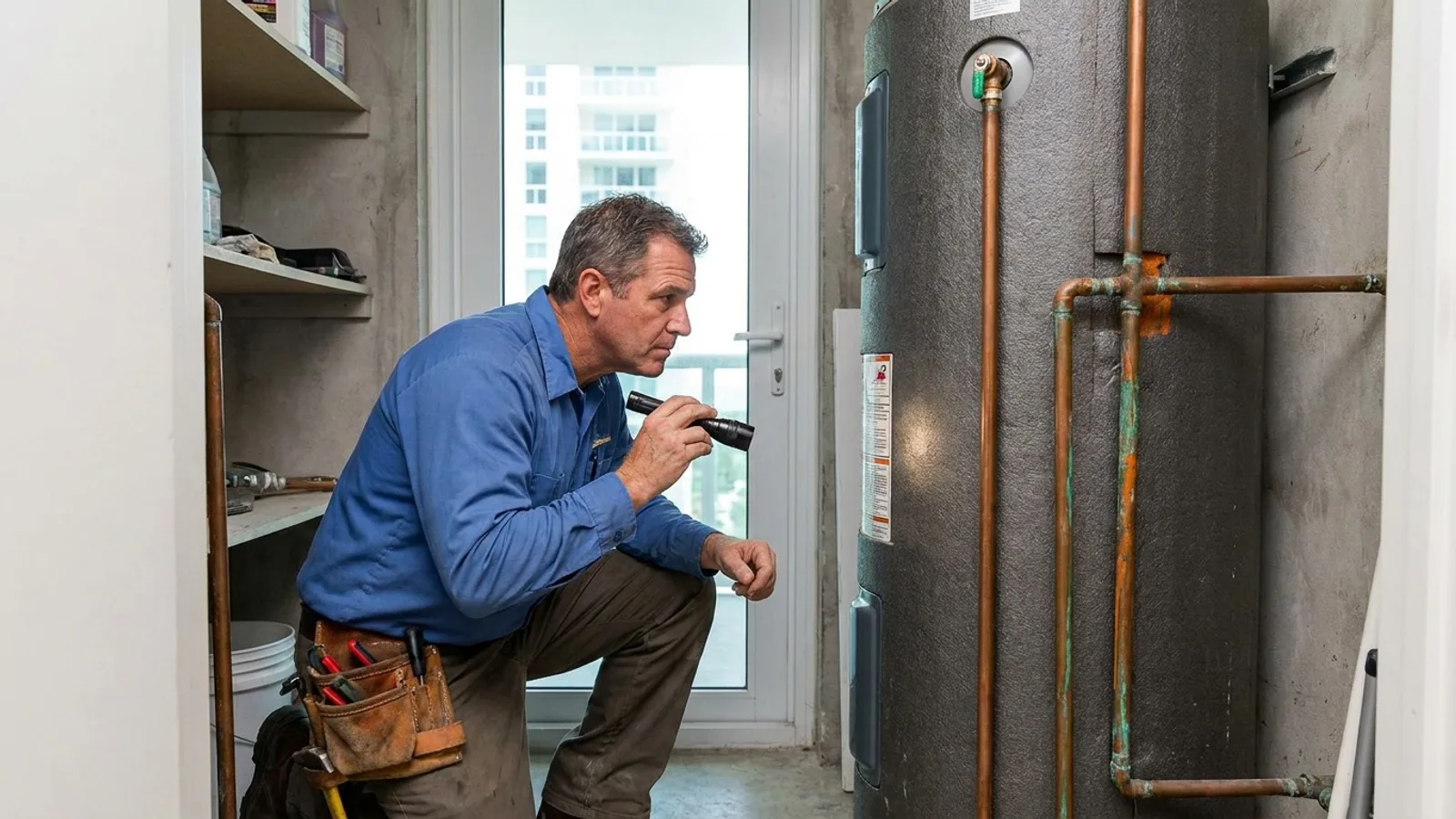
If you have no hot water, first confirm the heater has power or gas, then check the thermostat setting, breaker, reset button, and if the tank is leaking. In condos, ask building staff if there is an outage. If breakers trip, gas will not stay lit, or valves leak, call a licensed plumber immediately.
No hot water in a Miami or Miami Beach home usually shows up in the worst moment, like in the shower or while turning over a rental. This guide walks you through clear, safe checks so you can tell if it is a simple fix or a job for a licensed plumber.
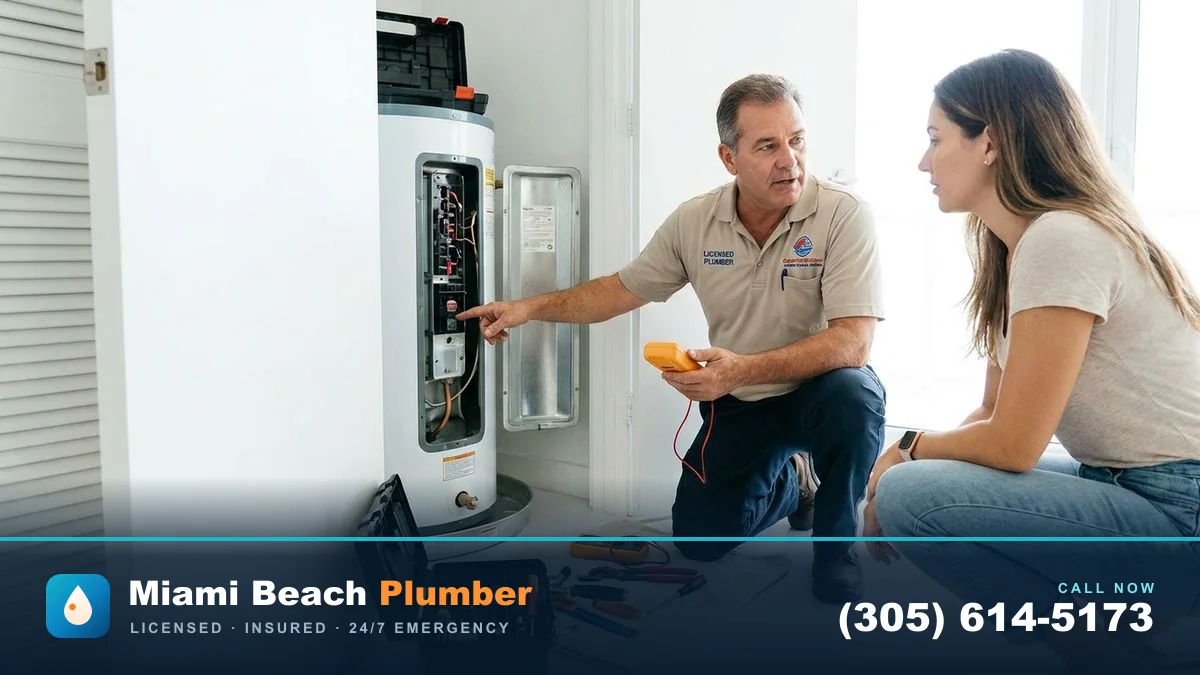
Start Here: Quick Checks When There Is No Hot Water In The House
Most Miami owners only notice there is no hot water when the shower runs cold or a sink never warms up. Before assuming your water heater is dead, a few quick checks can narrow down the problem and sometimes solve it.
First, confirm that it is truly no hot water in the whole house, not just a single fixture. Turn on the hot side in:
- Two different bathrooms, if you have them
- Kitchen sink
- A tub or utility sink if available
If none of these produce any hot water after 60 to 90 seconds, you likely have a water heater or building supply issue. If only one faucet has no hot water, the problem is more local, such as a failed cartridge, debris in the line, or a tempering valve at that fixture.
Next, locate your water heater if you have an individual tank. In Miami and Miami Beach you will often find it in a hallway closet, laundry room, small mechanical room on the balcony, or a ground floor utility room in townhomes. Make sure:
- The unit has not been shut off at the breaker, disconnect, or gas valve
- The cold water shutoff above the heater is open (handle parallel with the pipe)
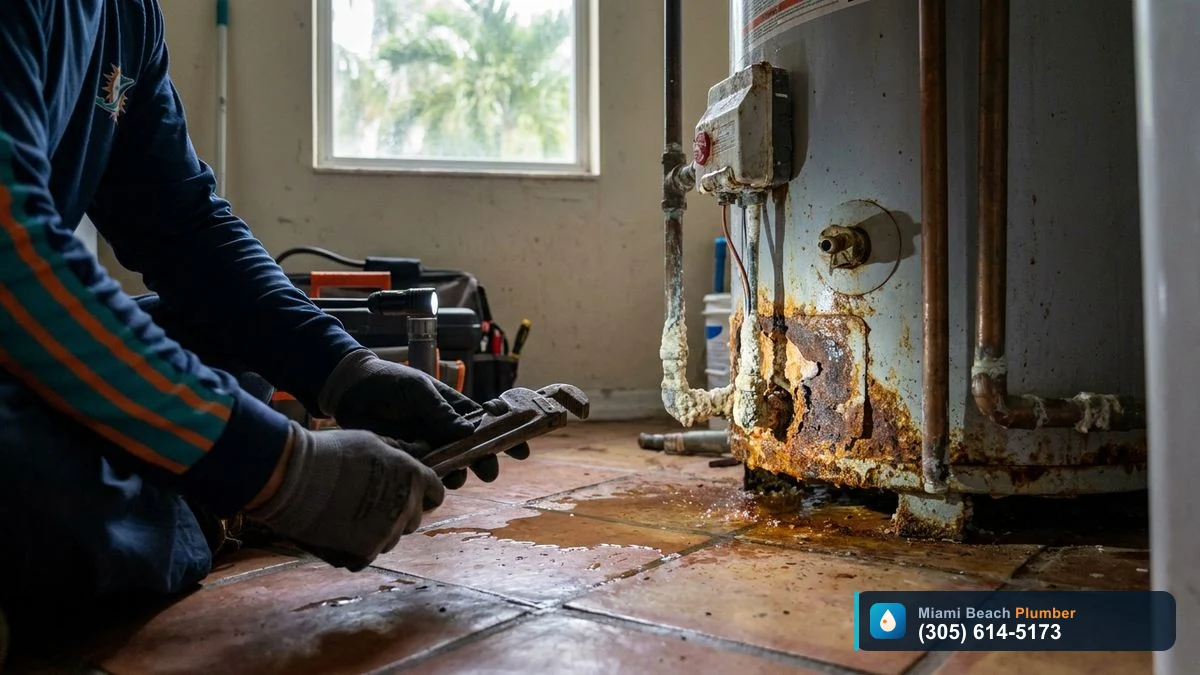
- You do not see obvious leaks, standing water, or heavy rust around the base
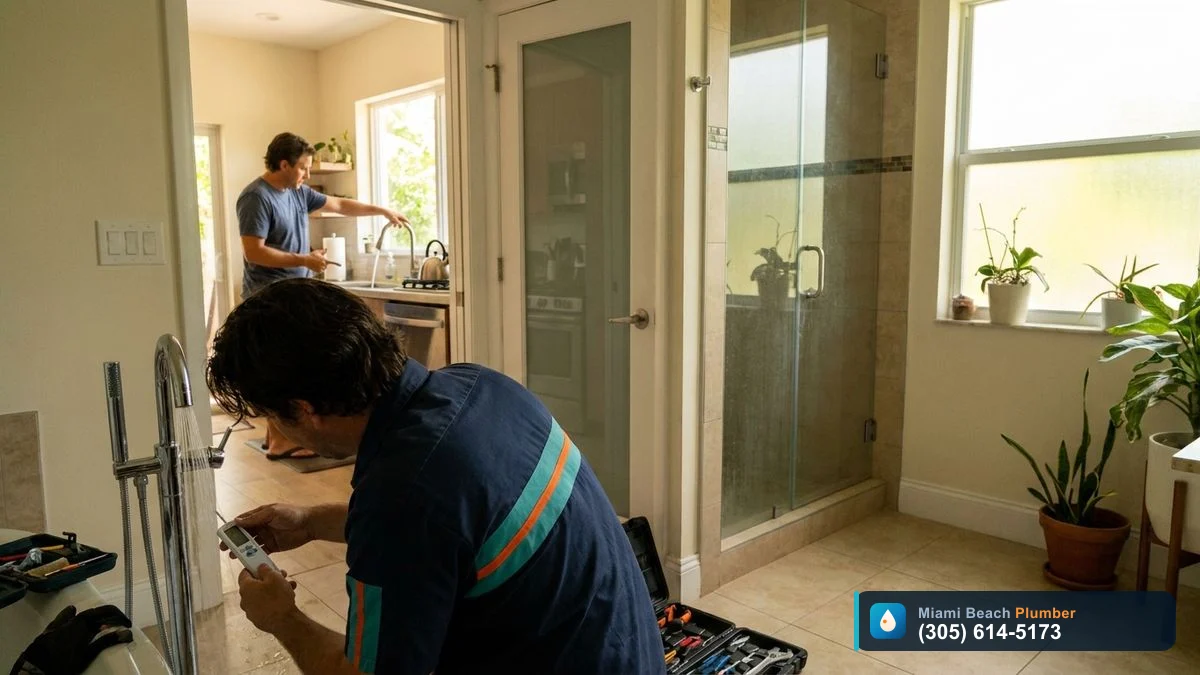
Electric Water Heater: No Hot Water But The Heater "Works"
In many Miami-Dade homes and condos, the water heater is electric. Owners often say they have no hot water but the heater "works" because the light is on or they hear it humming. That does not mean it is actually heating correctly.
Start with the safest checks you can do:
- Go to your electrical panel and look for the water heater breaker, usually a double-pole 30 to 50 amp breaker labeled “WH” or “Water Heater”. If it is in the middle position, firmly switch it off, then back on.
- Wait 30 minutes and test hot water again. If the breaker immediately trips again, stop and call a licensed plumber or electrician. Repeated tripping can mean a short, a failing element, or wiring damage.
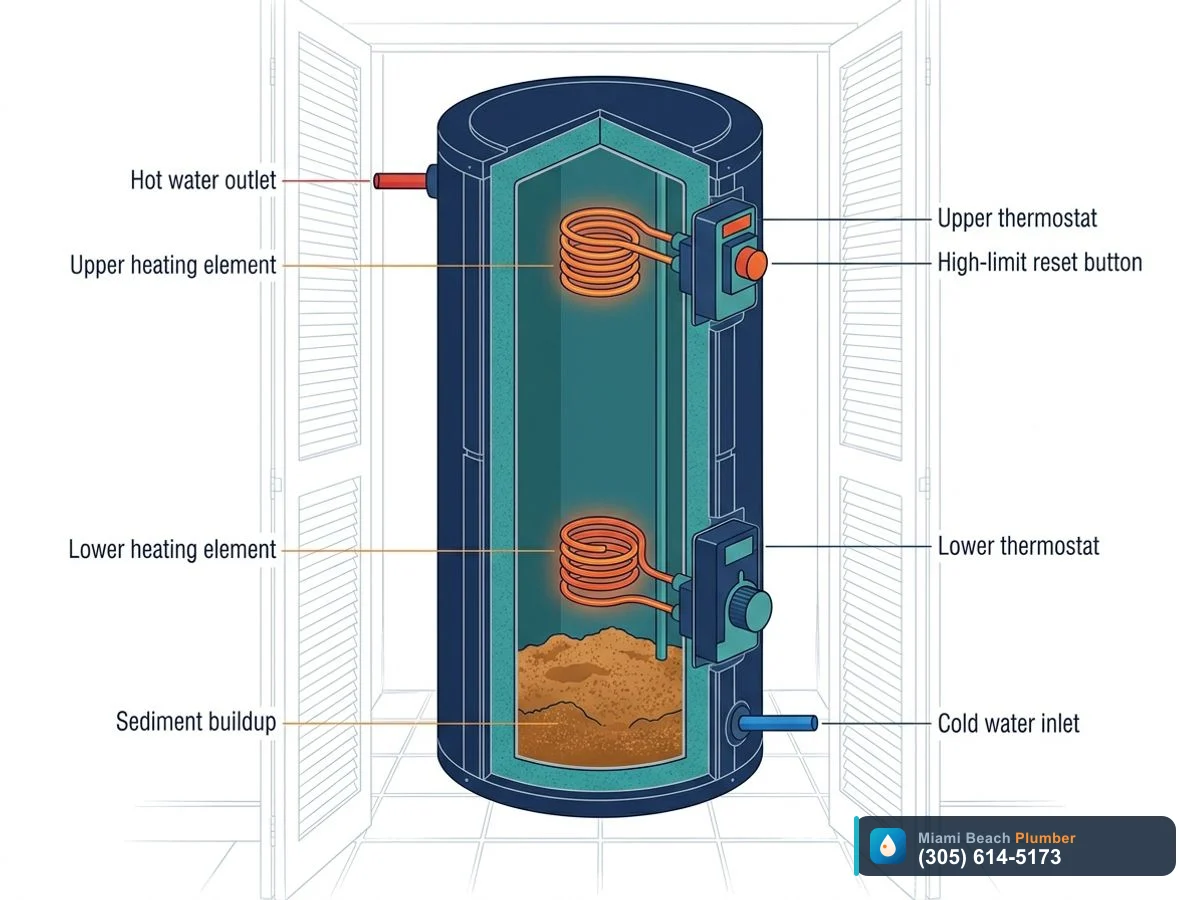
Most modern electric heaters in Miami have a high-limit reset button under the upper access panel. If you are comfortable and the power is switched off at the breaker, you may:
- Remove the small metal cover on the upper thermostat compartment
- Press the red reset button if visible
- Replace the cover before turning the breaker back on
If the unit begins working then trips again within a day or two, you likely have a deeper problem such as:
- Burned out heating element from hard water scale (common with Miami’s 180 to 210 ppm hardness)
- Failed thermostat
- Loose or overheated wiring and lugs
- Internal tank failure or excessive sediment
Those issues require a professional who handles water heater repair, can test elements with a meter, flush the tank if appropriate, and advise if replacement is smarter than another repair, especially in older Miami Beach condos with limited access and strict HOA rules.
Gas Water Heater Problems In Miami Homes
Some single-family homes and duplexes in Miami and parts of Miami-Dade still use gas water heaters. No hot water on a gas system usually shows up as lukewarm water that quickly turns cold, or completely cold water if the burner is off.
Your first question should be: is the gas supply on and safe? Check if other gas appliances like the range or dryer work. If they also do not work, the issue might be with the gas service itself, not the heater.
Common gas water heater reasons for no hot water:
- Pilot light is out or the electronic igniter has failed
- Thermocouple or flame sensor is bad, so the gas valve shuts off
- Gas control valve itself has failed
- Vent blockage causing the heater to shut down for safety
Many older heaters have lighting instructions printed on the front. While some homeowners relight pilots themselves, Miami’s tight utility closets, hurricane strapping, and building code updates make it easy to do this incorrectly. If you are unsure, or if the pilot will not stay lit, this is the right time to call a licensed, insured plumber who is familiar with Miami-Dade requirements.
For property managers, repeated pilot outages can point to venting problems, downdrafts from strong coastal winds, or spillage in mechanical rooms that also serve dryers or air handlers. A professional should evaluate draft, combustion air, and clearances, especially in older Miami Beach buildings that predate current codes.
Tankless And Condo Boiler Systems: Hot Water Issues In Miami High-Rises
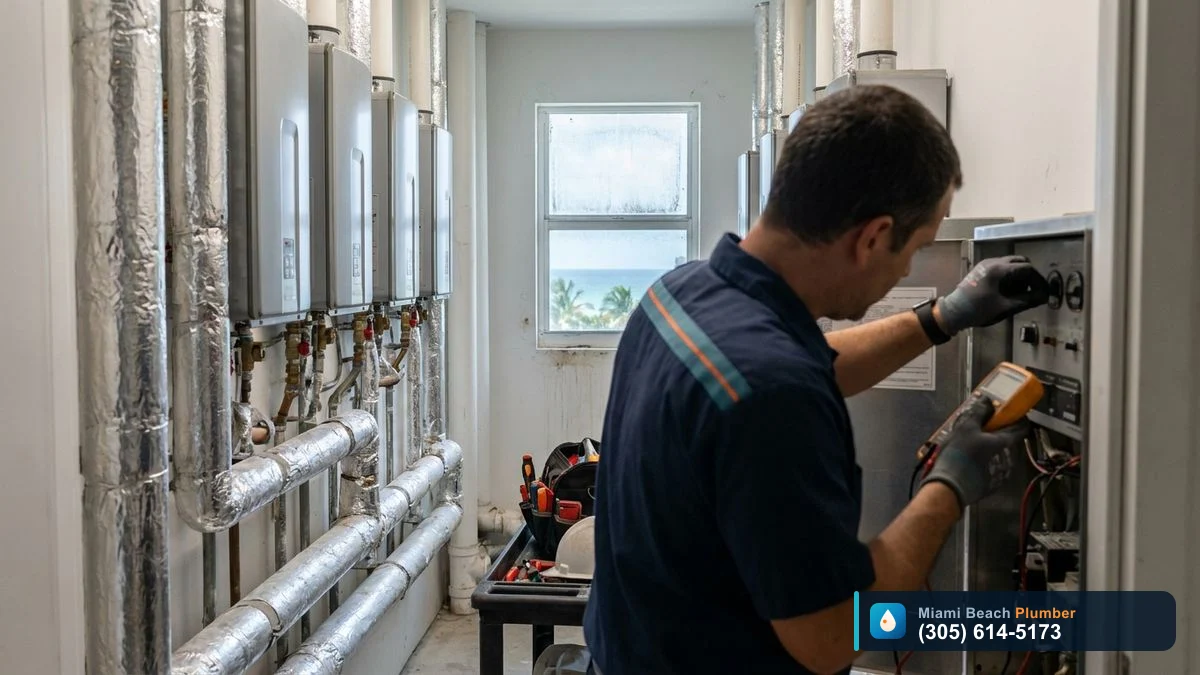
Miami and Miami Beach condos often use either individual tankless heaters in each unit or central boiler systems that feed many apartments. "No hot water but heater works" is a common complaint in these setups, because things look normal at the unit but the temperature never comes up at the tap.
For individual electric or gas tankless heaters in a unit, typical no hot water symptoms include:
- Display is lit but shows an error code
- Unit fires only sometimes, such as in the shower but not at the sink
- Water never reaches the temperature set on the controller
First, make sure:
- The unit has power and the breaker is on
- Any service valves are fully open
- The temperature is not set too low, especially if you recently had power outages or maintenance
In central boiler buildings, no hot water troubleshooting is different. Common causes:
- Boiler is off for maintenance or has locked out
- Recirculation pump failure, so hot water is not circulating through the loop
- Balancing or valve issues leaving some units cold while others are fine
As an owner or tenant, your role is usually to document what is happening:
- Note times of day with no hot water
- Test multiple fixtures in the unit
- Ask neighbors on your line or floor if they have the same issue
Share that detail with management or maintenance. If the building brings in a licensed plumbing contractor familiar with Miami high-rise systems, they will check boiler controls, recirculation, mixing valves, and risers to find the failure point. Local plumbers that do leak detection and emergency plumbing in Miami-Dade often handle these boiler loop problems after hours.
Partial Hot Water, Slow Heating, Or Short Showers: Hidden Clues
Not every problem starts as total loss of hot water. Many Miami owners see symptoms like one hot shower that suddenly turns cold, or sinks that take several minutes to warm up. These are important early warning signs that something in your system is failing.
Common partial hot water symptoms and likely causes:
| Symptom | Possible Cause | Who Should Fix It |
|---|---|---|
| One shower goes cold quickly, others fine | Bad shower cartridge or balancing valve, clogged mixing valve, debris in that line | Licensed plumber, especially in condos |
| All fixtures start hot but turn cold in 5 to 10 minutes | Small or failing water heater, burned element, gas burner not staying on, heavy sediment | Licensed plumber to test and size system |
| Very long wait for hot water at distant bathrooms | No recirculation loop, failed recirc pump, piping layout issues | Plumber, sometimes building engineer in condos |
| Water only lukewarm, never truly hot | Thermostat set low, mixing valve stuck open, single element failed on dual-element heater | Licensed plumber to adjust or replace parts |
In Miami’s older homes with original cast iron or galvanized piping, partial hot water can also point to internal corrosion and narrowing of the hot lines. That is especially common near the water heater connection and in lines that run under slabs. Over time, the hot side may clog faster than the cold.
For property managers juggling Miami Beach rentals or short-term units, track complaints by line or stack. Patterns like “Stacks 3 and 5 report lukewarm water” can help your plumbing contractor quickly pinpoint a recirculation or mixing valve issue and keep your guests happy.
Miami-Specific Causes: Hard Water, Leaks, And Hurricane Season
Miami-Dade has some quirks that affect hot water systems more than in other parts of the country. The mix of hard water, salt air, high humidity, and hurricane season can shorten the life of your water heater and create “no hot water” problems that come and go.
Hard water, typically 180 to 210 ppm here, leaves mineral scale on heating elements and inside tanks. Over time this:
- Insulates electric elements so they overheat and fail
- Reduces tank capacity because sediment builds up at the bottom
- Increases noise, such as popping or banging when the heater runs
Another big local factor is hidden leaks and slab leaks. If you suddenly have no hot water in the house and also notice:
- Warm spots on tile floors
- Constantly running water sounds when fixtures are off
- High FPL bills from the heater running nonstop
There may be a hot water line leaking under the slab or inside a wall. The heater keeps firing to replace lost heat, then eventually fails from overuse or from running dry.
Hurricane season adds its own twist. Power outages, surges, and roof or balcony leaks can damage water heaters, expansion tanks, and electrical connections. After a major storm, check around your heater for new water stains, rust streaks, or scorch marks. If your tank is in an attic or closet over finished space, any new leak can cause costly ceiling damage below.
When To Call A Licensed Miami Plumber And What They Will Check
It is reasonable to flip a breaker, verify a thermostat setting, or call your condo front desk when you lose hot water. Beyond those basics, hot water problems touch live electricity, gas, pressure, and sometimes sewage. That is where a licensed, insured plumber is not just helpful, it is required for safety and code compliance.
You should call a professional immediately if:
- Breakers trip again after you reset them
- You smell gas or see scorch marks around the heater
- Water is leaking from the tank, the temperature and pressure relief valve, or connections
- The heater is more than 8 to 10 years old and suddenly stops working
- You are in a condo or HOA building with strict mechanical rules and limited access
A qualified Miami plumber will typically:
- Identify heater type, age, and capacity
- Check electrical supply, breakers, and disconnects for proper voltage
- Inspect gas valves, pilots, igniters, and flue piping for gas systems
- Test heating elements, thermostats, and safety devices
- Evaluate for leaks, corrosion, and code issues like missing pans or improper discharge lines
In multi-unit buildings, they may also coordinate with property management to access mechanical rooms, check boiler settings, verify recirculation pumps, and ensure Miami-Dade permit requirements are met for any replacements or major repairs.
Local companies that regularly handle water heater repair, emergency plumbing, and leak detection in Miami, Miami Beach, and the wider Miami-Dade area bring another advantage. They are used to tight condo closets, older cast iron systems, and hurricane-related issues. That experience saves you time and helps prevent repeat problems.
How to safely do basic no hot water troubleshooting before calling a plumber
- Confirm the problem is house-wide. Run the hot water at several fixtures in different rooms. Note whether none, some, or all fixtures have no hot water, and whether it starts warm then turns cold.
- Check the water heater power or gas. Find your water heater and confirm the breaker is on for electric units or that other gas appliances work if you have a gas heater. Do not open panels or access live wiring.
- Look for obvious leaks or damage. Visually inspect around the water heater for standing water, steady dripping, rust streaks, or scorch marks. If you see any of these, stop troubleshooting and call a licensed plumber.
- Verify thermostat and controls. If safely accessible from the outside of the unit, make sure the thermostat dial or digital controller is set to around 120°F and has not been turned down or switched off.
- Document symptoms for your plumber or building. Write down when the problem started, which fixtures are affected, any noises or odors, and whether you noticed blinking lights or error codes. Share this with your plumber or condo management.
If any step involves gas, electrical wiring, sewage or opening a wall, stop and call a licensed pro at (305) 614-5173.