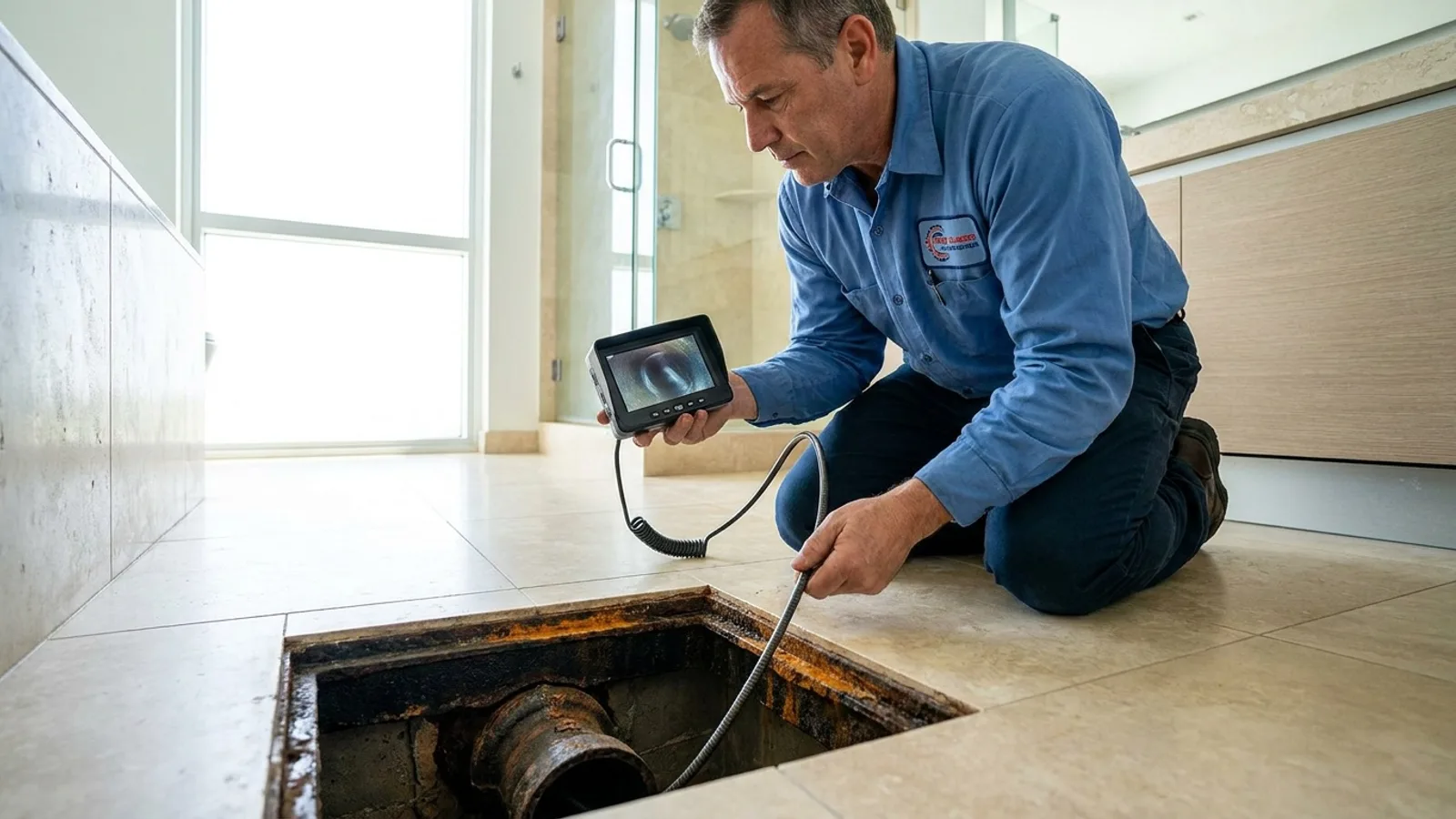
Most cast iron drain pipes in Miami homes and condos installed before the 1980s are at or past their expected life. Common warning signs include slow drains, recurring backups, sewer odors, roach activity, floor or slab cracks and sinkholes. A licensed Miami plumber can inspect with a camera and advise on repair vs full replacement.
If your Miami or Miami Beach home has constant clogs, sewer smells, or mysterious floor cracks, there is a good chance old cast iron pipes under the slab or building are failing and letting sewage leak into the soil.
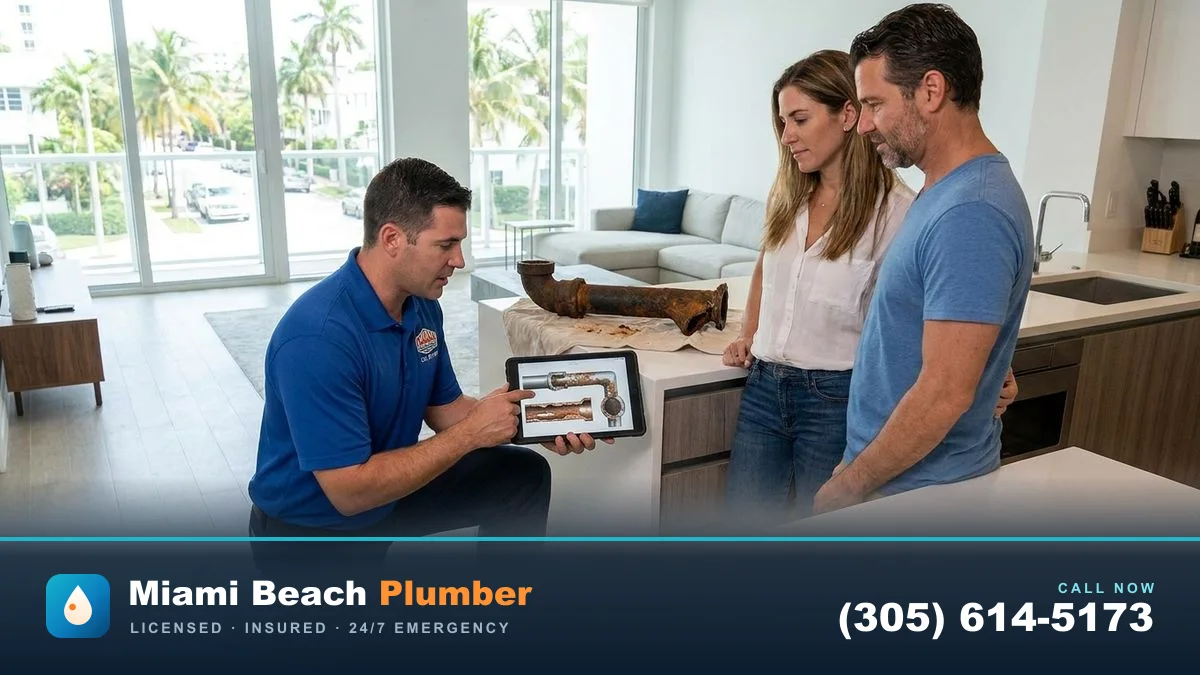
Why cast iron pipes fail faster in Miami and Miami Beach
Most older houses and many low rise condos in Miami, Miami Beach and across Miami-Dade were built with cast iron drain and sewer pipes. In a milder climate those pipes might last 60 to 80 years. Here, the reality is different.
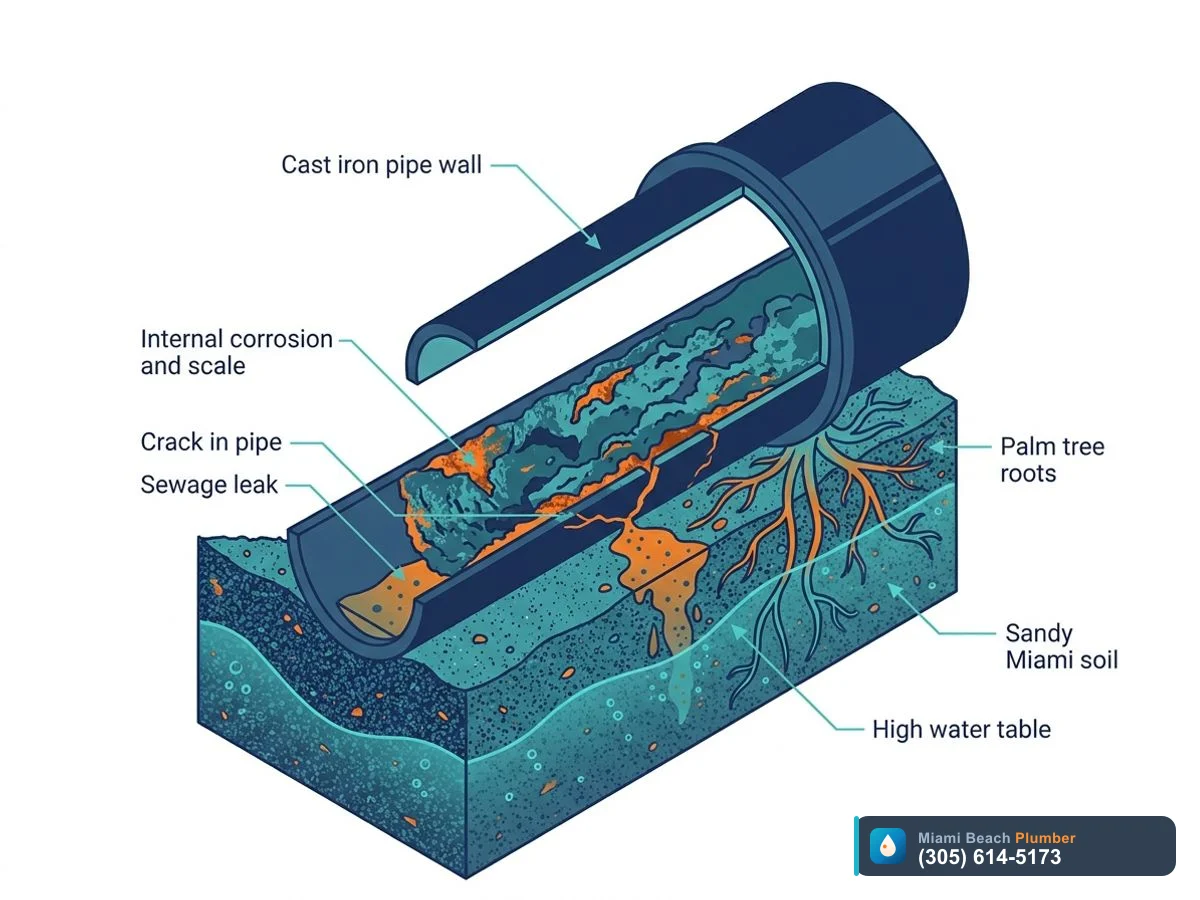
We have three big pipe killers: salt air, high humidity and very hard water. Coastal air carries chlorides inland, especially east of I-95. That salty moisture sits on underground concrete and metal, which speeds up corrosion on cast iron pipe walls. Humidity means crawl spaces and pipe chases often stay damp, so the outside of the pipe rarely dries out.
Inside the pipe the problems stack up. Miami-Dade water is typically 180 to 210 ppm hardness. That mineral scale grabs onto rough spots in aging cast iron, catches grease and wipes, and slowly narrows the pipe. Add in decades of use from large families, short term rentals, and restaurants at ground level in some mixed use buildings, and those old lines are under constant stress.
Finally, many older Miami homes were built with cast iron lines encased in or under the slab, sometimes sitting in corrosive soil with little protection. If you live east of Biscayne Boulevard or close to the bay, tidal water and a high water table keep the ground saturated, which accelerates rot and can bring sewer leaks right up to your flooring.
Common cast iron pipe problems Florida owners actually see
Most owners do not see the pipe itself. You see symptoms in your house or condo. Cast iron pipe problems in Florida, especially in Miami and Miami Beach, usually show up in a pattern instead of a single event.
- Slow drains in multiple fixtures like tubs and showers on the same side of the house. You snake them, they help for a week, then slow again.
- Recurring main line backups, often after heavy rain or high tide, especially in Miami Beach and low lying parts of Miami.
- Sewer odors in bathrooms, kitchens, elevator lobbies or parking garages. Smell is often stronger first thing in the morning or after the AC has been off.
- Roaches and other insects appearing around floor drains, under cabinets or near baseboards. Broken pipes give pests a freeway into the building.
- Soft spots, cracks or staining in tile or terrazzo, sometimes with warm or damp flooring. This can suggest leaking pipes under the slab.
- Visible corrosion and orange or black flakes if you have an exposed cast iron stack, usually in a mechanical closet or parking level.
In multi story Miami Beach condos, cast iron stack problems often start as leaks in units directly below a bathroom or kitchen. You might see water stains on the ceiling, bubbling paint, or seepage in the chase area behind access panels. Property managers also notice pinhole leaks along horizontal runs in garages or trash rooms where humidity and sea air hit hardest.
Key signs cast iron pipes should be replaced, not just cleared
Owners in older Miami neighborhoods often ask, should I replace cast iron pipes or just keep cleaning them? At a certain point, cleaning is like putting a bandage on a cracked foundation. These are the main cast iron pipe replacement signs we look for in Miami and Miami Beach.
- Frequent backups in the same main line or stack more than twice a year, even after a professional cleaning.
- Camera shows heavy scale, cracks, or missing pipe wall. If you see the camera drop into voids or water sitting in bellies of the pipe, that line is near the end.
- Sections of pipe are oval, collapsed, or offset where the joints have shifted. This is common in older Coral Gables and Miami Beach homes with settling slabs.
- Active leaks under the slab or in walls that have already caused damage to flooring, cabinets, or lower units.
- Cast iron is original to a 1950s to 1970s structure and you are planning a major remodel with high end finishes.
| Condition | Likely Recommendation | Reason |
|---|---|---|
| Minor scale, no cracks, no leaks | Cleaning and monitoring | Pipes still have life, maintain and recheck in a few years. |
| Moderate scale, early cracking, no slab leaks | Sectional repair or lining | Target problem sections without tearing up entire house. |
| Multiple cracks, holes, or root intrusion | Partial replacement or lining | Major structural damage, patching alone will not last. |
| Widespread corrosion, bellies, sewage leaks under slab | Full replacement of affected system | Pipes at end of life, recurring failures likely. |
If your house still has original cast iron and you see floor cracks running from bathrooms or the kitchen across the slab, that is a big warning sign. In some Miami homes we find that soil under the slab has washed out through long term sewer leaks, which lets the concrete settle and crack.
How cast iron pipe replacement works in Miami homes and condos
Cast iron pipe replacement in Miami is not one size fits all. Old house plumbing in Miami is different from a high rise condo in Miami Beach or a strip mall in Doral. The structure, access and local codes decide which method makes sense.
For single family homes, there are two main areas: the building drain under or in the slab and the main sewer line that usually runs out to a Miami-Dade or city connection. Replacement may mean trenching outside in the yard, tunneling under the slab, or opening interior floors in zones to swap cast iron for PVC.
In condos and commercial properties, vertical stacks are the big concern. Replacing a stack typically involves working from floor to floor, opening access at each unit, and coordinating shutoffs with management. Miami Beach condos usually have strict work hours, noise rules, and insurance requirements, so planning matters as much as the plumbing.
In some cases, especially for occupied condos and hotels, trenchless lining or pipe bursting can reduce disruption. These methods still need clean, stable pipe to work. If the cast iron is rotted away or badly collapsed, traditional replacement is usually the only reliable fix. Any job that touches sanitary lines in Miami-Dade will usually require permits and inspections, which your plumber should handle as part of the work.
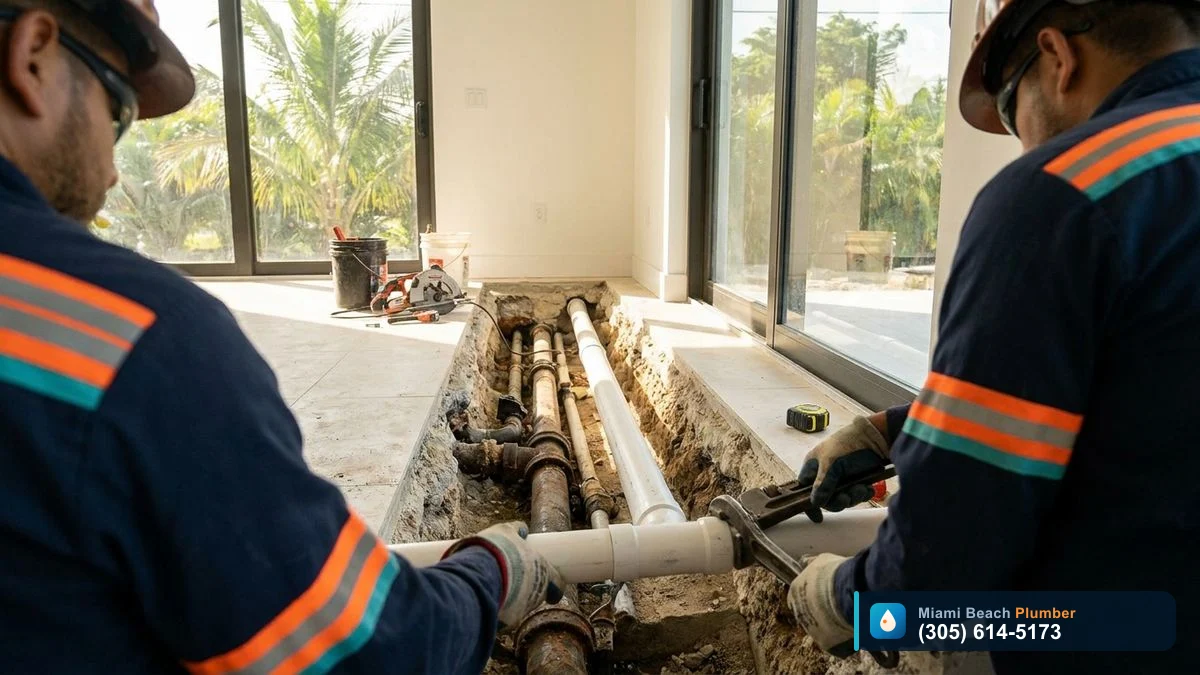
Repair, lining, or full replacement: what usually makes sense here
Owners often ask if they can avoid full replacement by relining cast iron pipes. The answer depends on pipe condition, project scope, budget, and how long you plan to keep the property. In Miami we often blend methods, for example, replacing badly failed sections and lining others.
| Option | Typical Use Case in Miami | Disruption | Ballpark Cost Range* |
|---|---|---|---|
| Spot repair | Single localized break or crack with otherwise solid pipe | Low to moderate, limited demo | $$ per repair area, get an upfront quote |
| Hydro-jetting and cleaning | Scale buildup, grease, early warning signs, no major cracks | Low, usually same-day work | $ to $$ depending on line length |
| Pipe lining (CIPP) | Structurally fair pipe where trenching would be very invasive | Low to moderate, good for condos and finished homes | $$$ based on footage and diameter |
| Pipe bursting | Yard or parking lot sewers with enough room for access pits | Moderate, avoids full trenching | $$$ based on depth and access |
| Full replacement | Widespread failure, heavy leaks, major remodels | High short term, best long term reliability | $$$$ project level, phased with a detailed quote |
*These symbols are general, not exact prices. Always get an on site evaluation and written, upfront pricing from a licensed plumber.
If you are flipping an older Miami house, you might be tempted to just hydro-jet, patch a few spots and move on. That can backfire. New owners who find failing cast iron soon after closing are not happy, and insurance carriers are getting stricter about paying for long term sewer damage from old pipes.
A good rule for old house plumbing in Miami is simple. If you plan to stay more than 5 to 10 years and your cast iron is original from the 1950s through 1970s, full or major partial replacement usually pays off. If you are in a high rise where full replacement is a long term association project, strategic repairs and maintenance may be the realistic path until the building is ready for a full stack replacement program.
Safe checks you can do before calling a licensed plumber
You do not need to diagnose every detail yourself, but a few simple checks help you speak clearly with your plumber and avoid wasting money on repeat quick fixes. These steps are safe for most owners in Miami and Miami Beach.
- Walk your floors. Slowly walk near bathrooms, the kitchen, and laundry. Notice any spongy spots, cracked tile patterns, or areas where the grout is constantly damp.
- Check cleanouts and exposed pipes. If you have exterior or garage cleanouts, look for rust staining, seepage, or foul smell. In condos, look at exposed stacks in the garage or trash rooms for heavy flaking or wet spots.
- Log your clogs. Keep a simple note of dates, fixtures affected, and what was done. If the same line backs up every few months, that is important information.
- Ask neighbors or your HOA. In Miami Beach condo buildings, if one unit has cast iron problems, others usually do too. Management may already have reports or inspection videos.
Once you have these notes, a licensed Miami plumber can use professional leak detection, sewer cameras and testing to confirm what is going on. Services like Sewer Line Repair, Leak Detection and Drain Cleaning are often combined on the same visit so you get clear answers instead of guesses.
Planning and budgeting for cast iron replacement in Miami-Dade
Replacing cast iron pipes in Miami-Dade is a real project, but it is much easier to handle when you plan for it. Start by understanding your property type and likely scope.
Single family homes in areas like Shenandoah, Little Havana, Miami Shores, North Miami and older parts of Miami Beach often have 50 to 70 year old cast iron under the slab. Many owners choose to coordinate replacement with other work like new flooring, kitchen and bath remodels, or hurricane window projects. That way, demolition and dust are combined instead of repeated.
Condo owners and property managers have another layer: association approvals and reserves. If building wide stacks or garage lines are failing, the board will often commission a camera survey of all main lines, then phase work by stack or tier over several years. Hotels and restaurants in Miami Beach and Brickell set up work windows in slower seasons or off peak hours to keep guests and operations moving.
| Planning Step | Why it matters in Miami-Dade |
|---|---|
| Camera inspection with recording | Creates a shared reference for owners, managers, insurance and future quotes. |
| Scope definition by area or stack | Makes it easier to phase work and minimize disruption to tenants and guests. |
| Permit and inspection scheduling | Miami-Dade and local cities may have backlogs, especially around hurricane season. |
| Protection of finishes | Tile, terrazzo and custom cabinetry in Miami homes need proper dust control and protection. |
| Temporary facilities | For larger projects, plan for restroom access and water shutoff windows. |
Always ask for upfront pricing with a clear breakdown of labor, materials, permits and any restoration work. Good contractors in Miami will explain what is included and what is not, so you are not surprised by change orders halfway through. Because soil, slab thickness and hidden conditions can vary, it is smart to build a contingency into your budget.

How to do a basic home check for cast iron pipe problems before calling a plumber
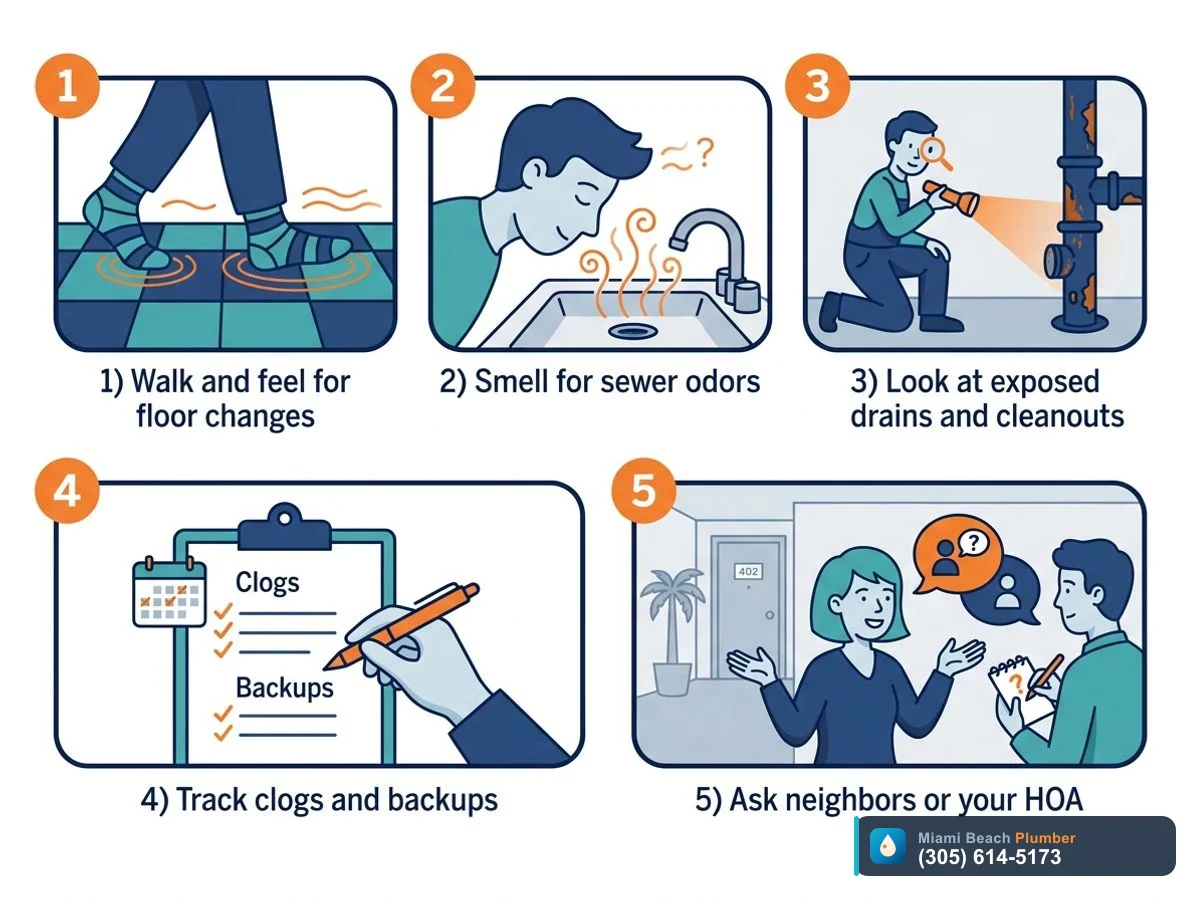
- Walk and feel for floor changes. Walk slowly around bathrooms, kitchens and laundry areas. Note any soft spots, new cracks in tile or grout, or areas that always feel damp.
- Smell for sewer odors. Pay attention to any sewage or musty smells in bathrooms, kitchens, garages or near floor drains, especially after showers or laundry.
- Look at exposed drains and cleanouts. Visually inspect any exposed cast iron stacks, garage pipes, or exterior cleanouts for heavy rust, flaking metal, drips, or staining.
- Track clogs and backups. Write down dates and fixtures involved every time a drain backs up or runs slow. Note what was done to clear it and how long it stayed clear.
- Ask neighbors or your HOA. If you live in a condo or townhome, ask building management or neighbors if they have had cast iron or sewer issues recently.
If any step involves gas, electrical wiring, sewage or opening a wall, stop and call a licensed pro at (305) 614-5173.