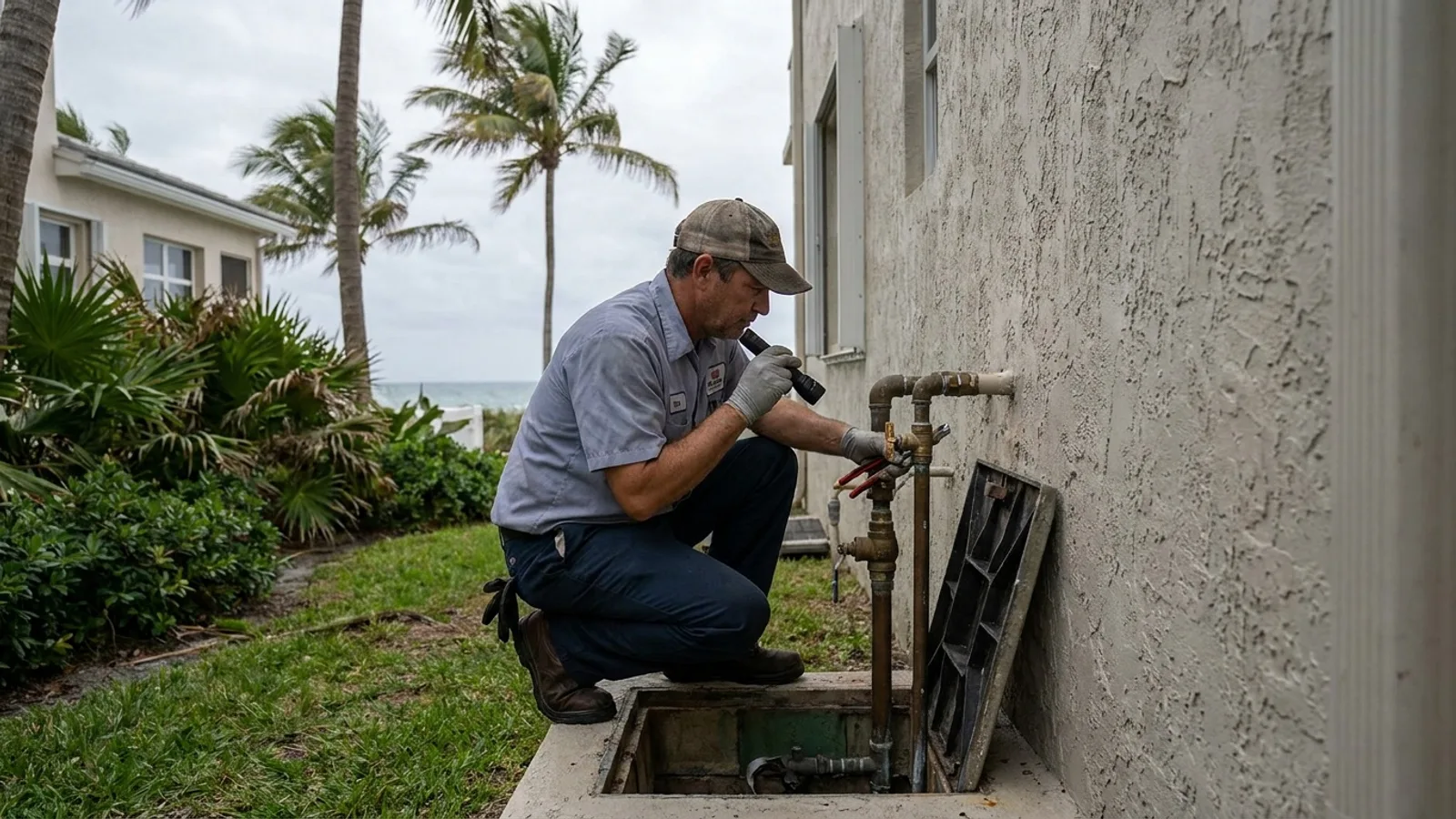
To prepare plumbing for a hurricane in Miami, secure outdoor lines, clear drains, test and locate your main water shutoff, protect your water heater, and minimize sewer backup risks. Shut off water before a hurricane only if officials advise, you evacuate, or you see leaks. For gas, always call a licensed pro.
In Miami and Miami Beach, many people think about shutters and sandbags first, then the storm hits and they end up dealing with sewage backing up in a condo or a flooded water heater room. Good hurricane plumbing preparation in Florida can prevent a lot of that mess.
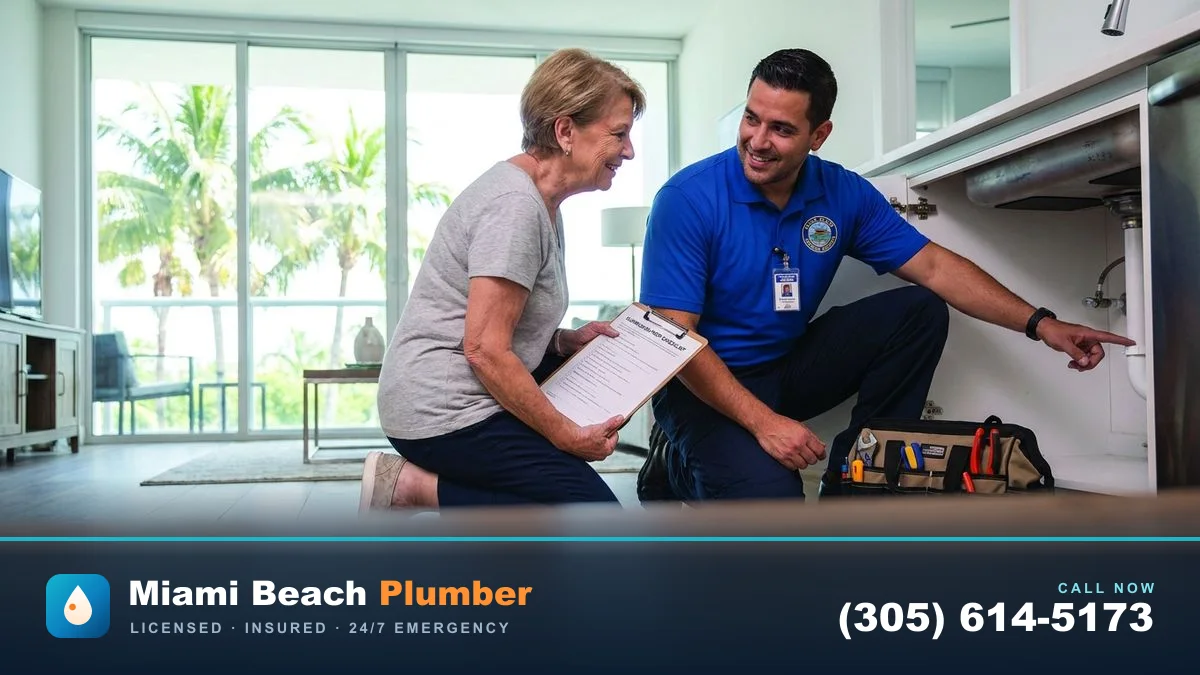
Why Hurricane Plumbing Preparation Matters In Miami-Dade
Most plumbing damage in Miami and Miami Beach during hurricanes shows up after the wind dies down. You get sewage backing up in a ground floor unit, a blown-out water heater in a condo mechanical room, or a broken outdoor line where debris hit exposed pipes. Those problems are expensive and often preventable with the right prep.
Our area has some specific risks. Many older Miami homes still have cast iron drain lines that are already weakened and more likely to fail when the ground shifts from heavy rain. Miami Beach condos and hotels often have roof equipment, vertical stacks, and sump pumps that can flood or lose power. Add salt air, high humidity, and hard water around 180 to 210 ppm, and your pipes and water heater are already working harder than average before a storm even starts.
Hurricane plumbing preparation in Florida is not only about surviving the day of the storm. It is also about avoiding raw sewage in living spaces, protecting potable water for a few days after, and making sure you do not create an insurance problem by doing unsafe DIY work on gas, electrical, or pressurized lines.
Hurricane Season Plumbing Checklist For Miami Homes And Condos
If you live in Miami, Miami Beach, or anywhere in Miami-Dade, you want a simple hurricane season plumbing checklist you can repeat every year. This is especially important for ground floor units, older homes with cast iron, and properties in flood-prone zones near the bay or canals.
Use this ballpark checklist before every major storm is in the forecast:
- Find and test your main water shutoff valve (and condo unit shutoff where applicable).
- Check toilets and floor drains for slow draining or gurgling that could signal a partial sewer blockage.
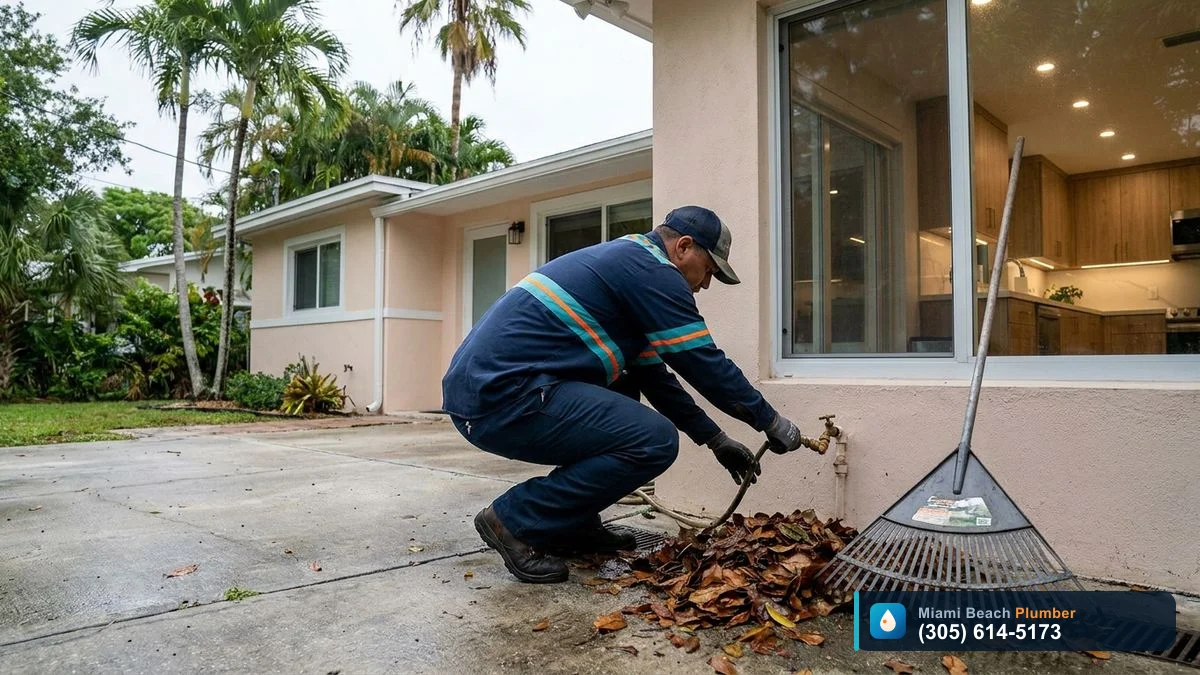
- Clear outdoor drains, driveway grates, and balcony drains of leaves and debris.
- Inspect exposed pipes and hose bibs, secure loose sections, and disconnect hoses.
- Secure or elevate water heaters in flood-prone areas and verify the T&P valve discharge is clear.
- Have a licensed plumber inspect sump pumps, sewage ejector pumps, and backwater valves in basements or parking garages.
- Store potable water in clean containers in case service is interrupted.
| Plumbing prep task | Who should do it | How often in hurricane season |
|---|---|---|
| Locate and test main water shutoff | Homeowner or condo owner | Once at season start, then quick check before major storms |
| Inspect for slow drains or sewer odors | Homeowner, call plumber if issues | Monthly and before storms |
| Clear outdoor and balcony drains | Homeowner or building maintenance | Before every major rain or hurricane |
| Test sump and sewage pumps | Licensed plumber or trained maintenance | At least annually, plus before peak storm months |
| Water heater and exposed pipe inspection | Licensed plumber | Every 1 to 2 years or before hurricane season for older systems |
Should You Shut Off Water Before A Hurricane In Miami?
Many people ask if they should shut off water before a hurricane. The answer in Miami and Miami Beach depends on your situation. There is no single rule that fits everyone, but there are clear guidelines that help you decide.
In general, consider shutting off your main water supply if you are evacuating, you already see leaks or broken pipes from flying debris, or local officials or your building management instruct you to do so. For single-family homes, that usually means turning a ball valve at the meter or house entry. For condos, you may only be able to shut off your unit, not the whole building.
If you plan to stay in place, it is usually better to keep water service on unless there is an active leak or your plumber advises otherwise. You want water available for flushing toilets, limited washing, and basic fire safety during and after the storm. Many Miami-Dade utilities have backup power or generator plans, but service can still become intermittent, so filling tubs and clean containers before landfall is a smart backup.
Always check with your specific utility or condo association. Some Miami Beach high-rises have building rules about shutoffs and will give written guidance as storms approach.
How To Protect Pipes And Drains From Hurricane Flooding
The most common hurricane plumbing complaints in Miami and Miami Beach are sewage backing up in showers and floor drains, and broken outdoor lines from flooding and debris strikes. Protecting pipes starts with understanding where your system is most exposed.
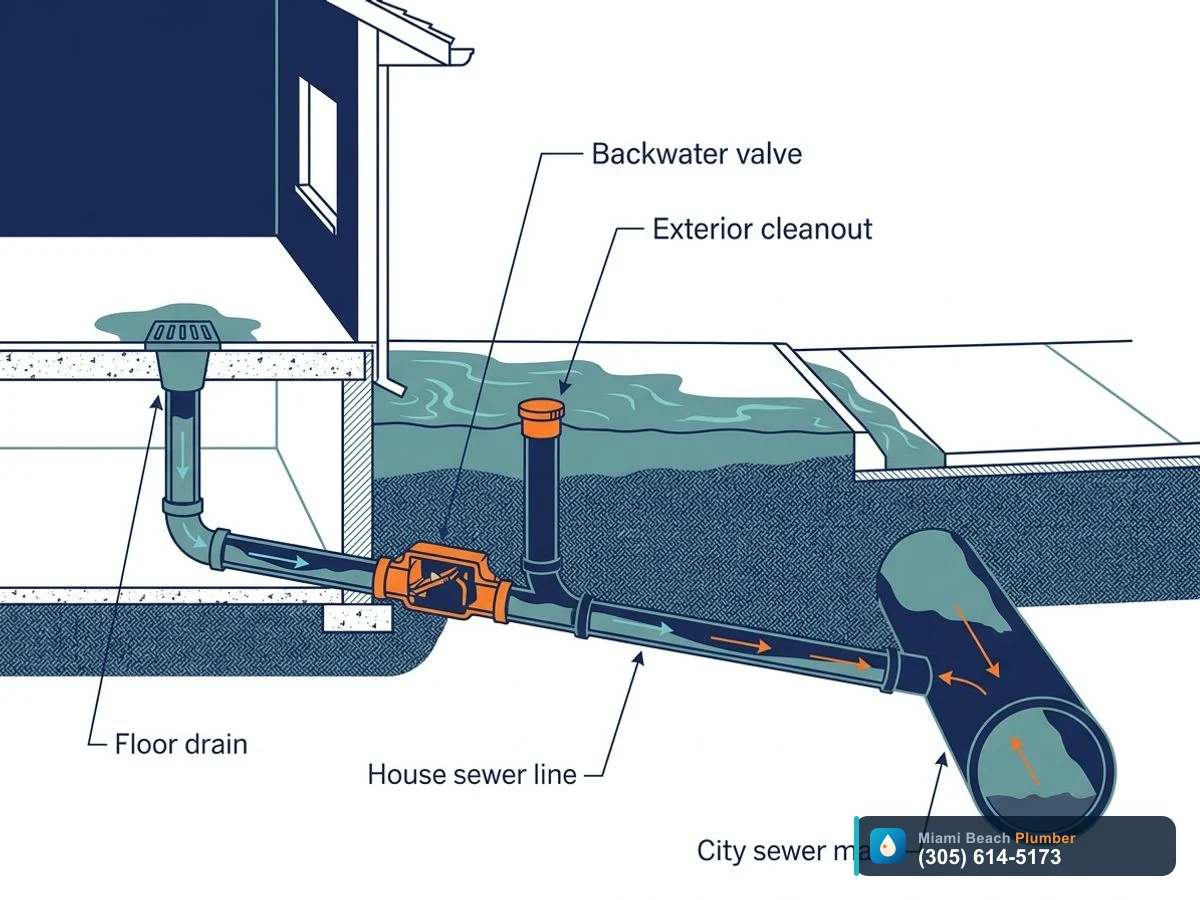
Ground floor bathrooms, laundry rooms, and garages with floor drains are the first places sewage will show up if the municipal sewer backs up. Older Miami homes with cast iron drain lines are more vulnerable because the pipe walls are often thinned by corrosion and tree root intrusion. When the saturated ground shifts during a storm, those weakened pipes can crack or collapse.
- Install or maintain backwater valves: These devices help prevent sewage from flowing back from the city sewer into your home. They must be installed by a licensed plumber and permitted in Miami-Dade.
- Inspect cleanouts: Make sure exterior cleanout caps are present and tight so floodwater and debris cannot enter your line easily.
- Protect exposed lines: For homes with visible PVC or copper lines along exterior walls, secure them with proper straps and shield them from flying debris where possible.
- Address slow drains before storms: A line that is already partially clogged is much more likely to fully block or back up under heavy rain conditions.
For condos, focus on keeping balcony drains and AC condensate drains clear. Overflowing balcony drains can send water straight into units below, and clogged AC condensate lines can overflow during long power outages and restarts.
Water Heaters, Pumps, And Equipment Prep Before A Storm
Water heaters, booster pumps, and sewage ejector pumps are often tucked in closets, garages, or mechanical rooms in Miami and Miami Beach buildings. Those spaces can flood quickly in a storm, especially in parking garages or first floor utility rooms near the coast or canals.
For tank-style water heaters in single-family homes, make sure the unit is properly strapped, elevated if you are in a known flood area, and that the temperature and pressure relief (T&P) valve discharge is clear and not blocked. In a power outage, a gas water heater can still provide hot water, but only if it is safe and undamaged.
Many Miami Beach condos and commercial properties rely on sump pumps and sewage ejector pumps in basements and parking levels. Before hurricane season, have those pumps professionally tested, check alarms and float switches, and confirm backup power arrangements. A failed ejector pump during a storm can mean sewage overflow into parking areas and elevators.
If your property has a booster pump system for upper floors, talk with your plumber or building engineer about how power outages will affect water pressure. Some systems must be shut down intentionally to prevent damage during long outages, then restarted in a specific sequence. This applies to both residential high-rises and commercial properties like hotels and restaurants.
Special Hurricane Plumbing Tips For Condos, Hotels, And Property Managers
Condo associations, hotel operators, and property managers in Miami-Dade face extra challenges during hurricane season. You are not just dealing with one kitchen and two bathrooms. You have stacked units, shared risers, roof drains, and parking garages that all tie into the same plumbing systems.
Start with clear communication. Before each hurricane season, send residents or tenants a short plumbing guideline that covers what they should and should not do. Include how to report leaks, where unit shutoffs are typically located, and why they must not flush wipes or pour grease down drains, especially before storms. Even "flushable" wipes can create serious blockages in older cast iron stacks under heavy use.
- Schedule annual inspections of roof drains, vertical stacks, and main sewer lines with a licensed plumber.
- Use camera inspections on older cast iron stacks to identify sections that are at high risk of failure during flooding.
- Have a written plan for who has authority to shut off water to sections of the building if a major leak is reported during a storm.
- Verify that emergency contact numbers for your plumbing contractor are posted in mechanical rooms and security desks.
Hotels and restaurants in Miami Beach and downtown Miami also need to plan for grease trap behavior during and after storms. Heavy stormwater intrusion, power outages, and interrupted maintenance can cause backups right when you are trying to reopen and serve guests again.
After The Storm: Checking Your Plumbing Safely
Once the storm has passed and local officials say it is safe to go outside, do a basic plumbing check before putting full demand on your system. Many Miami and Miami Beach residents turn everything back on at once, then discover burst pipes, leaking water heaters, or sewer backups.
Start with a visual walkthrough. Look for standing water near the base of walls, around water heaters, behind toilets, and under sinks. Listen for hissing or running water you cannot see. Check outside around hose bibs, visible pipes, and your water meter for signs of ground movement or breaks.
- Turn water on gradually and watch for pressure drops or discoloration.
- Flush toilets one at a time and watch for slow draining or gurgling in nearby fixtures.
- Run showers and sinks briefly, then check for leaks at traps and supply lines.
- Look at your water heater for rust streaks, bulging, or water on the floor.
If you notice sewer odors, multiple slow drains at once, or water coming up from floor drains, stop using water and call a plumber immediately. That can indicate a damaged main sewer line or city-side problem. A pro can perform a camera inspection and recommend targeted sewer line repair instead of guessing.
In Miami-Dade, boil water advisories can follow major hurricanes. Follow utility instructions, and if your property has a private well or storage tank, schedule water quality testing before using it for drinking or cooking again.
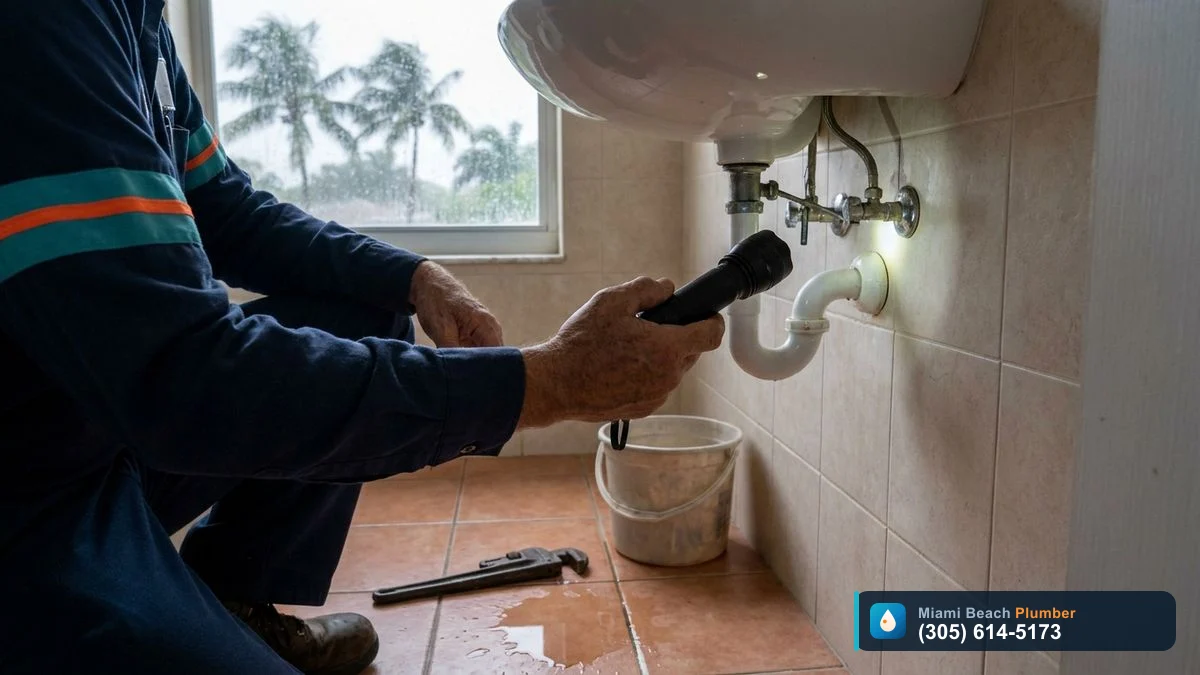
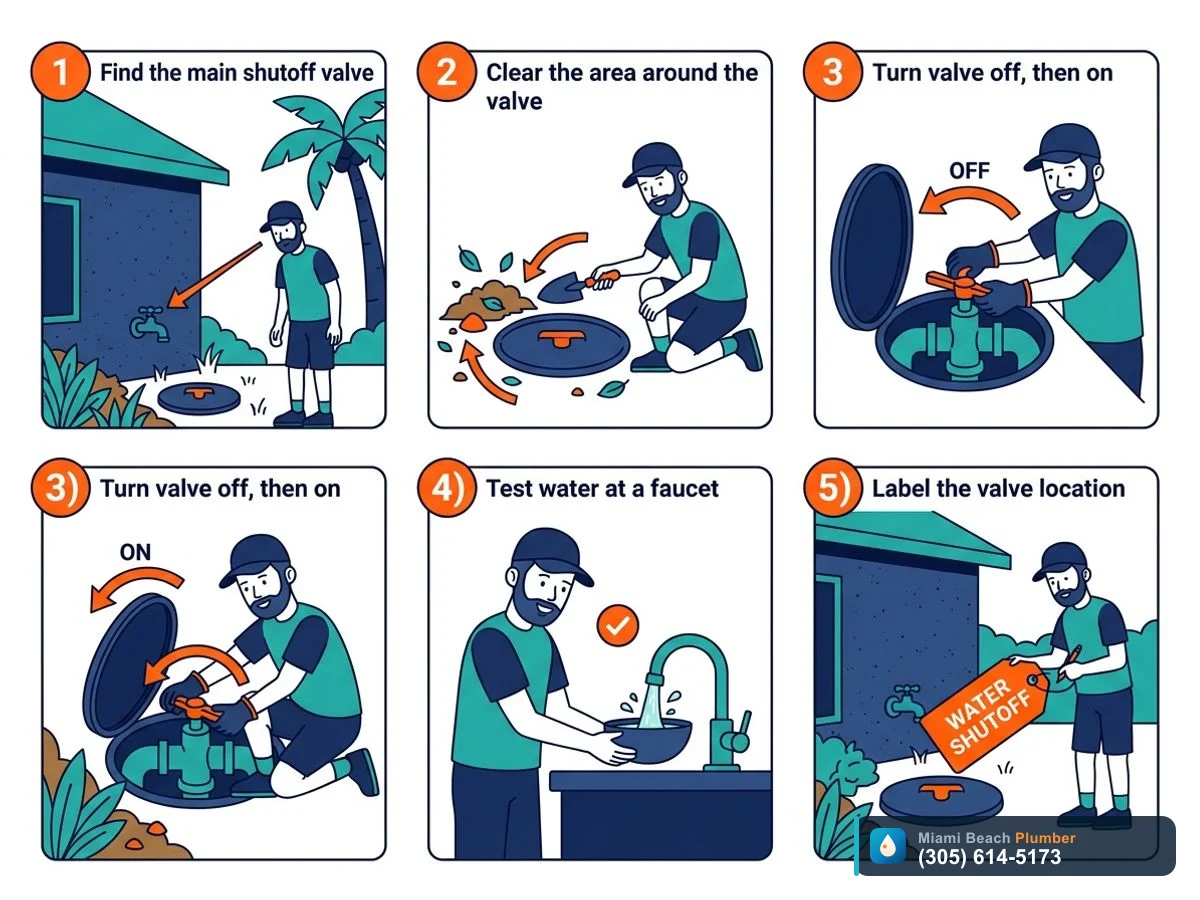
How to safely check your main water shutoff before hurricane season in Miami
- Locate the valve. Find your main water shutoff. It is usually at the exterior wall where water enters the home, near the water heater, or at the meter box by the street. Condo owners often have a unit shutoff in a closet or behind an access panel in a bathroom or hallway.
- Clear the area. Remove stored items, debris, or plants around the valve so you can reach it quickly during an emergency. Make sure you have good lighting to see the handle and surrounding pipes.
- Gently operate the valve. Turn the valve fully off, then fully back on. For a ball valve, the handle is in line with the pipe when open and across it when closed. Do not force it if it is stuck. If it will not move or starts leaking, stop and call a licensed plumber.
- Test by running a faucet. With the valve in the off position, open a nearby faucet to confirm the water flow stops, then close the faucet and return the valve to the on position. Check for drips or leaks around the valve for a few minutes.
- Label the shutoff. Use a durable tag or waterproof marker to label the valve as "Main Water Shutoff" so family members or tenants can find it quickly before a hurricane. Share its location with everyone in the home.
If any step involves gas, electrical wiring, sewage or opening a wall, stop and call a licensed pro at (305) 614-5173.