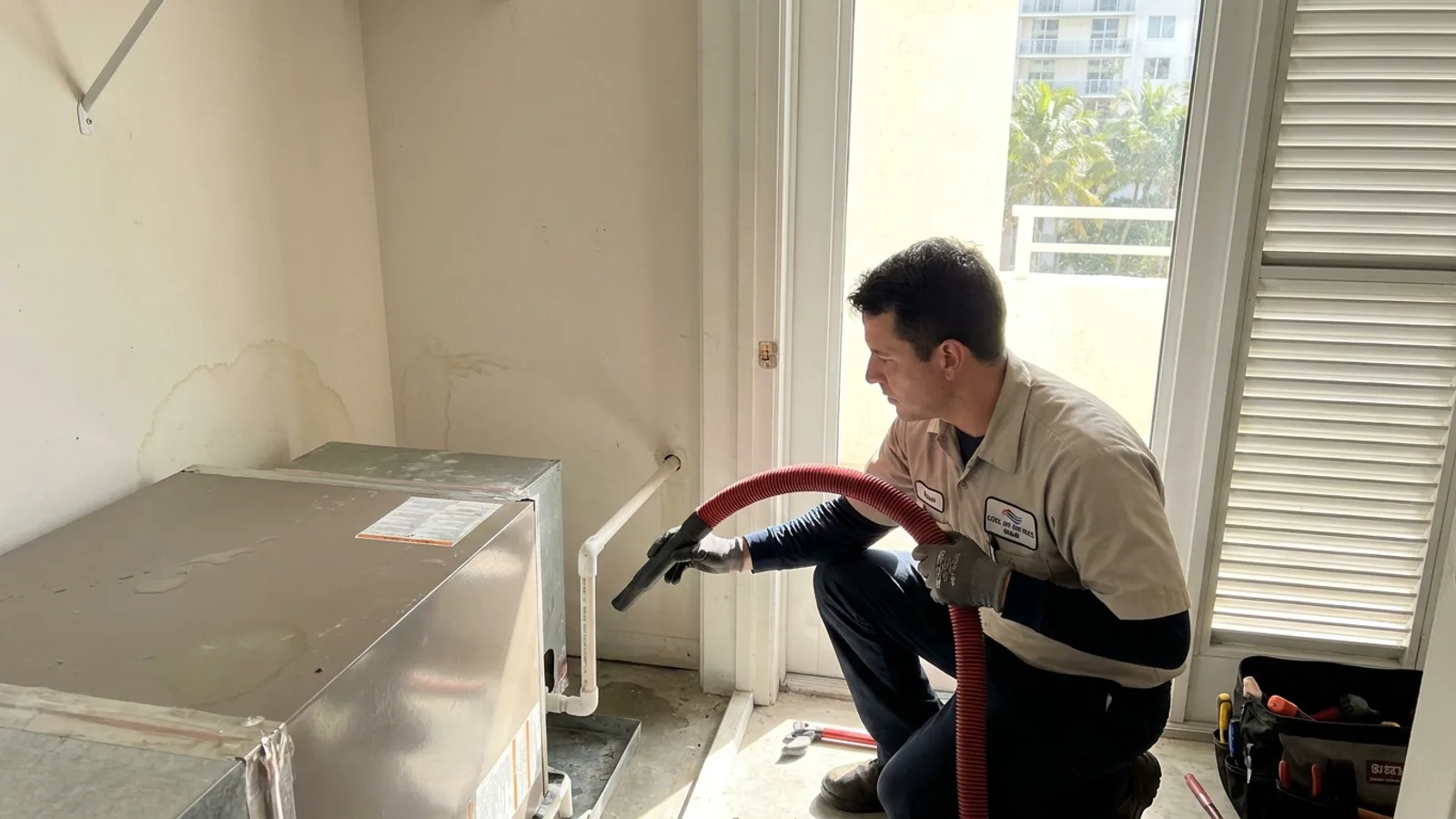
A clogged AC drain line in Miami is usually caused by algae, mold, and debris in the condensate pipe. Turn off the system, clear the line at the cleanout with a wet/dry vacuum, then flush with water. If the pan is overflowing, there is no cleanout, or clogs keep coming back, call a licensed plumber or HVAC tech.
AC dripping water in Miami is almost always urgent. In our heat and humidity, a clogged AC condensate drain line can overflow in hours and damage drywall, flooring, and even your neighbor’s condo below.
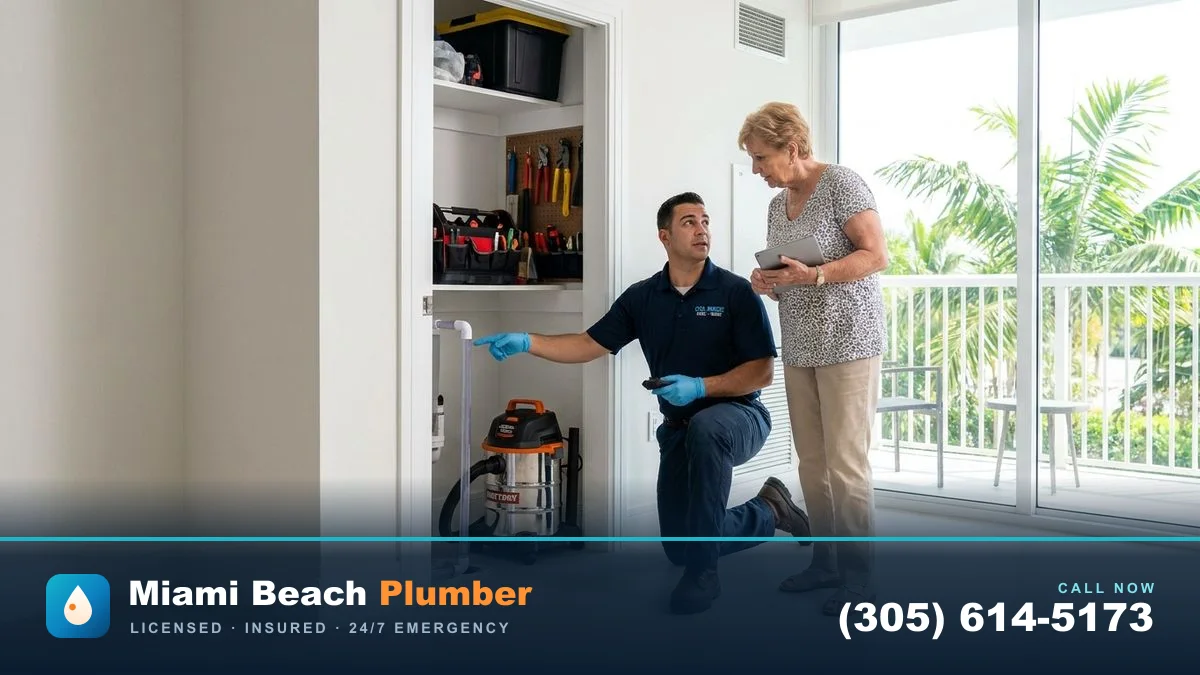
How a clogged AC drain line shows up in Miami homes and condos
Most Miami and Miami Beach owners first notice a clogged AC drain line when they see water where it should not be. Because our systems run hard almost year-round, problems move fast.
Typical signs include:
- AC dripping water from the air handler closet, garage, or ceiling
- Wet ceiling spots under a condo air handler or in a townhouse hallway
- Water pooling in the AC closet, under the air handler, or near the indoor unit
- Musty or mildew smell around supply vents or the AC closet
- AC shuts off and will not restart, even though the thermostat has power (a full drain pan float switch can cut the unit off)
- Rust or staining around the secondary (emergency) drain line outside
In Miami-Dade, many air handlers sit in small closets or attic spaces over finished areas. A clogged AC drain line can soak insulation, drywall, and electrical components in a day.
Condo and apartment owners in Miami Beach also have to think vertically. An overflowing condensate pan on the 10th floor can leak into the unit below, trigger HOA violations, and lead to insurance claims. Property managers usually want a licensed contractor to document the cause and repair.
Why AC condensate drain lines clog so often in Florida humidity
An AC condensate drain line clogged in Florida, especially in Miami and Miami Beach, is more common than in drier states because our systems pull enormous amounts of moisture out of the air.
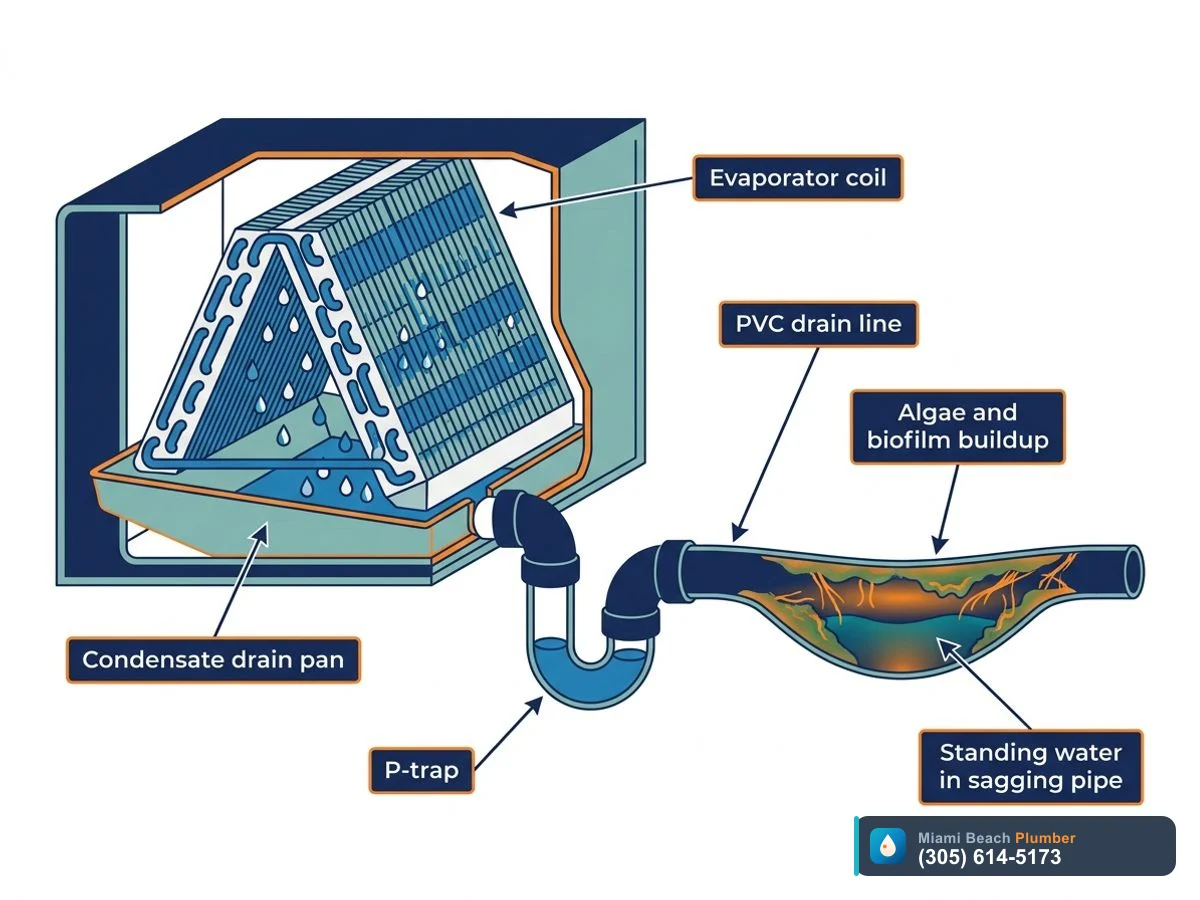
Here is what is happening inside that small plastic pipe:
- Constant condensation. In Miami’s humidity, your air handler drains gallons of water a day through a narrow PVC line. Any small obstruction starts a backup.
- Algae and slime growth. Warm drain pans and pipes grow algae, mold, and biofilm. That slime coats the inside of the condensate line and eventually blocks it.
- Dust and debris. Dust, drywall particles, pet hair, and construction debris get past the filter, land in the pan, and get carried into the drain line. In older Miami homes with remodeling work, this is very common.
- Improper slope or sagging lines. If the condensate line is not sloped correctly or sags between hangers, water sits and sludge builds up faster.
- Rust and scale. Older metal drain pans and fittings can corrode, flake, and shed particles into the line.
Combine those factors with Miami’s hard water, typically 180 to 210 ppm, and you get mineral buildup on top of the organic slime. That is why an AC drain line keeps clogging if it is only vacuumed out once in a while, without real cleaning and prevention.
Property managers for condos, hotels, and restaurants in Miami Beach usually schedule professional AC drain line maintenance at least once a year, often before hurricane season, because they know small clogs can quickly become building-wide issues.
Safe DIY: how to clear an AC drain line in Miami without damaging the system
If your AC drain line is clogged but you catch it early, a careful owner can sometimes clear it safely. The key is knowing the limits. Anything involving electrical work, opening walls, or cutting pipe is for a licensed pro.
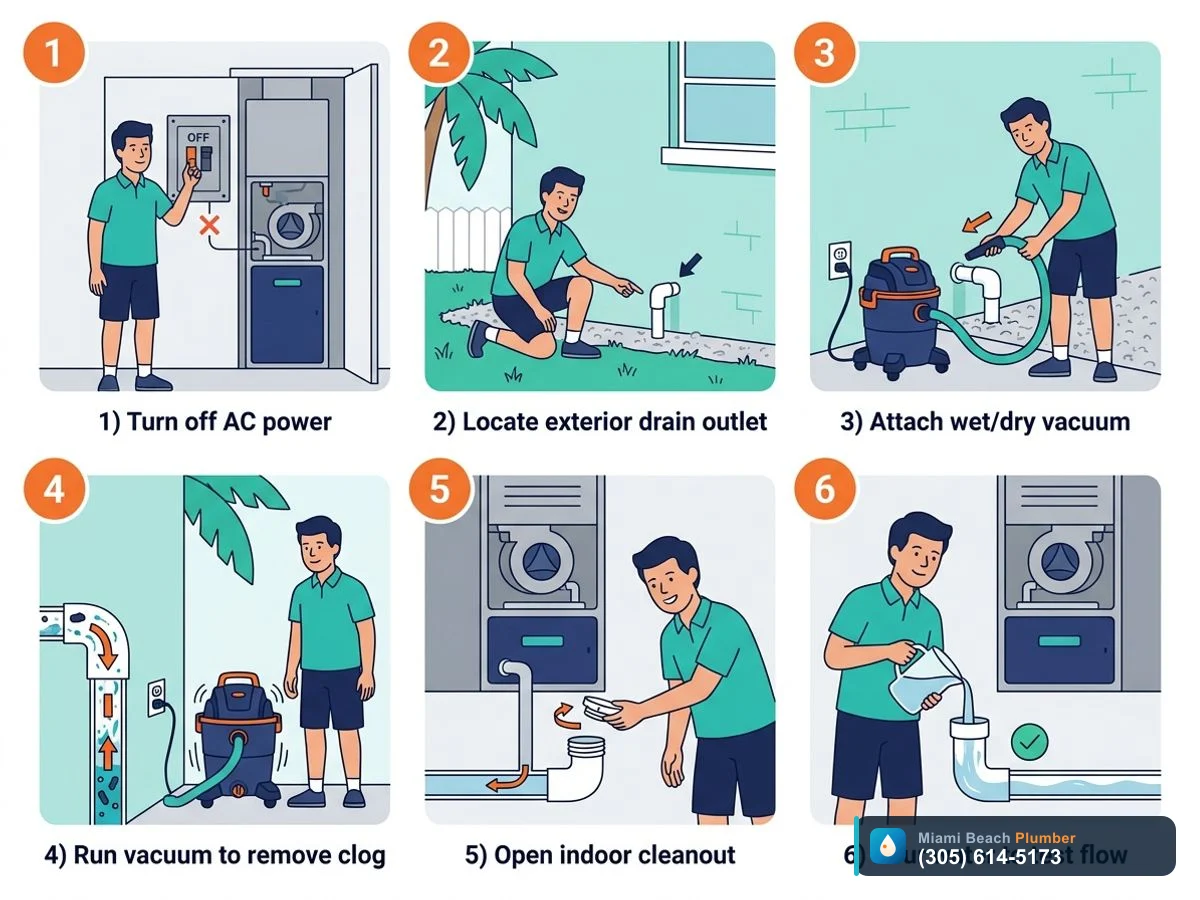
Here is a safe, basic method that often works on minor clogs in Miami-Dade homes, condos, and small offices:
- Find the condensate drain line. Inside, it usually exits from under the air handler as a white PVC pipe. Outside, you will see a small pipe dripping water near the foundation or an exterior wall when the AC runs.
- Look for a cleanout. Many lines have a vertical T-fitting near the air handler with a removable cap. This is the safest place to access the line.
- Use a wet/dry vacuum outside. At the exterior drain outlet, place the vacuum hose over the pipe, seal it with a rag or duct tape, then run the vacuum for 1 to 2 minutes to pull out sludge and algae.
- Flush from the cleanout. After vacuuming, you can pour a small amount of water into the cleanout to confirm it drains freely.
If the drain pan is already overflowing, if there is no cleanout, or if your AC keeps shutting off after you clear the line, stop. At that point you are past safe DIY and into the zone where a licensed plumber or HVAC tech should inspect the system and the safety devices.
Local companies like Miami Beach Plumber handle AC drain line cleaning, drain cleaning, and leak detection across Miami and Miami-Dade, including condos and commercial spaces. That kind of visit often includes a quick check of the pan, trap, and slope, not just a vacuum at the outlet.
Step-by-step: basic DIY method to clear a mildly clogged AC drain line
For owners who are comfortable with simple tools, here is a structured, safe process for a mildly clogged AC drain line that is not yet overflowing. If anything looks different from what is described, or you feel unsure, stop and call a licensed pro.
| Step | What you do | When to stop and call a pro |
|---|---|---|
| 1. Turn power off | Turn AC off at thermostat. If working inside the unit, turn off the air handler breaker. | If you cannot find the correct breaker or panel is corroded or wet. |
| 2. Locate the line | Find the PVC drain at the air handler and the outlet outside. | If the pipe disappears into a wall or ceiling with no visible outlet. |
| 3. Check the pan | Shine a flashlight into the air handler pan. | If pan is full, rusted through, or leaking over the edge. |
| 4. Attach wet/dry vac | Outside, seal vacuum hose to the drain outlet and run for 1 to 2 minutes. | If the vacuum pulls nothing out and water still backs up inside. |
| 5. Flush test | Remove the cleanout cap inside and pour in about 1 cup of water. | If water does not drain freely within a few seconds. |
| 6. Restart and monitor | Restore power, run AC, and check for normal dripping outside and a dry pan inside. | If the unit will not start, short cycles, or water returns within a day. |
This is about as far as safe DIY goes for an AC condensate drain line clogged in Florida. Anything more advanced, like clearing a blocked trap, repairing a broken line in a wall, or replacing a rusted pan, belongs to a licensed contractor familiar with Miami-Dade code.
If you are not sure whether the line you see is actually your unit’s condensate drain or a shared building pipe, do not experiment. A short visit from a licensed plumber who also does AC work is far cheaper than a building leak claim.
Why your AC drain line keeps clogging in Miami and what actually fixes it long term
If your AC drain line keeps clogging every few months, that is a sign something in the setup or environment is wrong, not just bad luck. In Miami’s climate, band-aid fixes do not last.
Common reasons for recurring clogs include:
- No trap or incorrect trap design. The trap keeps air from pulling water back and helps water flow properly. A missing or poorly built trap can leave water sitting in the line.
- Improper slope. Long and flat condensate runs in older Miami homes or retrofitted condos let water pool in low spots, where slime grows fast.
- Oversized or very dusty systems. Systems that short cycle, or run with dirty filters, send extra debris into the pan.
- Shared lines in condos. Some older Miami Beach buildings tie multiple units into one condensate line. One unit with a dirty pan can cause backups for neighbors.
- No regular maintenance. In our climate, going years without a professional AC or drain cleaning visit is asking for trouble.
Here are the kinds of permanent or long-term solutions that usually stop repeat clogs:
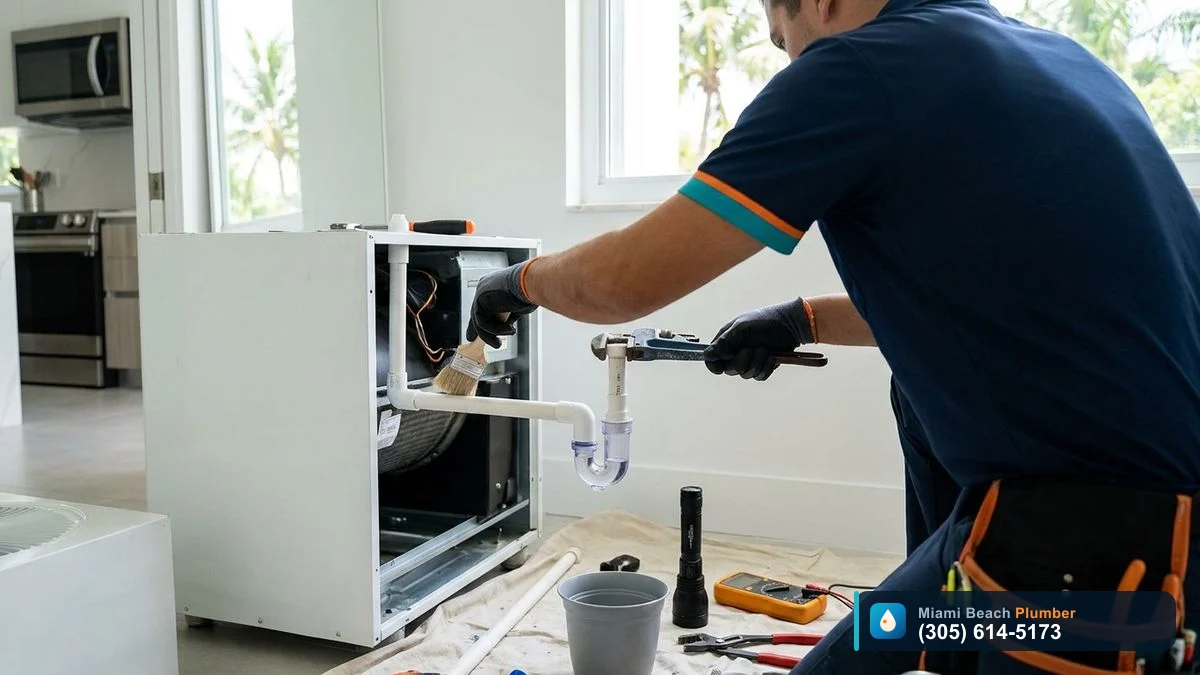
- Properly sizing and installing a P-trap and cleanout near the air handler
- Re-sloping or re-routing sagging sections of PVC drain
- Adding or wiring a float switch so the unit shuts off before pan overflow
- Professional drain cleaning or hydro-jetting of long or shared lines in larger buildings
- Annual maintenance that includes vacuuming, flushing, and checking the pan and trap
Plumbing companies that also handle Air Conditioning, Drain Cleaning, and Leak Detection, like Miami Beach Plumber, are used to these mixed problems. In many Miami-Dade homes, a clogged AC drain line, a slow sink, and a slab leak can all connect to the same underlying drainage or corrosion issue.
Water damage, mold, and Miami-Dade insurance issues from clogged AC drains
A clogged AC condensate drain line clogged in Florida is not just an inconvenience. In Miami and Miami Beach, it is a major source of water damage and mold claims, especially in condos and high-rises.
Here is what can happen if an AC dripping water is ignored:
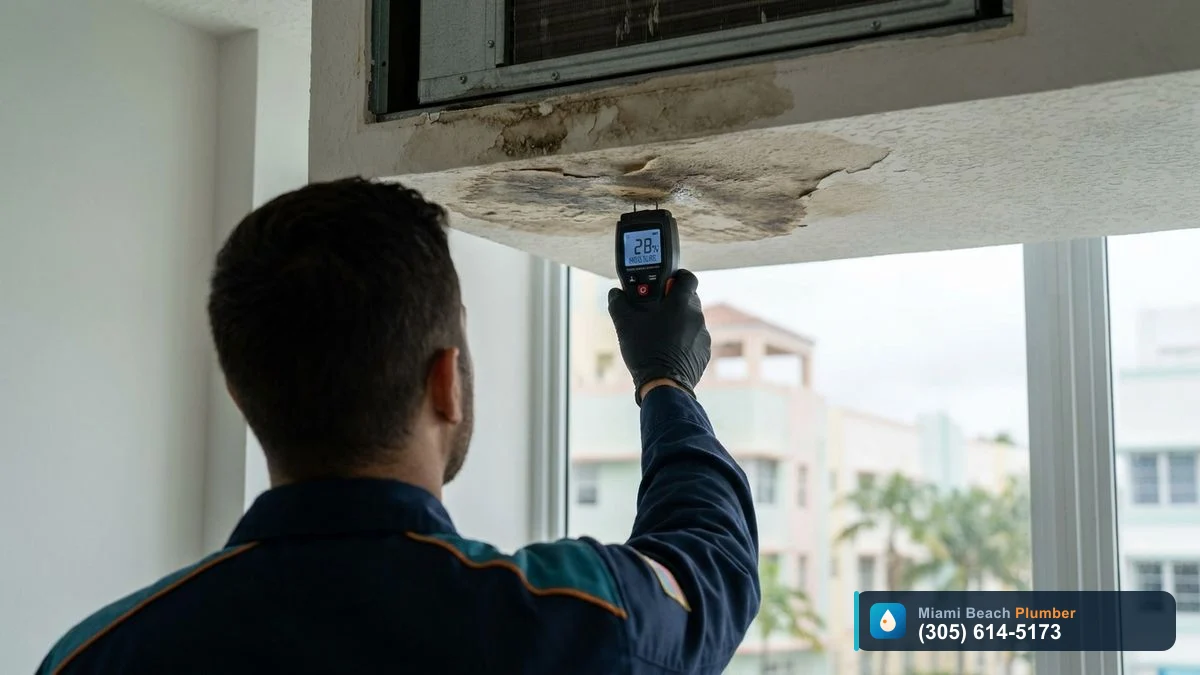
- Ceiling and wall damage. Continuous dripping can soak drywall, bubble paint, and collapse ceiling sections.
- Flooring damage. Engineered wood, laminate, and some tiles can lift or warp with repeated wetting.
- Mold growth. In Miami’s humidity, damp drywall and insulation can grow mold in as little as 24 to 48 hours.
- Electrical hazards. Water running along framing can reach junction boxes or recessed lights.
- Neighbor disputes. In condos, moisture can track along slabs or down wall cavities into the unit below, leading to complex liability questions.
From an insurance standpoint in Miami-Dade, adjusters often ask:
- How long the leak was present
- Whether the owner performed reasonable maintenance
- Whether required safety devices, like float switches and secondary pans, were installed
That is another reason it helps to have a licensed, insured plumber or HVAC contractor document the problem and the repair, especially in managed buildings or for property managers of condos, hotels, and restaurants. Reports that note “ac drain line clogged” with photos of the fix often make claim discussions easier.
Leak Detection services are useful here too. If you see stains or smell mustiness but do not see active dripping, a pro can use moisture meters and thermal imaging to check for hidden damage around the AC closet, slab edges, or shared chases.
How often should AC drain lines be cleaned in Miami and who should do it
Because Miami systems run so much, AC drain lines here need more attention than in cooler climates. Waiting until an AC condensate drain line is clogged is usually more expensive than planning routine service.
Reasonable schedules for Miami-Dade conditions look like this:
| Property type | Suggested cleaning frequency | Who typically does it |
|---|---|---|
| Single-family home | Once a year minimum, twice a year if occupants are home all day or have pets | Licensed HVAC or plumber, some owners do light mid-year vacuuming |
| Miami Beach condo | Annually at a minimum, often before summer | Licensed contractor, usually required by HOA |
| Small office or storefront | Twice a year | HVAC service company or plumber with AC experience |
| Hotels and restaurants | Quarterly or more, depending on usage | Commercial HVAC and plumbing contractors under maintenance contracts |
In many cases, the same visit can include a quick check of related plumbing, like nearby floor drains, condensate pumps, or emergency overflow lines that connect to building drainage.
Miami Beach Plumber provides Air Conditioning, Drain Cleaning, and Leak Detection services for both residential and commercial properties across Miami-Dade. That combination is useful in older buildings where cast iron stacks, slab leaks, and AC condensate lines all come together in tight spaces.
For most homeowners and condo owners, the smart approach is a mix. Learn a safe basic vacuum and visual check, then schedule a licensed, insured pro once a year to open things up, inspect pans and traps, and spot early signs of corrosion or code problems.
How to safely clear a mildly clogged AC drain line in a Miami home or condo
- Shut off the AC. Turn the AC off at the thermostat. If you will be opening panels or touching anything inside the air handler, turn off the air handler breaker at the electrical panel as well.
- Locate the condensate drain line. Find the white PVC pipe leaving the bottom of the indoor unit. Trace it to where it exits outside. Look near that pipe for a vertical cleanout with a removable cap.
- Inspect the drain pan. Carefully remove the air handler access panel if it is safe to do so. Use a flashlight to check the pan. If it is full, rusted, or leaking over the edge, stop and call a licensed plumber or HVAC pro.
- Vacuum the exterior outlet. Outside, place a wet/dry vacuum hose over the pipe where condensate usually drips. Seal it with a rag or tape and run the vacuum for 1 to 2 minutes to pull out algae and debris.
- Flush and test from the cleanout. Remove the cleanout cap inside. Slowly pour about 1 cup of water into the opening. It should drain quickly. If it backs up or drains very slowly, stop and call a pro.
- Restore power and monitor. Replace any panels, restore power at the breaker, and turn the AC back on. Verify that water is dripping steadily from the exterior outlet and that the indoor pan stays dry over the next few hours.
If any step involves gas, electrical wiring, sewage or opening a wall, stop and call a licensed pro at (305) 614-5173.