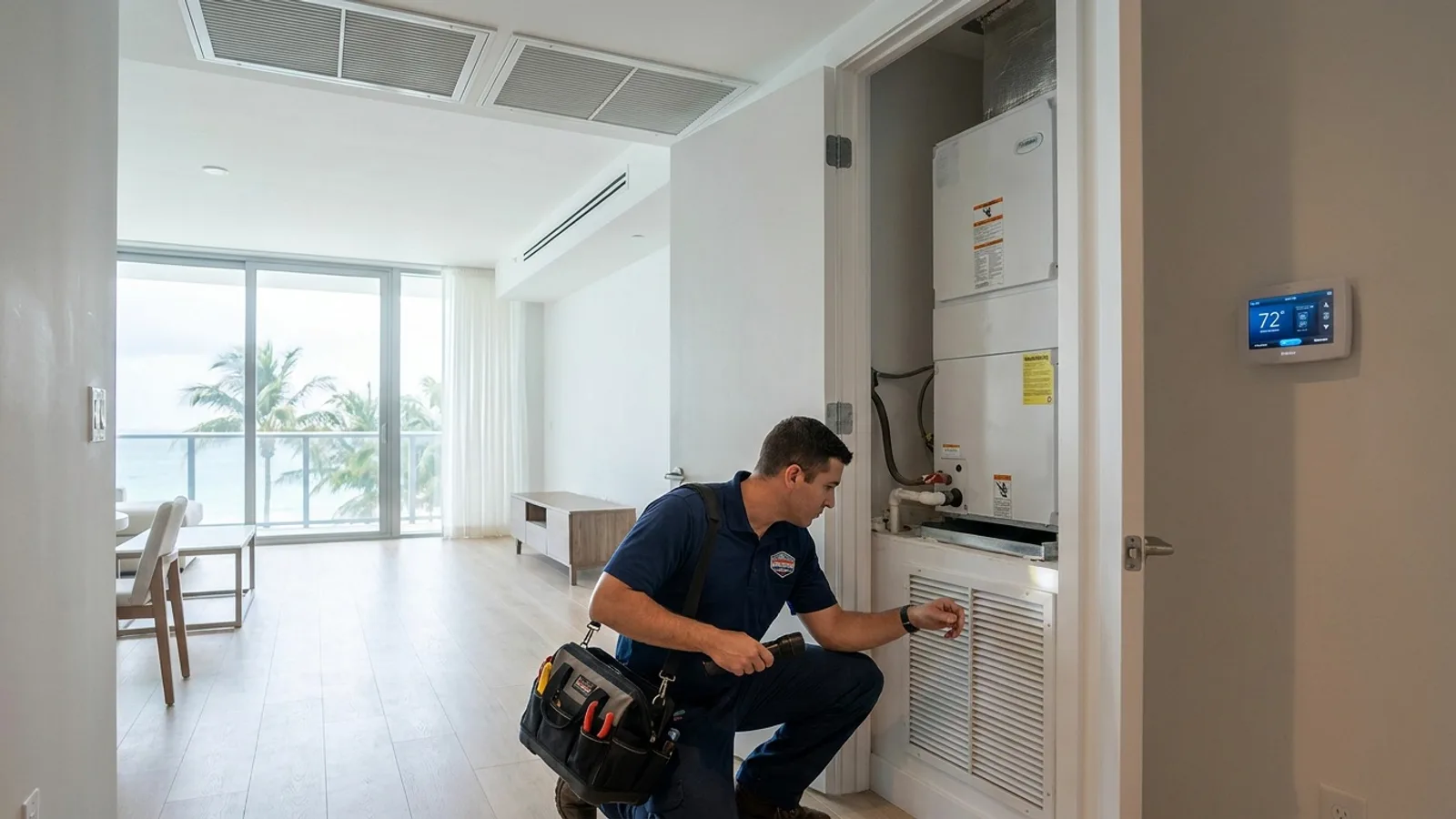
If your AC is not cooling, first check the thermostat setting, breaker, air filter, indoor vents, outdoor unit airflow, and that the system is not iced over. If the AC still blows warm air or the central AC is not cooling the house, a licensed HVAC technician should inspect refrigerant, coils, and electrical parts.
AC running all day and the house still feels warm and sticky is a common Miami headache. Before your electric bill spikes and tempers rise, it helps to know what actually causes an AC not blowing cold air and which fixes are safe to try yourself.
Common reasons an AC is not blowing cold air in Miami
Most calls we get in Miami and Miami Beach start with the same line: “My AC is running but not cooling.” The system hums, air comes out of the vents, but it is not cold enough to beat the Miami humidity. Here are the most common causes we see in Miami-Dade homes, condos, and commercial spaces.
The simplest problem is airflow. A clogged air filter, blocked return grille, or closed supply vents can choke the system. That makes your central AC not cooling the house, even though it is technically running. In Miami’s dust, pet dander, and construction ambiance, filters plug up fast, especially in condos that run the fan 24/7.
Another frequent culprit is a dirty or iced evaporator coil. If the indoor coil freezes, you may notice weak airflow or the AC blowing warm air after it first felt cool. Low refrigerant, very dirty filters, or a failing blower can all lead to icing. Outside, leaves, plastic bags, or salt-air corrosion on the condenser coil can also leave your AC not cooling.
Thermostat settings and electrical issues round out the usual suspects. A thermostat left on "fan" instead of "cool", a tripped breaker, or a failed capacitor or contactor in the outdoor unit can all lead to an AC running but not cooling. Condo units on Miami Beach also deal with overheating rooftop equipment and corrosion from salt air, which shortens component life.
Simple checks you can safely do before calling a pro
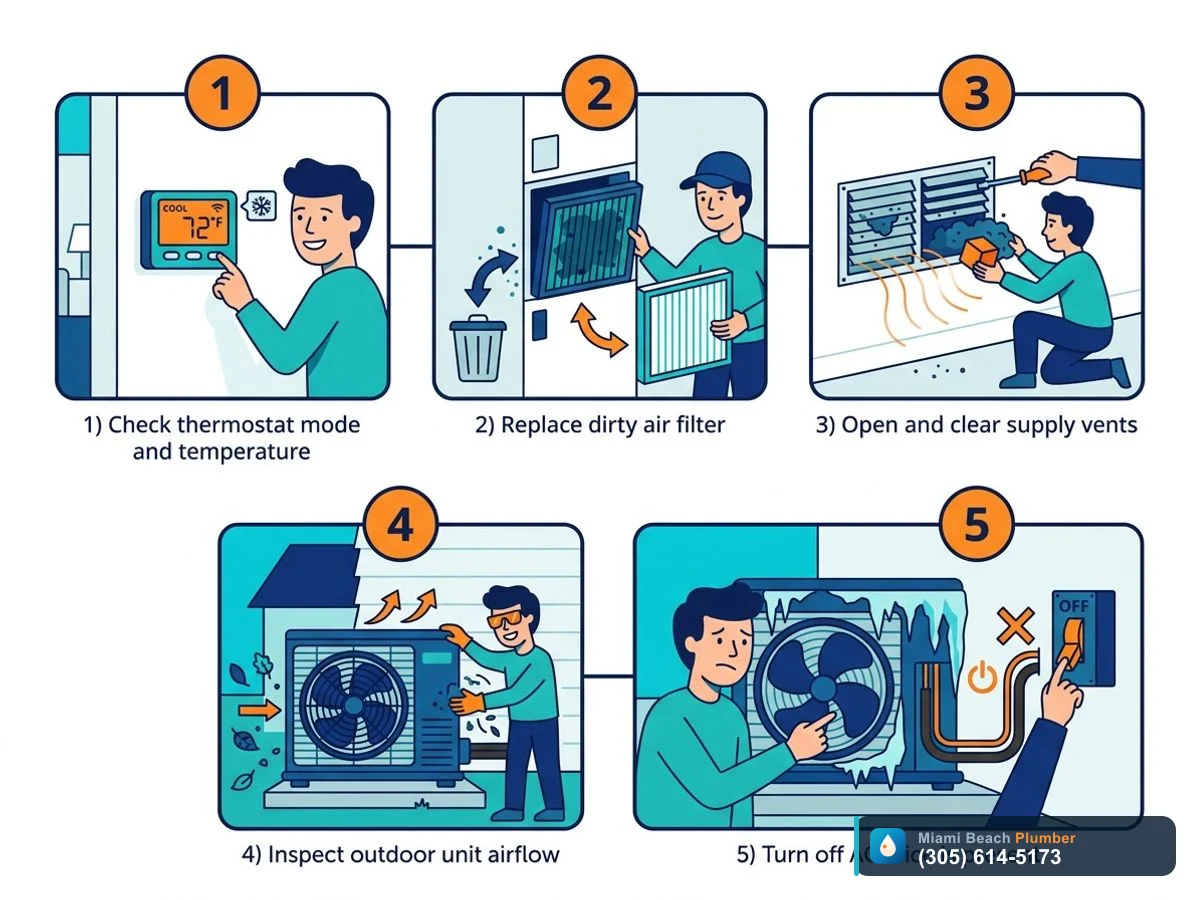
If your AC is not cooling, there are a few safe checks Miami homeowners and property managers can do without tools. These quick steps can sometimes solve the problem or at least give your technician better information.
- Confirm thermostat settings. Make sure it is set to "cool" and "auto" fan, not "heat" or "fan" only. Drop the setpoint at least 3 to 4°F below the current room temperature and wait 10 to 15 minutes.
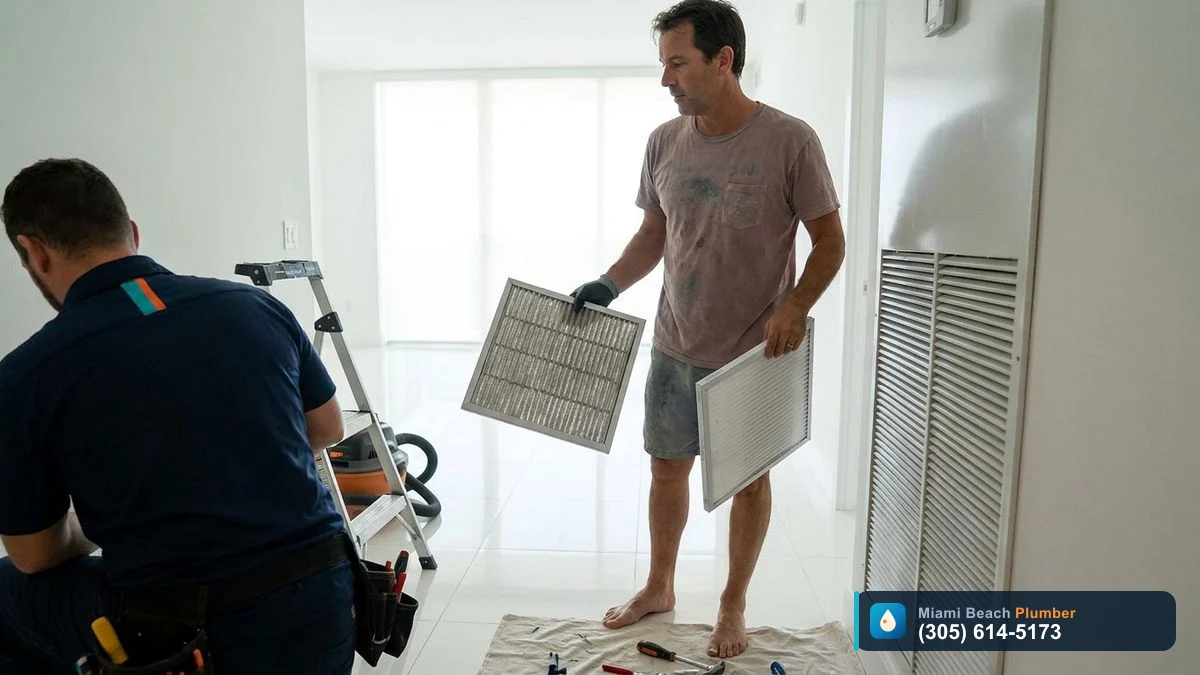
- Check your air filter. Pull the filter from the indoor unit or return grille. If you cannot see light through it or it looks gray and fuzzy, replace it. In Miami-Dade’s humidity and dust, many homes need a new filter every 30 to 45 days during heavy use.
- Open and clear vents. Make sure supply vents and the main return grille are open and not blocked by furniture, rugs, or closet clutter. Condos often have the main return in a hallway or closet that gets stacked with boxes.
- Inspect the outdoor unit. The fan on the outside condenser should be spinning and blowing hot air out the top or side. Clear leaves, trash, and plants at least 2 to 3 feet around it. Do not remove panels.
- Listen and look for ice. If you see ice on the refrigerant lines or inside the air handler, turn the system off at the thermostat and set the fan to "on" to help thaw it. Do not chip or melt ice with tools or hot water.
If these basics do not get your AC blowing cold air again within 30 to 60 minutes, the problem is likely beyond safe DIY and needs a trained technician.
Why your AC is running but not cooling in Miami heat
On a 92°F Miami afternoon with heavy humidity, a central AC not cooling the house warm often has more than one issue. The system might still move air, but it cannot remove enough heat and moisture to keep up, especially in older homes or oceanfront condos.
One of the biggest factors is heat load. Poor attic insulation, leaky windows, sliding doors that do not seal, and west-facing glass can dump heat into your home faster than an aging AC can pull it out. In Miami Beach high-rises, long runs of ductwork across hot roofs or through warm chases can also add heat to the air before it reaches your vents.
Refrigerant problems are another major cause. A small leak in the copper lines or indoor coil will slowly drop refrigerant levels. The AC may still run, but it will cool less and less until you notice the AC blowing warm air. Simply adding refrigerant without finding the leak is not a real fix and can violate EPA rules.
Finally, years of salt air, hard water (often 180 to 210 ppm in Miami-Dade), and vibration wear out electrical parts like capacitors, contactors, and fan motors. You might hear the outdoor unit humming but the fan does not spin, or the compressor tries to start then stops. These are not DIY repairs. They need a licensed HVAC technician with the right meters and parts.
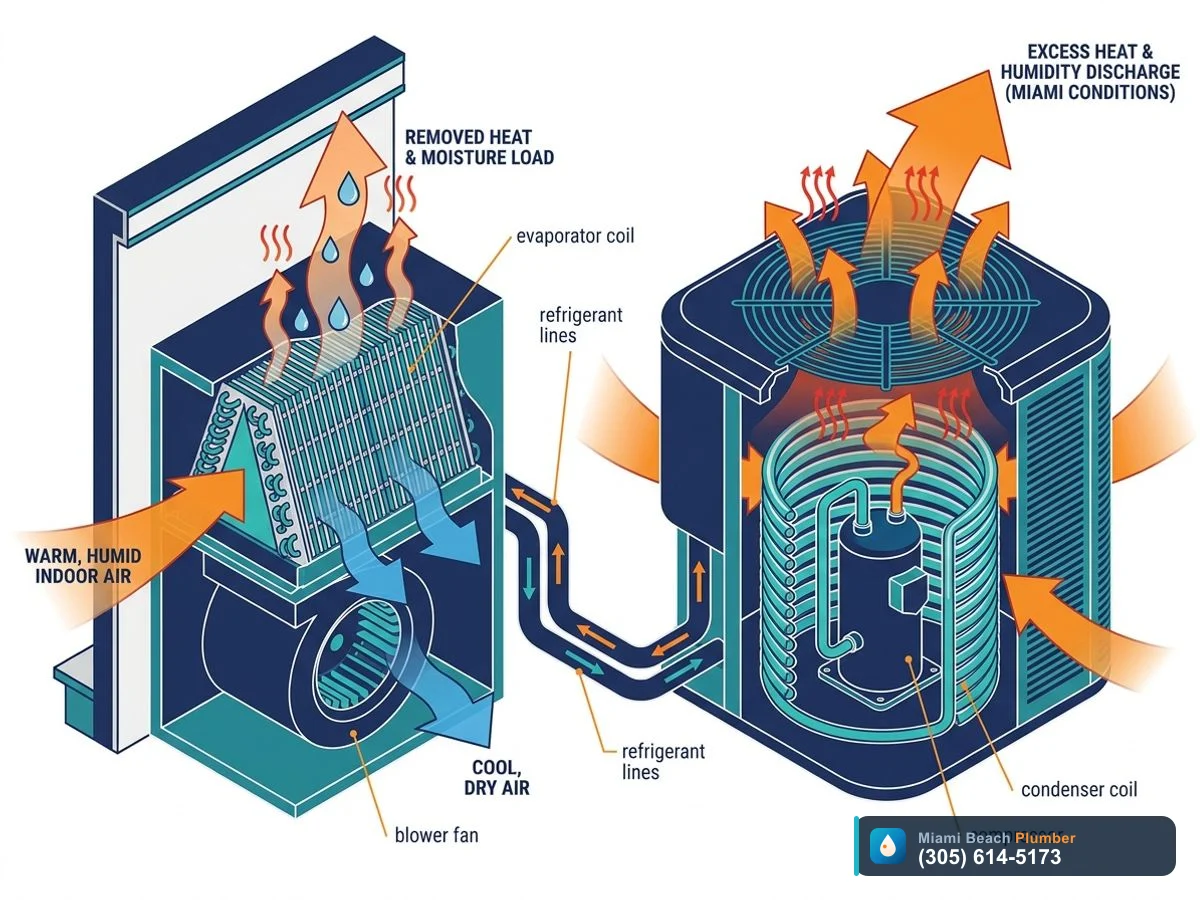
AC blowing warm air vs weak cooling how to tell the difference
Not all “AC not cooling” complaints are the same. Sometimes the system is blowing truly warm air. Other times it is technically cooling, but not enough for Miami’s climate. Telling the difference helps narrow down the cause and avoid unnecessary parts swapping.
If the air from your supply vents feels almost room temperature or even slightly warm, you likely have a major cooling failure. Common causes include a failed compressor, outdoor unit not running while the indoor fan runs, refrigerant very low from a leak, or a reversing valve stuck in heat mode on a heat pump system.
If the air is cool at the vent but your central AC is not cooling the house, think more about airflow and heat gain. You might have closed vents in some rooms, kinked or disconnected ductwork, a dirty indoor coil, or a system that is simply undersized for an addition or enclosed balcony buildout. In older Miami homes, previous owners sometimes added rooms without upgrading the AC.
| Symptom | Likely Cause Range | DIY Friendly? |
|---|---|---|
| Air from vents feels warm, indoor and outdoor units both running | Refrigerant leak, failed compressor, stuck reversing valve, very dirty coils | No, call a licensed HVAC tech |
| Outdoor unit silent, indoor fan running | Tripped breaker, failed capacitor or contactor, bad fan motor | Breaker check is OK, parts require a pro |
| Cool air at vents but home never reaches set temperature | Dirty filter or coil, duct leaks, undersized system, high heat load | Filter and vent checks are DIY, rest needs a pro |
| Intermittent cooling, system cycles on and off quickly | Thermostat issue, low refrigerant, oversize equipment | Thermostat setting check only, diagnosis by pro |
Spend a minute at one of your main supply vents and really feel the air. If it is clearly warmer than usual, turn the system off and schedule service. Running an AC that is blowing warm air can damage the compressor and drive up your power bill fast in Miami-Dade.
Condos, Miami Beach humidity and AC not cooling problems
AC problems in Miami Beach condos and high-rises have a few special twists. Miami Beach air is salty, humid, and hard on metal. Many condo air handlers are tucked in tight closets with poor access, so simple maintenance gets skipped until the AC is not blowing cold air at all.
In condos, a clogged condensate drain is one of the most common calls. The AC pulls moisture from the air and sends it down a small drain line. In our humid climate, algae, mold, and sludge build up quickly. The result can be a safety float switch that shuts your system off or water leaking into the ceiling below.
Another issue in Miami Beach and oceanfront Miami is corrosion on outdoor units located on balconies or roofs. Salt air eats condenser fins and electrical connections. That leads to weak cooling, tripped breakers, or the AC running but not cooling under heavy load. Routine coil cleaning and inspections help extend equipment life in these environments.
If you are a property manager for condos, hotels, or mixed-use buildings in Miami-Dade, regular AC service, leak detection, and emergency plumbing planning are crucial before hurricane season. Flooding, power events, and blocked condensate drains all spike after heavy storms.
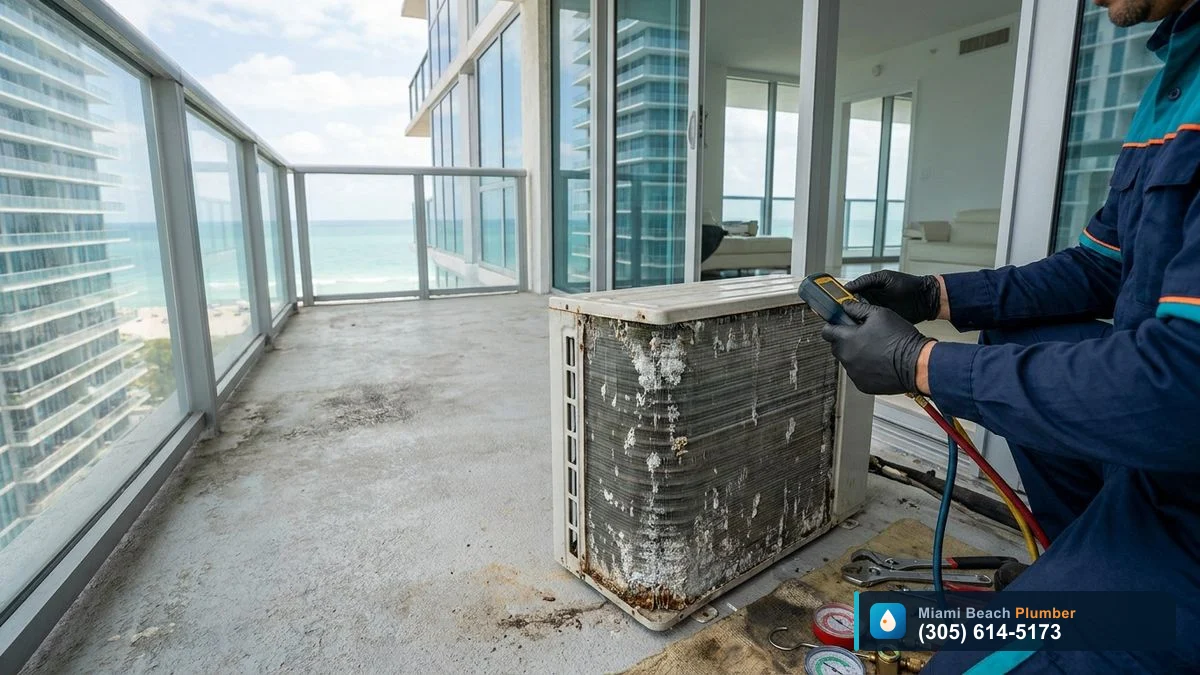
When to call a licensed Miami HVAC pro versus DIY
There are clear lines between safe homeowner checks and work that needs a licensed, insured pro. AC systems combine electricity, refrigerant under pressure, condensation drains, and sometimes gas heat. In Miami-Dade, many repairs also fall under permit rules or HOA requirements.
- Safe DIY checks: Thermostat settings, air filter changes, opening vents, clearing debris around the outdoor unit, and visually checking for ice buildup on accessible lines.
- Pro-only work: Refrigerant charging, leak detection on refrigerant lines, opening electrical panels, replacing capacitors or contactors, cleaning coils with chemicals, clearing condensate lines inside walls, or any work near gas or main electrical panels.
In Miami and Miami Beach, there is another layer. Many repairs in multifamily buildings require coordination with your HOA and may involve Miami-Dade permits, especially if electrical work or new equipment is involved. Using a licensed and insured contractor protects you if something goes wrong inside a wall, above a ceiling, or on a shared roof.
Local companies that handle both air conditioning and emergency plumbing, like Miami Beach Plumber, are especially useful for issues that mix AC and water, such as condensate leaks, slab leaks near line sets, or drain tie-in problems. You get one team that understands cooling, drainage, and Miami-Dade code requirements.
Typical repair options and cost ranges for an AC not cooling
If your AC is not cooling and a basic filter or thermostat fix does not solve it, you are likely looking at a repair visit. While every system and building is different, there are some typical issues and ballpark cost ranges that can help you plan. Always get an upfront quote for your specific unit and situation.
| Common Issue | What A Pro Usually Does | Typical Cost Range* |
|---|---|---|
| Dirty evaporator or condenser coil | Inspect, clean coils, check refrigerant levels and operation | $150, $450 |
| Clogged condensate drain | Clear drain line, flush with cleaning solution, test safety switch | $150, $350 |
| Failed capacitor or contactor | Test electrical, replace faulty part, verify compressor and fan operation | $200, $450 |
| Refrigerant low from a small leak | Leak search, repair if accessible, evacuate and recharge system | $350, $1,200+ |
| Blower motor failure | Diagnose, replace motor, balance airflow, test system | $500, $1,200+ |
| Compressor failure | Confirm failure, replace compressor or discuss system replacement | $1,500, $3,500+ |
*These are rough Miami-Dade ballpark ranges. Brand, capacity, condo access, permit needs, and roof work can all change pricing. Always get an upfront written estimate.
For property managers handling multiple units or commercial spaces, it is often smarter to plan scheduled maintenance and leak detection before the first major heat wave. Catching a weak capacitor or a slowly clogging drain pan in April is far cheaper than handling an AC blowing warm air at 8 p.m. in August with tenants or guests on site.
Some plumbing-focused issues that look like AC failures, such as water stains near air handlers, damp slabs, or mysterious warm spots, can actually be hidden pipe leaks. In those cases, combining leak detection, emergency plumbing, and AC diagnostics is the most efficient way to protect your building.
How to safely troubleshoot an AC not cooling before calling a pro
- Set thermostat to cool and auto fan. Confirm the thermostat is on COOL mode with the fan set to AUTO, and lower the set temperature at least 3 to 4°F below the current room temperature.
- Check the air filter and replace if dirty. Turn the system off, remove the air filter at the return grille or air handler, and replace it if it looks clogged, gray, or you cannot see light through it.
- Make sure vents and returns are open. Walk through the home or condo, open closed supply vents, and clear furniture, rugs, or boxes away from return grilles so air can move freely.
- Inspect the outdoor unit for airflow. Look at the outdoor condenser while the system is running. Confirm the fan is spinning and gently clear leaves, trash, or plants from around the unit without opening panels.
- Check for ice on lines or the indoor unit. If you see ice on refrigerant lines or the indoor coil, turn the AC to OFF and set the fan to ON to help it thaw, then schedule service with a licensed HVAC technician.
If any step involves gas, electrical wiring, sewage or opening a wall, stop and call a licensed pro at (305) 614-5173.