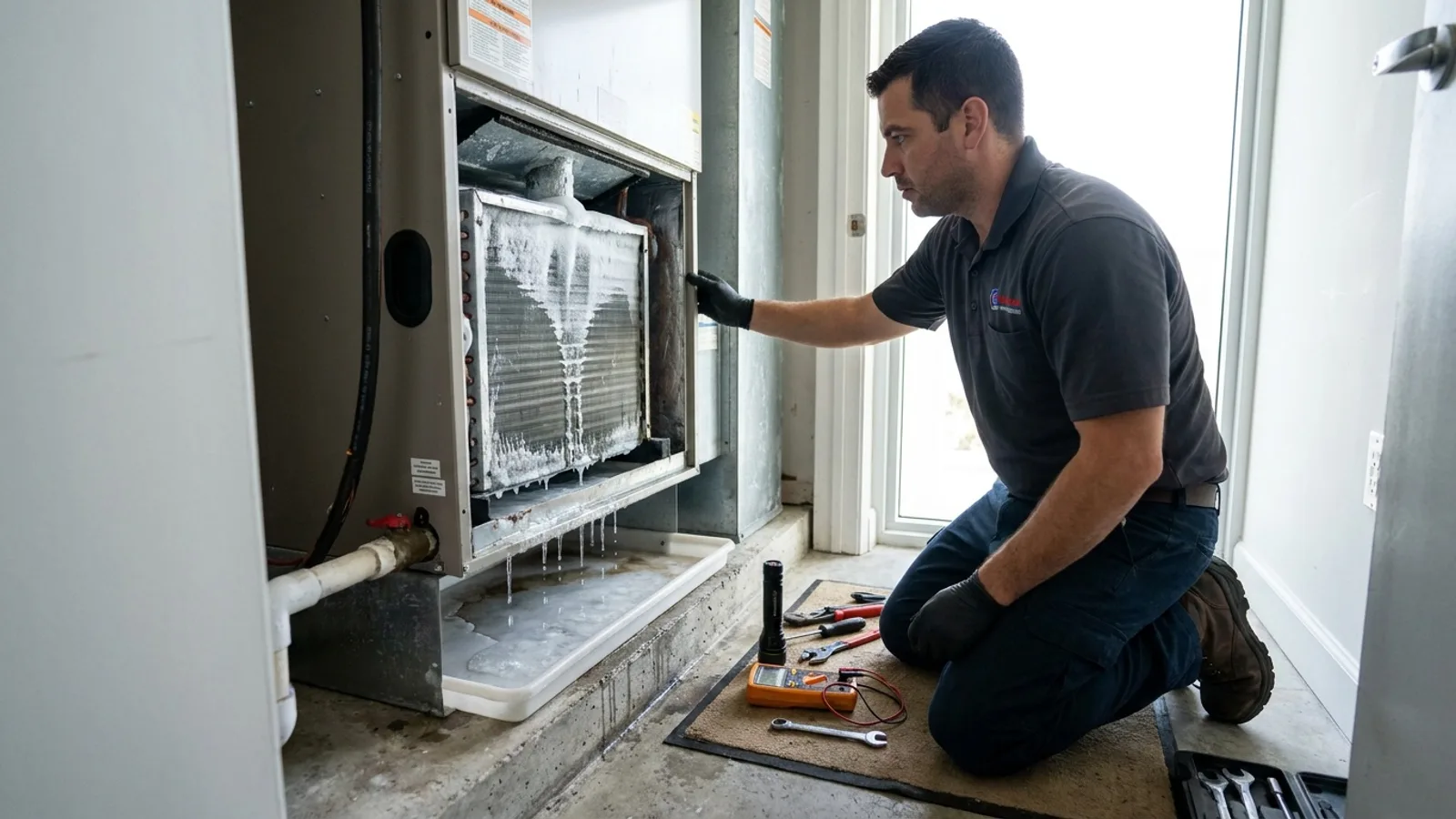
An AC frozen evaporator coil usually means low airflow or low refrigerant. Common causes are dirty filters, blocked vents, clogged condensate drains, or a refrigerant leak. Turn the system off, let the ice fully thaw, change the filter, and restart on “fan.” If it refreezes, call a licensed HVAC technician.
If you see a block of ice on your AC unit in Miami or Miami Beach, especially on the air handler or copper lines, your system is not working correctly and can be damaged if you keep running it frozen.
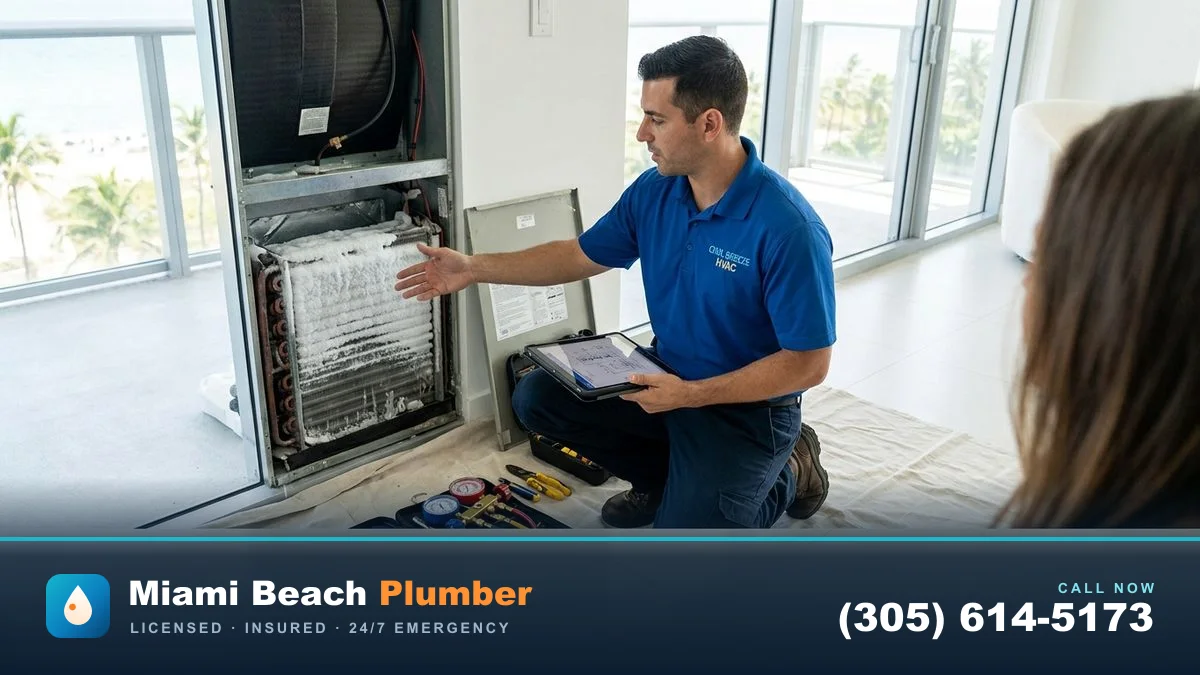
How To Know Your AC Has A Frozen Evaporator Coil
Most Miami homeowners do not spot the evaporator coil itself, because it sits inside the air handler, usually in a closet, attic, or condo mechanical room. You notice symptoms first, long before you see actual ice.
Common signs of an AC frozen evaporator coil in Miami and Miami Beach include:
- AC runs nonstop but the air from the vents is warm or barely cool
- Weak airflow from supply vents, especially on upper floors or distant rooms
- Visible ice on the AC unit lines, usually the thicker insulated copper pipe near the air handler or outdoor unit
- Water leaking from the air handler, ceiling stains, or a wet AC closet after the unit shuts off
- Unusual hissing or bubbling noises from the indoor unit
- Thermostat temperature not dropping, even at night
If you open the air handler panel, you may see the evaporator coil packed in ice or frost. In many Miami Beach condos, the HOA or building rules do not allow residents to open panels without a licensed tech, so pay close attention to the symptoms above.
In multi-story homes and high-rise condos across Miami-Dade, ice can lead to water leaks that drip into units below. Property managers should treat repeated freezing as an urgent maintenance issue, not something to ignore until “after season.”
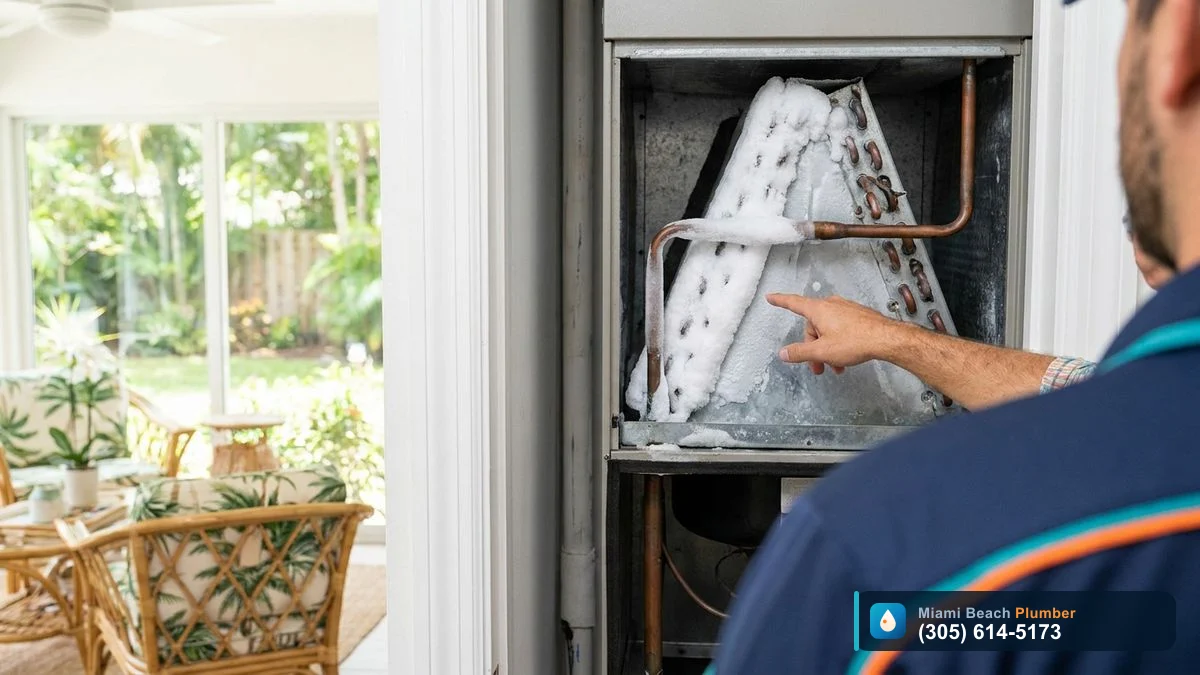
Why Your AC Evaporator Coil Freezes In Hot Miami Weather
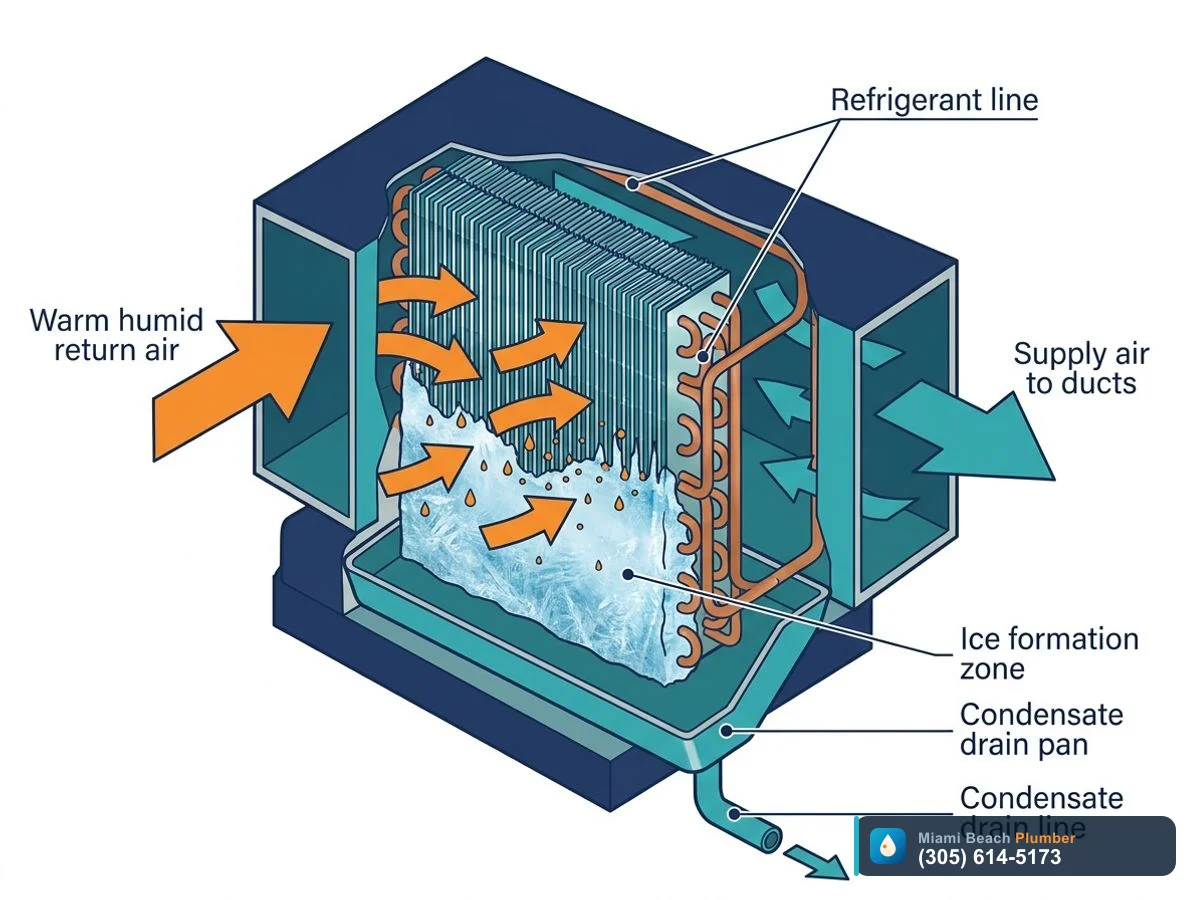
It feels backwards. You are in Miami humidity and heat, and somehow your AC is freezing up. To understand why is my AC frozen, it helps to know one key point: the evaporator coil must stay above 32°F. If the coil temperature drops below freezing, the moisture in our humid Miami air turns to ice instead of draining as water.
Two things drive coil temperature: airflow and refrigerant behavior. If either is off, you get a frozen AC coil.
Most common causes in Miami and Miami Beach
- Dirty or clogged air filter reduces airflow over the coil, so it gets too cold and freezes.
- Blocked supply or return vents from furniture, rugs, or closed doors choke off airflow.
- Dirty evaporator coil with dust and bio-growth (very common in humid Miami) acts like insulation and disrupts heat exchange.
- Blower motor or fan issues such as a failing motor, loose belt in older handlers, or low fan speed.
- Low refrigerant from a leak causes pressure to drop and coil temperature to fall below freezing.
- Thermostat set too low, sometimes below 70°F, forces long run times and can contribute to icing in marginal systems.
- Clogged condensate drain in our algae-prone, humid environment, which can back water up around the coil and affect operation.
In older Miami homes with original ductwork or in Miami Beach condos with tight mechanical closets, poor return air design is also common. Starved return air makes the system pull harder through any little gap, dropping pressure and helping the evaporator dip below freezing.
Is It Safe To Thaw A Frozen AC Coil Yourself?
If you are searching for how to thaw a frozen AC coil, you probably want your cooling back fast and do not want to damage anything. The good news is that the basic thawing process is usually safe for homeowners, as long as you stick to low risk steps and do not open refrigerant lines or electrical compartments.
The core idea is simple: stop the cooling, keep the fan running, and give the ice time to melt. Do not chip at the ice, and do not use a heat gun or hair dryer on the coil. Mechanical stress or sudden temperature swings can crack the coil or damage fins.
There is one more safety piece for Miami and Miami Beach homes. As the ice melts, you can suddenly get a lot of water, especially if the coil was a solid block of ice. In townhomes, mid-rise condos, and older Miami-Dade homes with air handlers in closets over finished spaces, this can overflow the drain pan and soak drywall or floors.
Basic thawing and filter checks are safe. Anything beyond that, especially repeated freezing, refrigerant issues, or electrical trouble, needs a licensed technician.
Step By Step: How To Thaw A Frozen AC Coil Safely
This process is for central AC systems in Miami-Dade homes and condos where the air handler is accessible and not actively flooding. It will not fix the root cause, but it gets your system thawed so a tech can diagnose it without a block of ice in the way.
| Step | What to do | Why it helps |
|---|---|---|
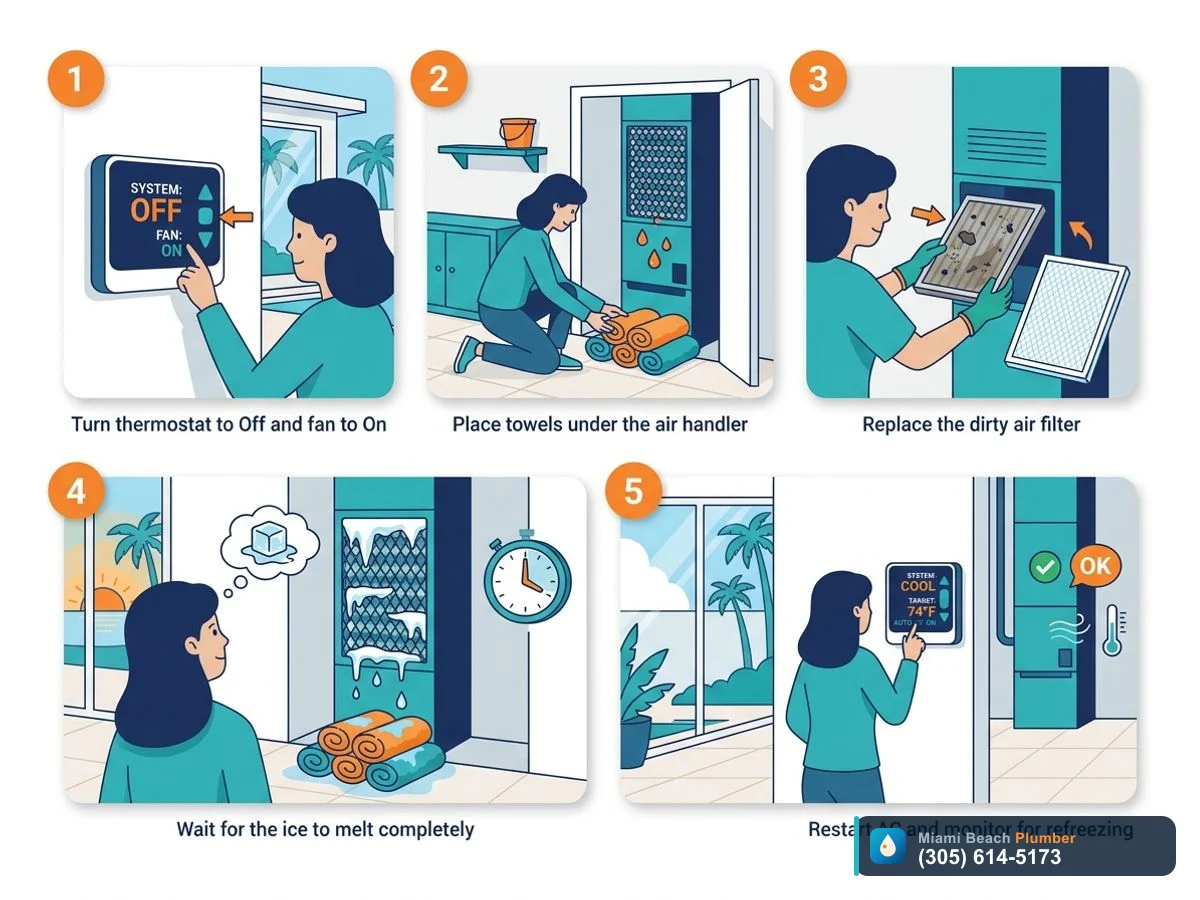
| 1 | Set thermostat to "Off" and fan to "On" | Stops cooling so coil can warm up, keeps air moving to melt ice slowly |
| 2 | Protect nearby floors or ceilings | Prepares for dripping water as the ice melts |
| 3 | Check and replace the air filter | Restores airflow, a major cause of a frozen AC coil |
| 4 | Let the system thaw for 4 to 24 hours | Ensures all ice on the AC unit and coil is gone before cooling again |
| 5 | Restart in "Cool" mode and monitor | Checks if the freezing was a one-time airflow issue or a deeper problem |
Plan for 4 to 24 hours of thaw time depending on how much ice is present and how humid it is. In Miami summers, a solid block can easily take most of a day to fully melt.
If the coil freezes again within a day or two after thawing and changing the filter, that points to a deeper issue like low refrigerant, a failing blower, or ductwork problems. At that point, stop DIY efforts and schedule a licensed HVAC inspection.
Common Causes Of A Frozen AC Coil In Miami-Dade Homes And Condos
After you thaw the system, the real question is why the frozen AC coil happened in the first place. In our Miami climate, a few patterns show up again and again.
Airflow and maintenance related causes
- Dirty filters: In Miami-Dade, most homes need filters changed every 30 to 60 days, not "every 6 months" like cooler climates. Pets, construction dust, and beach sand shorten that even more.
- Dirty evaporator coil: Humid air leads to sticky dirt and biofilm on the coil. This insulates it and disrupts airflow. A professional coil cleaning often fixes recurring icing and musty smells.
- Blocked returns: Furniture pushed against wall returns, or closet doors kept closed around the air handler, starve the system of air and drive coil temperature down.
- Improperly sized filters: Using a filter that does not fit right, or a very restrictive high-MERV filter on a system that was not designed for it, can choke airflow.
Mechanical and refrigerant related causes
- Blower problems: A weak blower motor, slipping belt, or failing capacitor means insufficient air across the coil.
- Refrigerant leak: Very common in older equipment, especially near the coil. Low charge lowers pressure and coil temperature, which leads to ice on the AC unit and suction line.
- Thermostat or control issues: Short cycling or improper staging can contribute to icing in marginal systems.
- Improper system sizing: Oversized units short cycle, never dehumidify properly, and can have icing problems in some setups.
In coastal areas like Miami Beach, salt air can accelerate corrosion on outdoor units and line sets. That can lead to small refrigerant leaks that show up to you as repeated freezing or poor cooling. In many older Miami homes and condos, we also see rusted drain pans that overflow when coils ice and thaw repeatedly, causing ceiling damage and mold concerns.
Preventing Frozen AC Coils In Miami’s Heat And Humidity
Once you have dealt with a frozen coil, you probably do not want to deal with it again in the middle of August or during hurricane season. Prevention is mostly about airflow, drainage, and timely professional service.
Practical steps you can take
- Stay on a real filter schedule: In Miami-Dade, change 1-inch filters every 30 to 60 days. Larger 4 to 5 inch media filters can go 3 to 6 months, but check monthly during summer.
- Keep returns and supplies clear: Do not block wall grills with furniture or curtains. Leave a good gap under bedroom doors so air can return easily.
- Use reasonable thermostat settings: Target 74 to 78°F for most homes. Constantly pushing for 68°F in Miami humidity can stress undersized or older systems.
- Flush the condensate drain line: Many owners safely pour a cup of distilled white vinegar into the accessible drain line cleanout every 1 to 2 months to slow algae growth.
- Schedule annual AC service: A licensed tech can clean the evaporator coil, check refrigerant levels, inspect the blower, test the safety float switch, and clear the drain line.
In Miami Beach condos and high-rise buildings, coordinate with your HOA or property manager. Many buildings have rules for condensate drain tie-ins, drain pan float switches, and AC replacement. Making sure your system is properly trapped, drained, and permitted under Miami-Dade rules helps prevent leaks and code issues.
Regular attention to AC, drains, and potential leaks all work together. Licensed local companies like Miami Beach Plumber handle Air Conditioning, Drain Cleaning, and Leak Detection across Miami-Dade, which means we often catch AC-related drain and water issues before they become ceiling repairs.
When To Call A Licensed Miami HVAC Plumber For A Frozen Coil
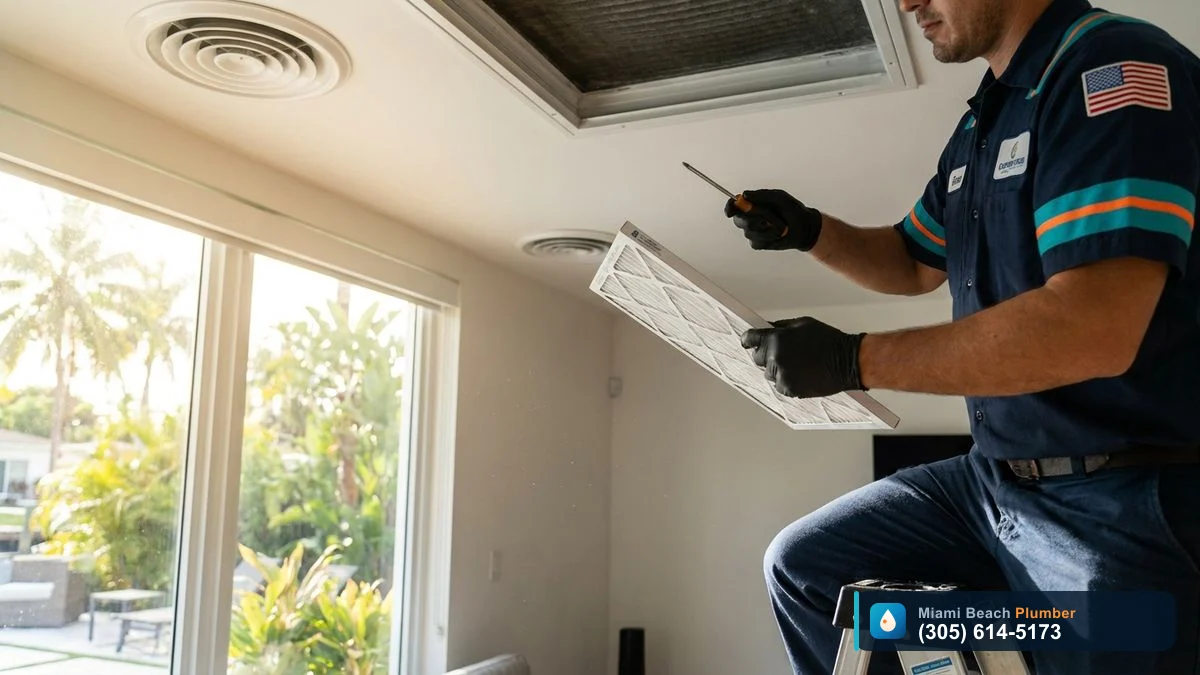
There is a big difference between a one-time freeze from a dirty filter and a system that ices up every week. Knowing when to stop DIY and call a pro can save you from a burned-out compressor or water damage.
Call a licensed technician right away if:
- The coil freezes again within 24 to 48 hours of thawing and changing the filter
- You see water stains on ceilings, walls, or below the air handler
- The safety float switch is tripping repeatedly and shutting the system down
- You hear hissing, bubbling, or notice an oily residue around refrigerant lines or the coil
- Your breaker trips when the system starts or runs, or the blower will not come on
- You live in a condo or multi-unit property and water may leak into units below
In Miami-Dade, especially in multi-story homes, condos, and hotels, a frozen evaporator coil is more than a comfort problem. It is connected to drainage, building structure, and sometimes mold issues if leaks are missed. Property managers in Miami and Miami Beach should treat frozen coils and AC leaks as priority work orders.
Licensed and insured local contractors can diagnose whether your frozen AC coil is a simple airflow fix or a sign of a failing system. If we find related issues like condensate backups, slab leaks, or drain line blockages, services like professional Drain Cleaning and Leak Detection keep small AC issues from turning into major water damage.
How to safely thaw a frozen AC coil in a Miami home or condo
- Shut off cooling at the thermostat. Set the thermostat mode to "Off" so the compressor stops running, and set the fan to "On" to move air across the coil.
- Protect the area from meltwater. Place towels, a shallow pan, or plastic sheeting under or around the air handler or closet to catch drip water as the ice melts.
- Check and replace the air filter. Locate the return or air handler filter, remove it, and replace it with a correctly sized, clean filter rated for your system.
- Let the system thaw completely. Leave the system off in cooling mode for 4 to 24 hours, fan running, until all visible ice on the lines and coil (if visible) is gone.
- Restart and monitor operation. Set the thermostat back to "Cool" and your normal temperature. If the coil ices again, or airflow stays weak, schedule a licensed HVAC inspection.
If any step involves gas, electrical wiring, sewage or opening a wall, stop and call a licensed pro at (305) 614-5173.