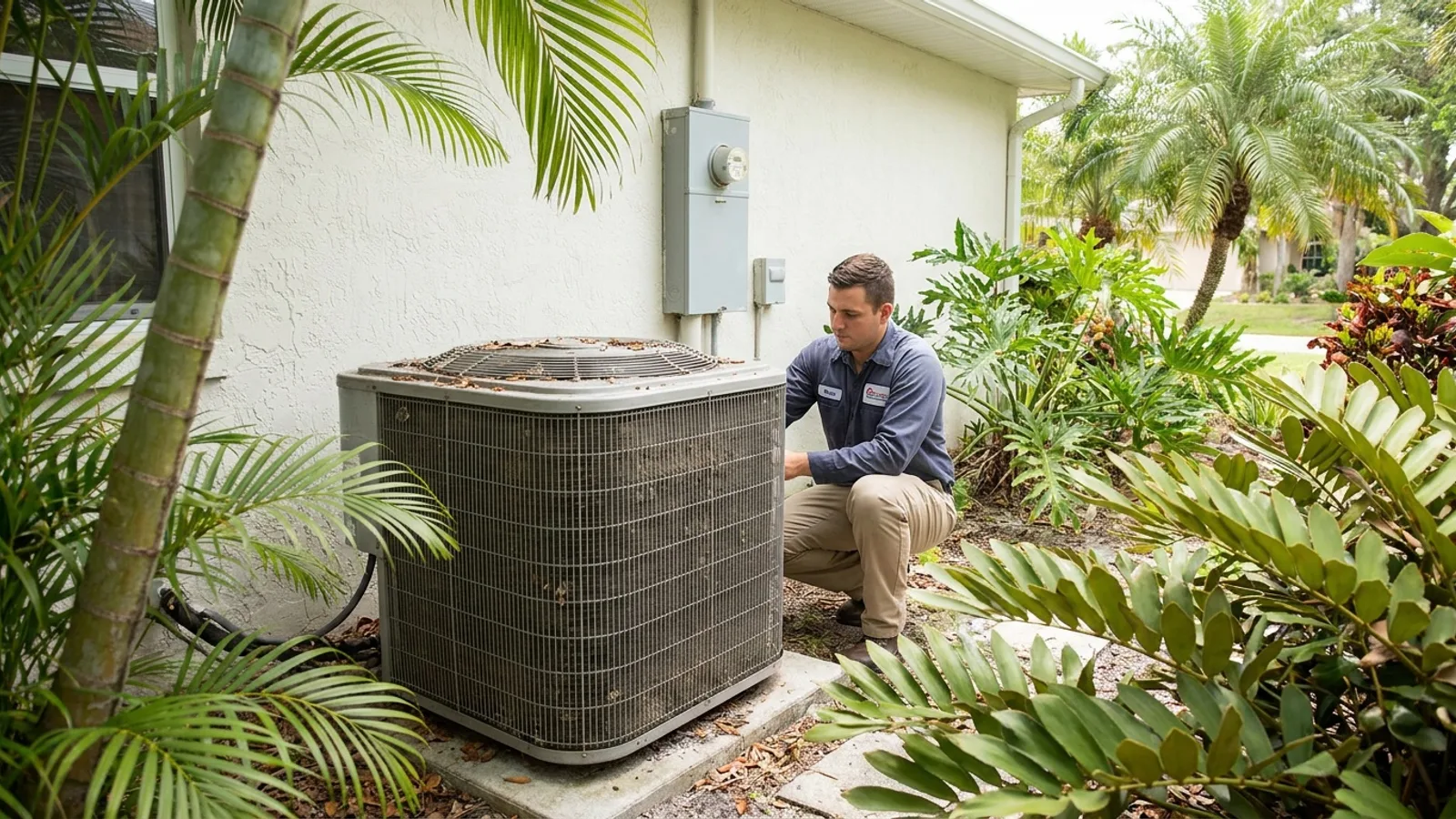
An AC tripping the breaker is usually caused by a failing compressor, dirty condenser coil, clogged air filter, weak breaker, loose wiring, shorted components, or low refrigerant that makes the unit work too hard. You can safely check filters and the outdoor unit for blockage. Electrical or refrigerant issues need a licensed technician.
AC tripping the breaker in the middle of a hot Miami afternoon is more than a nuisance. It is usually a safety response that prevents overheating, fire risk, or damage to your air conditioner, so it should never be ignored or repeatedly reset without understanding why it is happening.
What It Means When Your AC Keeps Tripping the Breaker
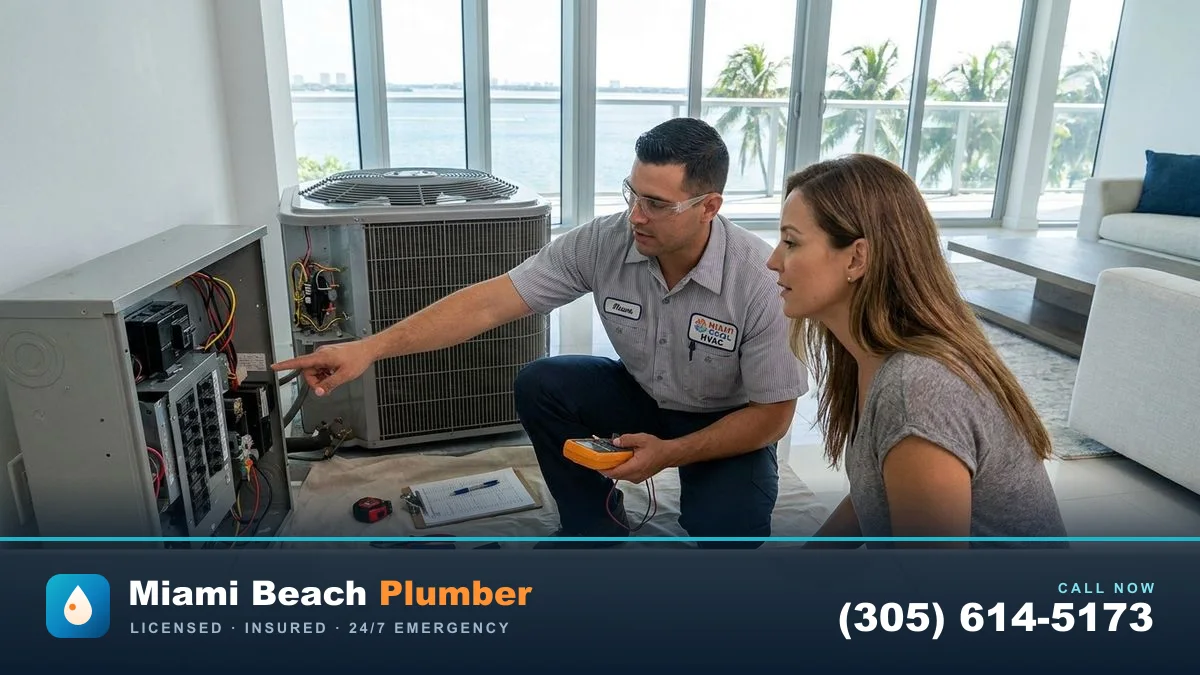
If your air conditioner keeps tripping the breaker, the system is pulling more electrical current than the circuit can safely handle. The breaker shuts off power to prevent overheating, melted wires, and potential fire. In our Miami and Miami Beach climate, this usually happens during the hottest part of the day when your AC is working hardest.
Typical symptoms include the AC running for a few minutes then shutting off, the indoor fan working but the outdoor unit silent, or the breaker in your electrical panel popping every time the AC starts. In condos and high-rises, you may also see a separate AC disconnect near the balcony or rooftop unit tripping.
In Miami-Dade, where AC units often run 10 to 11 months a year, breaker trips are common once equipment or wiring starts to age. Salt air near the beach, humidity, and constant load all speed up wear. The good news is that the pattern of the trip, for example the AC trips breaker when it starts versus after running for 10 minutes, gives strong clues about the cause.
Main Reasons an Air Conditioner Trips the Breaker in Miami
If you are asking "why does my AC trip the breaker" in a Miami or Miami Beach home, you are usually looking at one of a handful of issues. Some are simple maintenance problems. Others require a licensed HVAC or electrical professional.
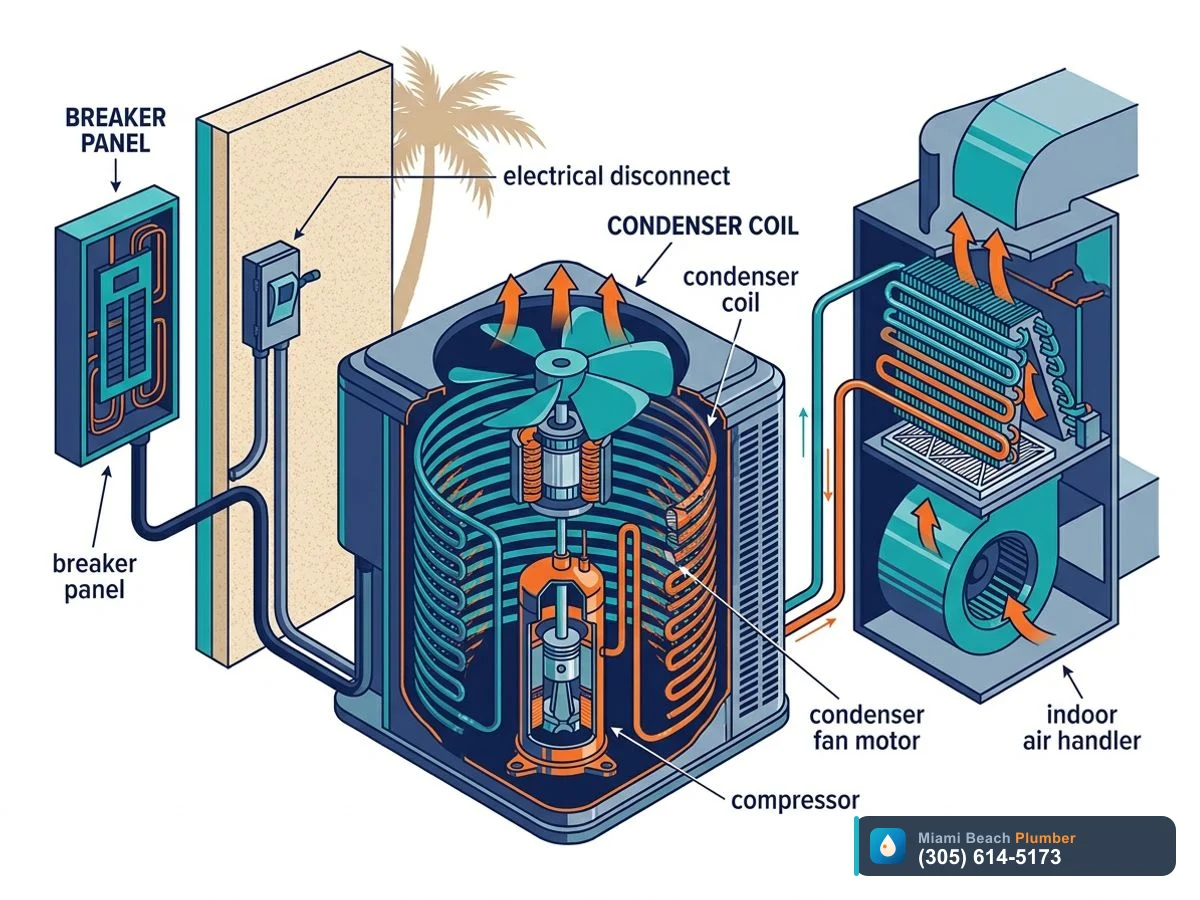
- Dirty condenser coil or blocked outdoor unit The outdoor coil gets coated with dust, grass, salt, and sand. The AC works harder, pulls more amps, and trips the breaker.
- Clogged air filter or restricted airflow In Miami-Dade's high humidity, filters load up fast with dust and mold. Low airflow overheats the blower or makes the system work beyond design.
- Failing compressor or fan motor An aging compressor, especially in older Miami Beach condos or homes with original equipment, can draw high current at startup and cause an AC tripping breaker issue.
- Weak or incorrect breaker Breakers wear out. Some older panels in Miami homes were never sized correctly for modern high-efficiency units, especially after an AC upgrade.
- Loose or corroded electrical connections Salt air and humidity corrode lugs and terminals at the disconnect or panel. Loose connections create heat and higher resistance, which increases current draw.
- Short circuits in wiring or components Rodents in attics, water intrusion from storms, or insulation rubbed through by vibration can create shorts that trip the breaker instantly.
- Low refrigerant charge Low refrigerant increases compressor workload. Over time, the compressor starts pulling more amps and may cause the air conditioner to keep tripping the breaker.
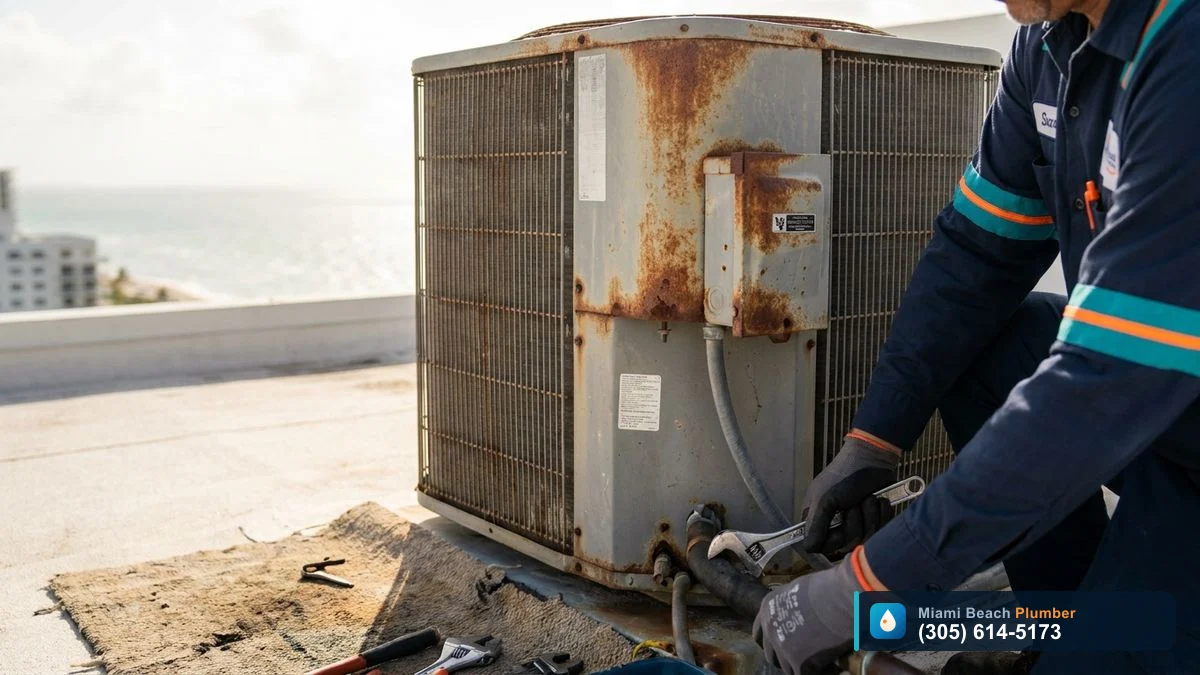
In Miami-Dade, a lot of air conditioning gear is installed on rooftops of mid-rise and high-rise buildings. These units see even more sun, wind, and salt, so issues like corrosion and overheated wires show up earlier than in cooler climates. Regular professional maintenance can prevent many "AC keeps tripping breaker" calls long before they become emergencies.
Why Your AC Trips the Breaker Right When It Starts
One very specific symptom is the AC trips breaker when it starts. You flip the thermostat to cool, the system tries to come on, you may hear a brief hum from the outdoor unit, and then the breaker clicks off almost immediately. That pattern points to startup and inrush current issues rather than simple dirt or airflow problems.
Common causes of a breaker trip at startup include:
- Hard-starting compressor As compressors age, especially in older Miami homes on original equipment, they can struggle to start. They pull a big spike of current and the breaker reacts.
- Shorted start capacitor or contactor Electrical components that help the compressor and fan start can fail, creating sudden high current or a short circuit that trips the breaker instantly.
- Wrong size breaker or wire for the unit If the AC was replaced but the breaker or wiring was never updated, the initial surge may be beyond what the circuit can handle, even if the unit is properly sized for the home.
- Seized fan motor A locked outdoor fan or indoor blower motor can cause high amperage the moment power is applied.
In Miami and Miami Beach, AC systems already face high starting loads because they are usually trying to start against hot coils and high indoor humidity. On really hot August afternoons, startup spikes are even higher. A hard-start kit can sometimes help a marginal compressor, but that decision belongs with a pro who can measure actual startup amperage, compare it to the nameplate rating, and make sure the fix is safe and code compliant.
What You Can Safely Check Before Calling a Pro
There are a few things homeowners, condo owners, and property managers in Miami-Dade can safely check before calling for service. These checks will not fix every air conditioner tripping breaker issue, but they can rule out simple problems and give your technician better information.
- Check the air filter Turn the thermostat to "off". Locate the filter at the return grille or air handler. If it is visibly dirty or sagging, replace it with the correct size and airflow rating. In Miami, filters often need changing every 30 to 60 days due to humidity and dust.
- Inspect the outdoor unit for blockage Look at the condenser unit outside or on the balcony. Remove leaves, trash, and debris from around it. Make sure there is at least 2 feet of open space around the unit for airflow. If the fins are matted with dirt, note it for your technician, but do not open panels or use a pressure washer.
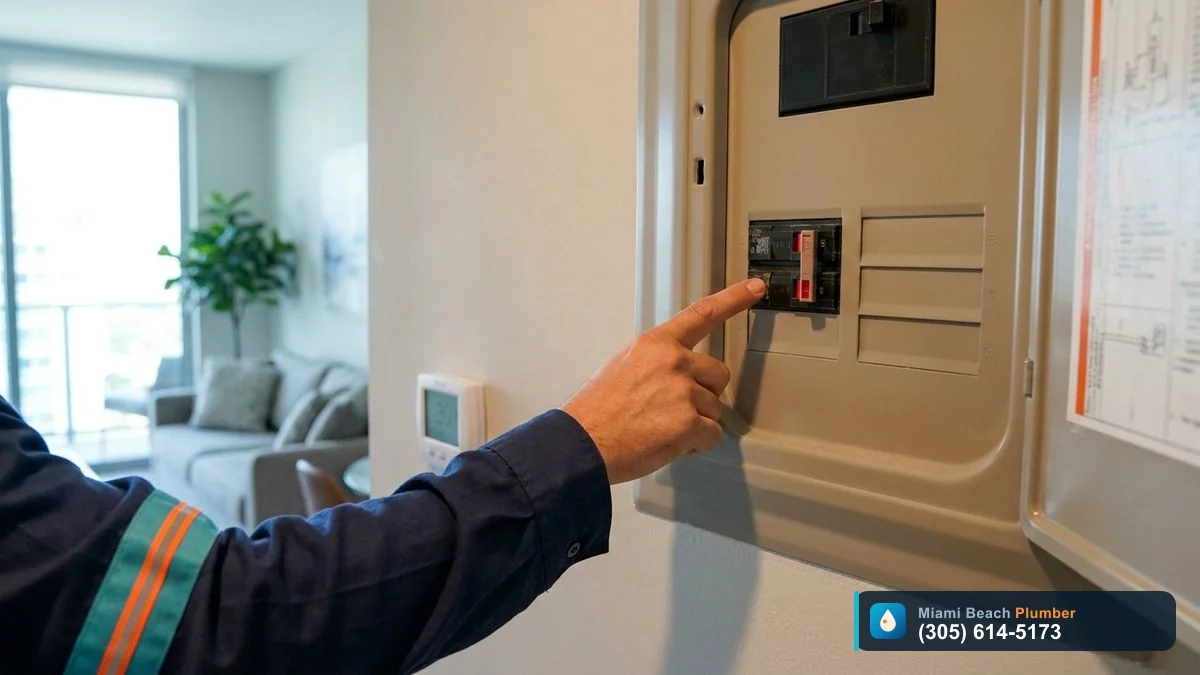
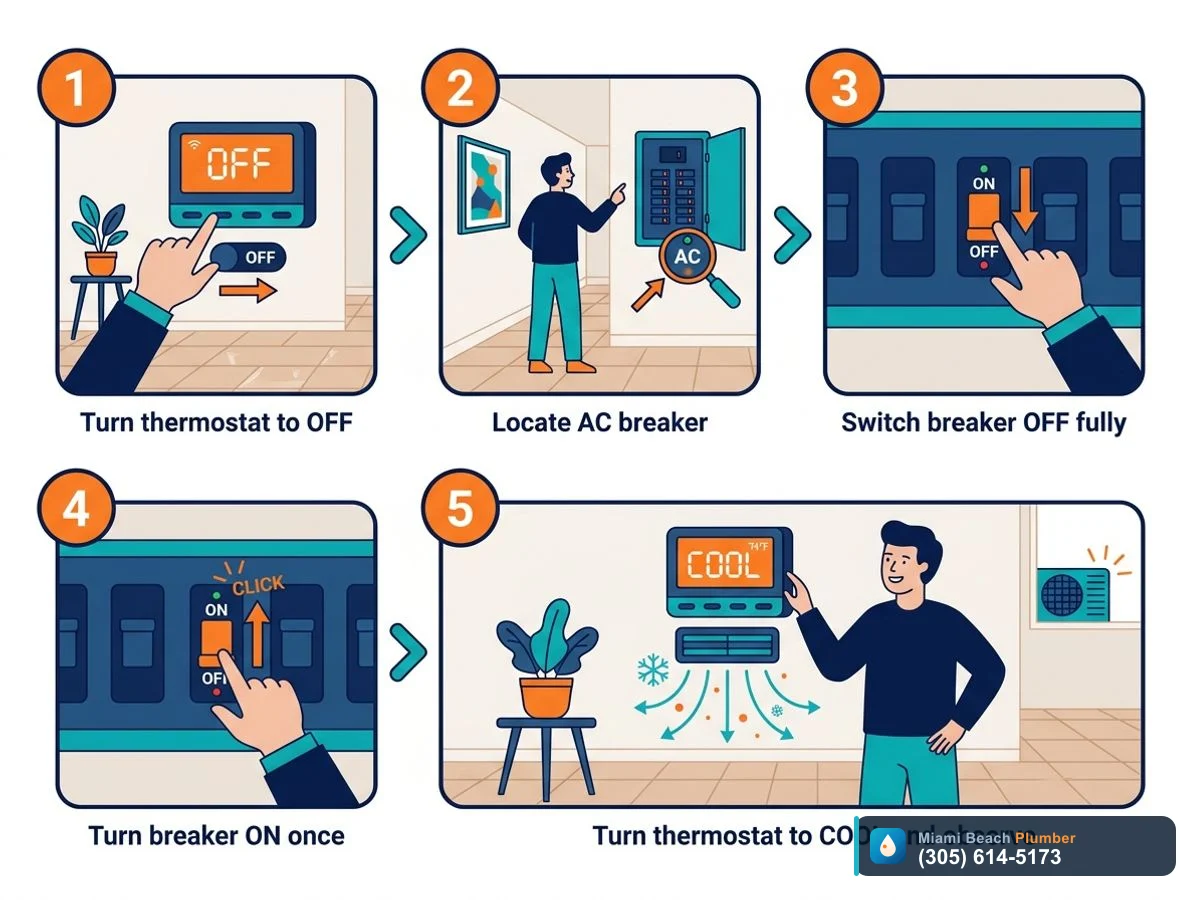
- Note the breaker behavior At your electrical panel, identify which breaker controls the AC. You can reset it once, by pushing it firmly to the off position, then back on. If it trips again during the same cycle or immediately at startup, leave it off and call a pro.
- Check other big loads In some older Miami homes and small condos, the AC may share service with other heavy loads. Avoid running the oven, dryer, and AC all at once if you are right on the edge of your service capacity, then see if the trip repeats.
These safe checks will not repair shorts, compressor problems, or weak breakers, but they prevent wasted service calls for obvious issues like a fully blocked condenser or a completely clogged filter. If the air conditioner keeps tripping the breaker after you have done these basic steps, it is time for a licensed technician to test the electrical and refrigerant side.
Common Professional Repairs For AC Tripping Breakers
Once simple issues are ruled out, a licensed HVAC or plumbing company that also handles air conditioning, like Miami Beach Plumber, will test the system under load. The goal is to match the symptom to an electrical or mechanical cause and fix it before it damages the equipment or starts to affect wiring inside walls or conduits.
Here are some of the most common professional fixes for AC tripping breaker calls in Miami-Dade:
| Likely Cause | Typical Fix | Ballpark Cost (Miami-Dade) | Notes |
|---|---|---|---|
| Dirty condenser coil | Professional coil cleaning and maintenance | $150 - $350 | Often part of yearly maintenance visit |
| Weak or undersized breaker | Breaker replacement, check wire size and load | $200 - $450 | Requires licensed electrician or HVAC with electrical license |
| Failing compressor | Compressor replacement or full system replacement | $1,800 - $4,500+ | Decision depends on age and efficiency of existing unit |
| Bad fan motor or blower motor | Motor replacement, capacitor check | $450 - $900 | Common in older Miami and Miami Beach equipment |
| Shorted capacitor or contactor | Component replacement and wiring inspection | $200 - $450 | Often discovered on emergency calls during heat waves |
| Low refrigerant / leak | Leak detection, repair, and recharge | $500 - $1,500+ | EPA rules apply, older R-22 systems may be better replaced |
These are ballpark ranges, and you should always get an upfront quote before approving work. Miami Beach Plumber provides air conditioning service, emergency plumbing, and leak detection in Miami, Miami Beach, and across Miami-Dade with clear pricing and no hidden fees.
On homes with older electrical panels, especially in parts of Miami with 1960s and 1970s construction, a simple AC tripping breaker call can reveal outdated panels, aluminum wiring, or overloaded circuits. In those cases, part of the repair plan may include panel upgrades or dedicated circuits to safely support modern AC loads.
Miami-Dade Factors That Make AC Breaker Trips More Likely
Living in Miami and Miami Beach is hard on air conditioners and electrical systems. Our climate and building styles create specific stresses that make an air conditioner tripping breaker more likely compared to cooler, drier regions.
- High humidity and long runtimes AC units in Miami-Dade run almost year-round to control both temperature and moisture. Long runtimes increase wear on motors, compressors, and wiring.
- Salt air and corrosion Near the water, especially in Miami Beach and along Biscayne Bay, metallic parts corrode faster. Corroded terminals and disconnects heat up, increase resistance, and can cause breakers to trip.
- Rooftop and balcony installations Many condos and hotels have condensers on roofs or exposed balconies. These units see more direct sun, wind-blown debris, and hurricane-driven rain, all of which stress components.
- Older buildings updated in pieces A lot of Miami Beach condos have modern AC equipment tied into older electrical infrastructure. The breaker might be decades old even if the AC is only a few years old.
- Hurricane season and power quality Storms and grid issues can cause voltage drops, surges, and brownouts. Low voltage can make an AC draw higher current trying to start, which may trip the breaker.
These local factors are why routine AC and electrical inspections matter so much here. Catching corrosion, weak breakers, or marginal wiring early can prevent those mid-July calls where the AC keeps tripping breaker and the home is already 85 degrees inside.
When To Call a Licensed Miami-Dade Pro (And What To Expect)
You should call a licensed professional in Miami-Dade as soon as the breaker trips more than once for your AC, or if the AC trips breaker when it starts every time. Repeated trips are a clear sign that something is wrong, and continuing to reset the breaker can damage expensive components.
For homeowners, condo owners, and property managers, here is a simple rule of thumb:
- Safe to check yourself Thermostat settings, air filter condition, visual debris around the outdoor unit, and confirming which breaker is tripping.
- Needs a licensed pro Any work inside the electrical panel, AC disconnect, or equipment control box. Any refrigerant checks or refilling. Opening air handlers, attic units, or rooftop condensers. Diagnosing or replacing compressors, motors, or capacitors.
A company like Miami Beach Plumber, which is licensed and insured, provides air conditioning services along with emergency plumbing and leak detection. That is especially useful in Miami-area buildings where AC issues and plumbing issues often appear together, for example a tripped AC breaker and an overflowing condensate drain or water leak in a closet or hallway.
When you call for service at (305) 614-5173, be ready to share the pattern of the breaker trips, any recent storms or power issues, the age of your AC, and whether you live in a single-family home, a Miami Beach high-rise, or a commercial space like a restaurant or hotel. That context helps the technician arrive prepared to solve the problem on the first visit with same-day service whenever possible.
How to safely reset a tripped AC breaker one time
- Turn the thermostat to OFF. Set your thermostat to OFF so the air conditioner will not try to start while you work at the panel.
- Locate the AC breaker in the panel. Open your electrical panel and find the breaker labeled for the air conditioner or HVAC. It may be a double-pole breaker taking two slots.
- Fully switch the breaker OFF. Move the tripped breaker firmly to the OFF position. Do not force it if it feels stuck or gritty.
- Switch the breaker back ON once. After a few seconds, move the breaker to the ON position. Listen for it to click solidly into place. Do not try more than one reset.
- Turn the thermostat back to COOL and observe. Set the thermostat to COOL and watch and listen. If the AC trips the breaker again, leave the breaker OFF and call a licensed technician.
If any step involves gas, electrical wiring, sewage or opening a wall, stop and call a licensed pro at (305) 614-5173.