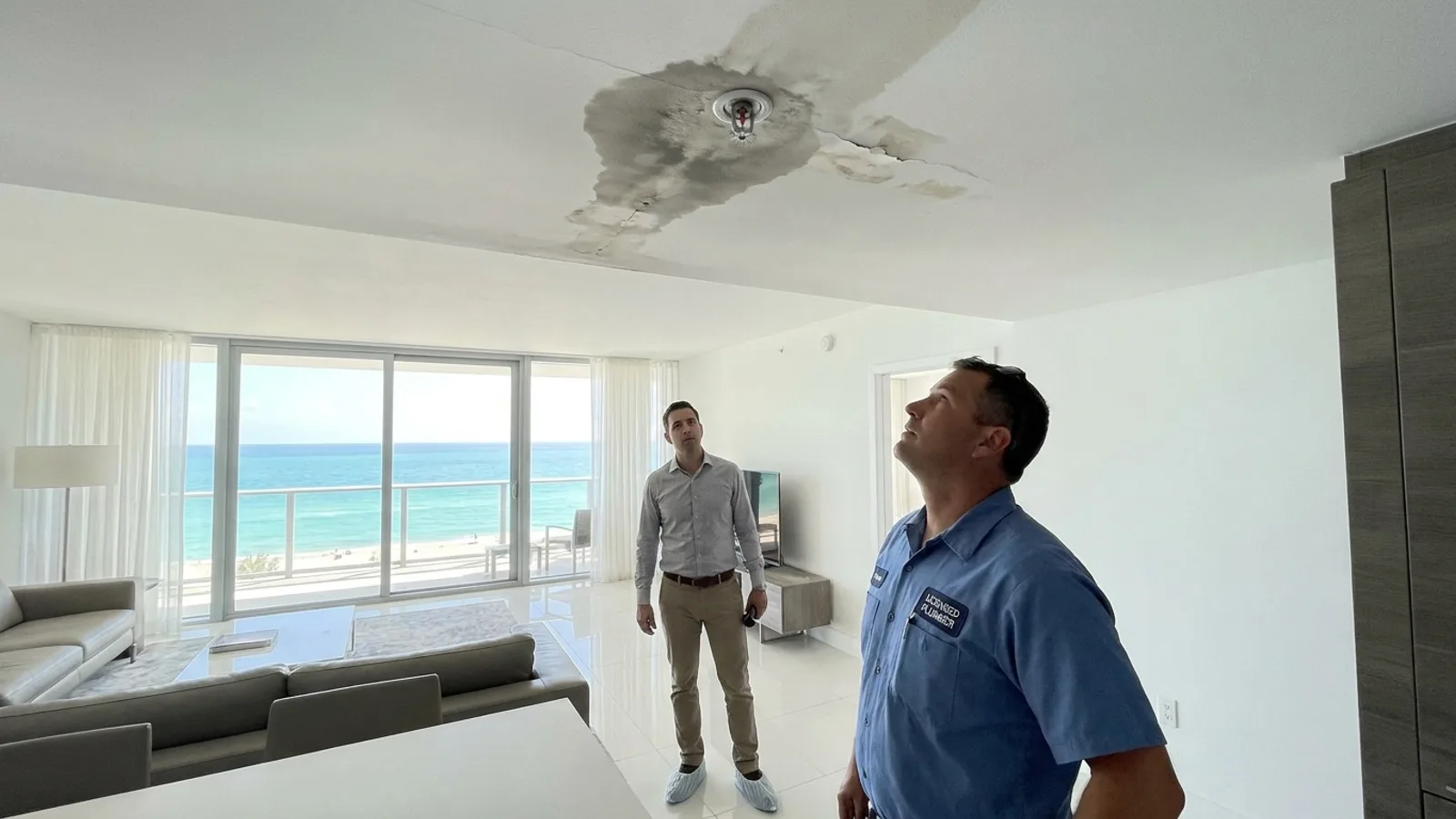
In a Florida condo, the unit owner usually pays to repair damage inside their unit, and the condo association usually pays to repair common elements. Who pays for the leak itself depends on where it originated, the declaration, and Florida Statute 718.111. Insurance and negligence can shift responsibility.
A water leak in a Miami or Miami Beach condo can turn into a stressful blame game fast: unit owner or condo association, upstairs neighbor or HOA, insurance or out-of-pocket. Getting clear on who is responsible in Florida before an emergency hits can save you time, money, and a lot of arguing in the hallway.
How Florida condo law looks at water leaks and damage
Most arguments about a condo water leak in Miami or Miami Beach eventually run into the same question: what does Florida law actually say? The starting point is Florida Statute 718, which governs condominiums. Within that, Florida Statute 718.111(11) talks about insurance and responsibility for certain parts of the building.
Statute 718 does not list every possible leak scenario. Instead, it sets broad rules about what is part of the condominium property (common elements and structural items the association insures) and what is part of the unit (things the owner insures and maintains). Your condo declaration, bylaws, and rules then fill in the details.
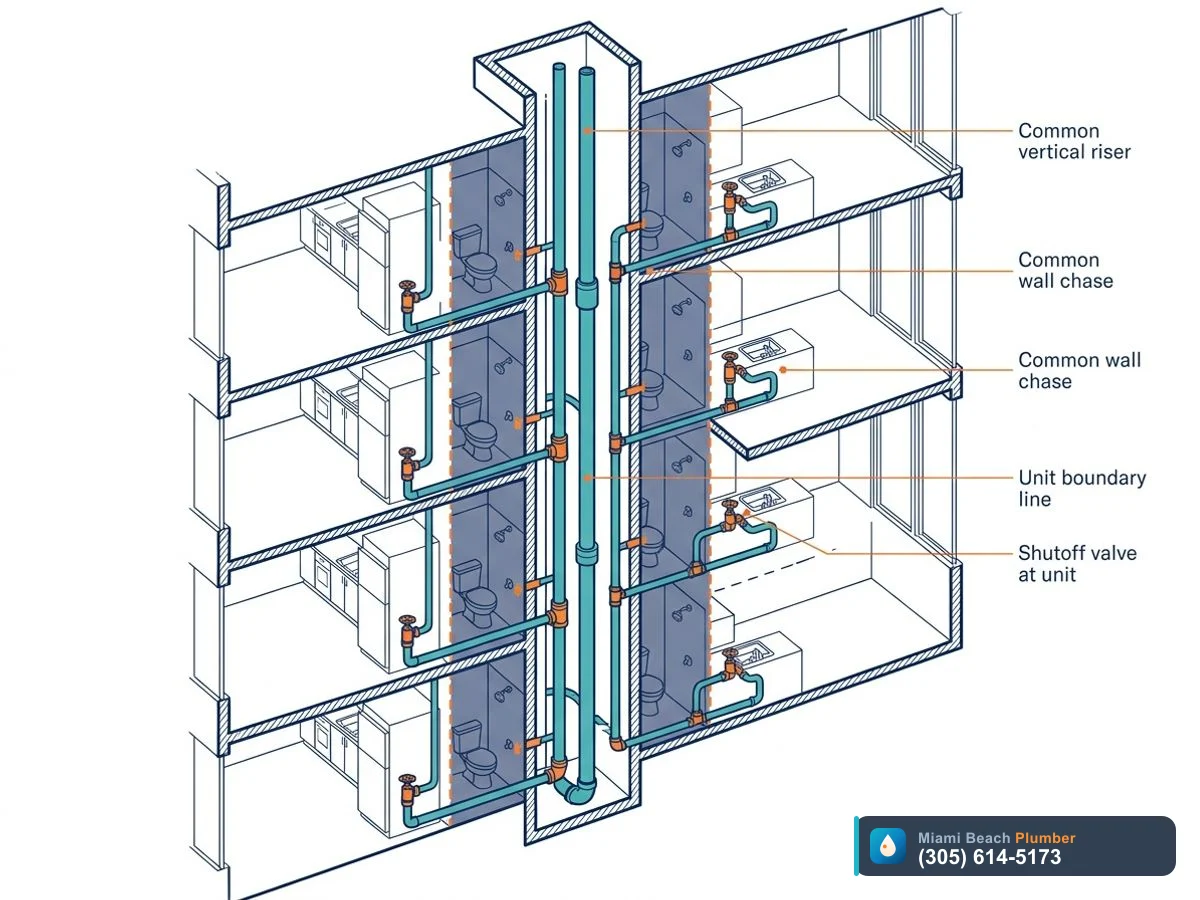
In most Florida condos, including Miami-Dade buildings, the association is responsible for common elements, which typically include the main plumbing risers, building supply lines up to a certain point, roof, exterior walls, and structural slabs. Owners are usually responsible for fixtures, finished surfaces, and equipment serving only their unit, like toilets, faucets, water heaters, and many branch lines inside their walls.
The key point: Florida Statute 718.111(11) mostly deals with who insures what, not exactly who pays in every fight. Responsibility often comes down to three things working together: the statute, your condo documents, and whether anyone was negligent.
Who pays for a condo water leak in Florida common scenarios
Questions like "condo water leak who pays" and "HOA responsible water leak Florida" almost always depend on where the leak started and what it damaged. Here are common situations we see in Miami, Miami Beach, and across Miami-Dade.
| Leak scenario | Typically responsible for repair of source | Typically responsible for damage inside units |
|---|---|---|
| Main vertical plumbing riser in a wall between units bursts | Condo association (common element), subject to condo docs | Each unit owner uses their own insurance for interior finishes; association may cover building elements |
| Unit owner’s water heater supply line fails | Unit owner (unit equipment and lines serving only that unit) | Each affected owner’s insurance, unless negligence shifts responsibility |
| Leaking toilet wax ring in upstairs unit damages ceiling below | Upstairs unit owner (toilet is usually owner’s responsibility) | Downstairs owner’s insurance, possible claim against upstairs owner if negligence proven |
| Roof leak after heavy Miami rain | Condo association (roof is a common element) | Association for building components, owners for interior improvements, based on docs and insurance |
| AC condensate line clogged inside a single unit | Unit owner (serves only that unit), unless docs say otherwise | Owner’s insurance; neighboring units only if negligence is proven |
These are ballpark patterns, not legal guarantees. Every building in Miami-Dade can set its own boundaries in the declaration, within the framework of Florida Statute 718. For example, some associations treat all interior plumbing as a unit responsibility, while others draw the line at the concrete slab or the shutoff valve.
Another major factor is negligence. If an owner ignores a known leak, fails to maintain a water heater far past a reasonable life, or removes a shutoff valve against code, they can be held responsible for damage beyond their own unit. The same applies to an association that ignores repeated reports of a leaking roof or corroded main pipe.
How Florida Statute 718.111 and your condo docs divide plumbing responsibility
To really understand Miami Beach condo plumbing responsibility you have to put Florida Statute 718.111(11) side by side with your building’s declaration and bylaws. The statute says the association’s insurance normally covers the “condominium property,” but not certain parts of a unit like floor coverings, cabinets, and appliances. The condo docs define exactly where the unit ends and the common elements begin.
Most South Florida condo documents use one of these patterns for plumbing:
- Pattern A: Association covers vertical risers, horizontal mains, and any pipe serving more than one unit. Owners cover branch lines and fixtures serving only their unit.
- Pattern B: Association covers plumbing up to the original shutoff valve at the unit boundary. Owners cover everything after that shutoff, including lines inside walls.
- Pattern C: Association covers only main stacks in chases. Owners cover all lines inside slabs and walls, even if buried.
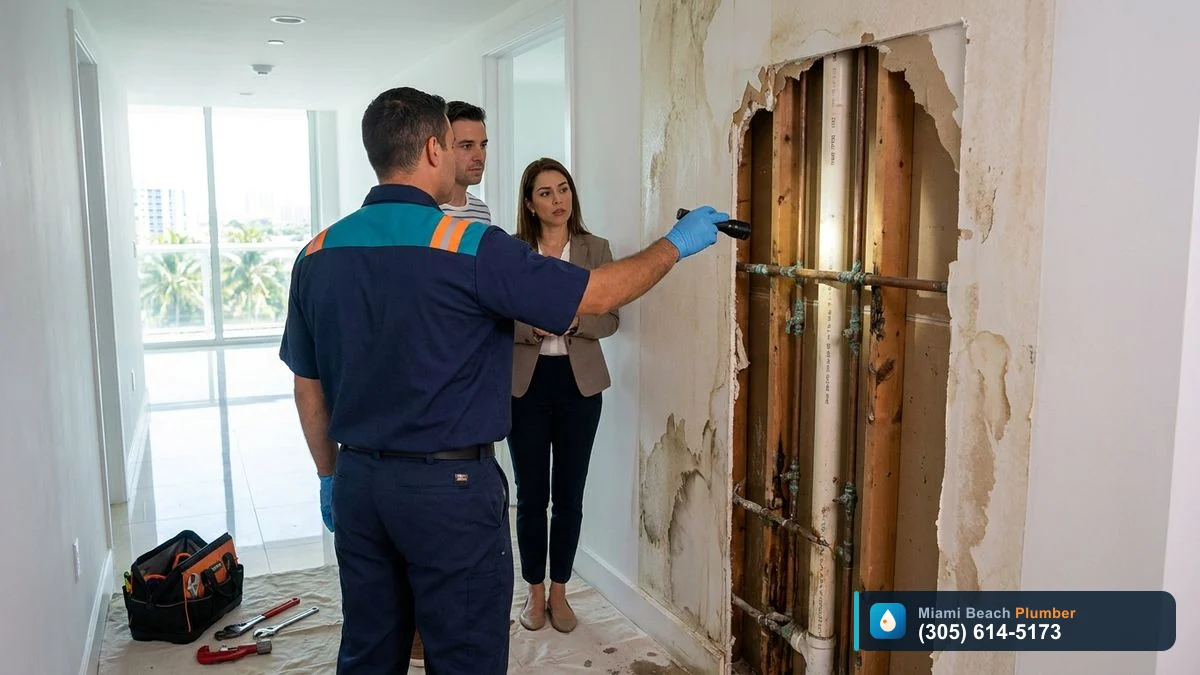
In older Miami and Miami Beach buildings with cast iron waste stacks and galvanized supply lines, we often see leaks in common risers inside shared walls. Those are typically association responsibilities, and they usually require permitting in Miami-Dade plus coordination with several units to open walls and ceilings for access.
For any serious leak, pull out three documents before you start pointing fingers:
- The condo declaration (sometimes called the Declaration of Condominium)
- The bylaws and rules
- The insurance sections that reference Florida Statute 718.111(11)
Look for sections that define “unit,” “common elements,” “limited common elements,” and “maintenance responsibility.” Limited common elements, like certain balcony drains or exterior AC lines that serve only one unit, often create confusion. The docs will normally say whether the association or the unit owner maintains and insures those pieces.
Who pays in a condo association vs owner leak battle
Most disputes around "condo association vs owner leak" are really disputes over three separate buckets of cost: fixing the leaking part, repairing building structure, and restoring interior finishes and belongings. Who pays for each bucket can be different.
- Fixing the leak source: Usually falls to whoever is responsible for that pipe or fixture under the condo docs. Association for common elements, owner for unit components.
- Building structure: Typically the association, including concrete slab, original drywall, insulation, and shared ceilings or chases, but confirm in your declaration.
- Interior finishes and contents: Usually the unit owner’s responsibility, handled through their HO-6 policy (flooring, paint, cabinets, furniture, electronics).
Insurance adds another layer. Florida Statute 718.111(11) expects the association to carry property insurance for the building, and unit owners to carry their own condo unit policies. After a leak, it is common for both policies to be involved. Each carrier will look at the documents, decide what they insure, and sometimes fight with each other.
In Miami and Miami Beach, we see these patterns a lot:
- A main in-wall leak, association repairs the pipe and structural components, owners each open a claim for their flooring and personal property.
- A washing machine hose bursts in one unit, that owner is responsible for the hose and may be responsible for other units’ damage if negligence is shown, but the downstairs unit still works with their own insurer for interior work.
- A recurring leak where the association was warned for months about a failing cast iron stack, then finally the pipe fails. Owners and the association’s insurer may both argue negligence and prior knowledge.
Because these disputes can get legal fast, especially in high-value Miami Beach condos and downtown Miami towers, many owners and associations involve a Florida condo attorney early. A written opinion that ties your specific documents to Florida Statute 718 can be valuable if an insurance claim or reimbursement demand escalates.
Upstairs leak into downstairs unit who is responsible in Florida condos
One of the most emotional problems we see is the classic upstairs leak into the downstairs condo. Ceiling stains, bubbling paint, and angry knocks on the neighbor’s door are common in Miami and Miami Beach buildings with stacked units and aging plumbing.
Florida law does not automatically make the upstairs owner pay for all damage below. The key issues are:
- What exactly failed (toilet, shower pan, AC drain, supply line, or common riser)
- Who has maintenance responsibility for that part under the condo docs
- Whether the upstairs owner was negligent or simply had a sudden accidental failure
If an upstairs owner had a sudden, hidden leak and fixed it promptly, they are often not automatically liable for the downstairs unit’s damage. Each owner generally turns to their own insurance, even if the leak came from above. If the upstairs owner ignored an obvious leak, refused to repair known problems, or performed unpermitted plumbing work, negligence becomes more likely, and they may be on the hook for more than just their own unit.
The association’s role depends on whether the leak involved a common element. For example, if a shared cast iron stack behind both units has rotted out, that usually falls under association responsibility in Miami-Dade condos, and the board will coordinate repairs and work with the association’s insurer.
What to do immediately if you discover a condo water leak in Miami-Dade
Responsibility debates can wait a few hours. Stopping the water and protecting health should come first, especially in our humid Miami climate where mold grows quickly. What you do in the first hour can prevent thousands of dollars in extra damage.
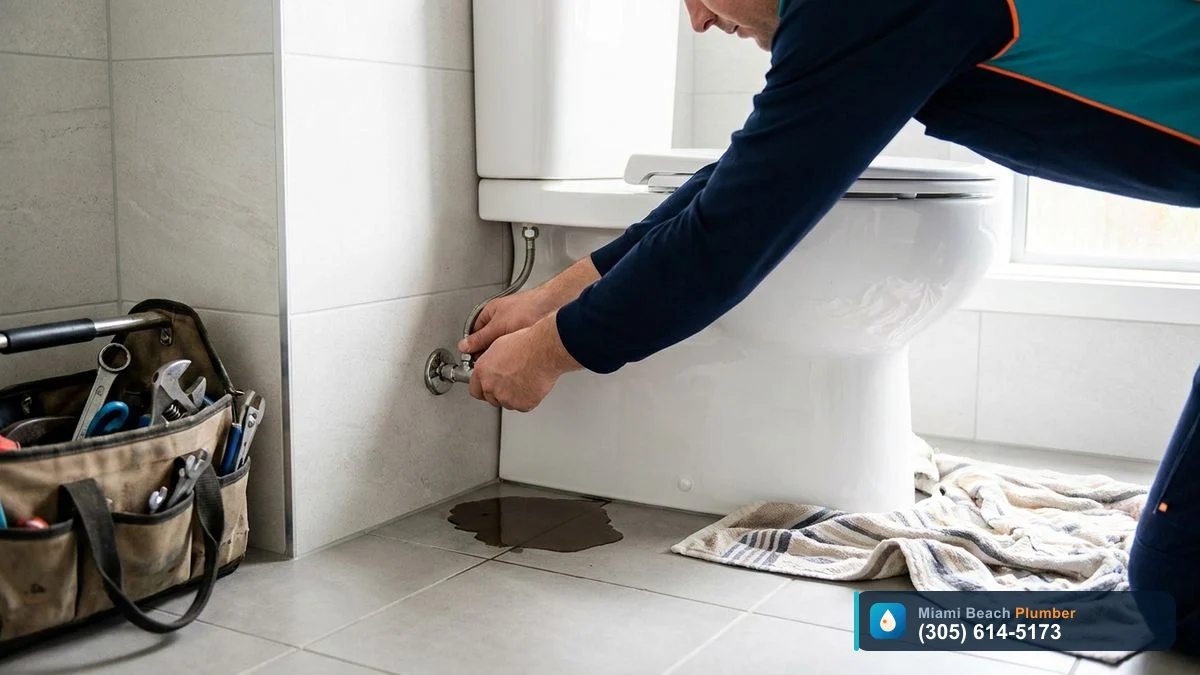
- Find and shut off the water source if you safely can. This may be a toilet valve, under-sink valve, or the main shutoff for your unit.
- Protect people and property. Move electronics and furniture, and keep children and pets away from wet ceilings or standing water.
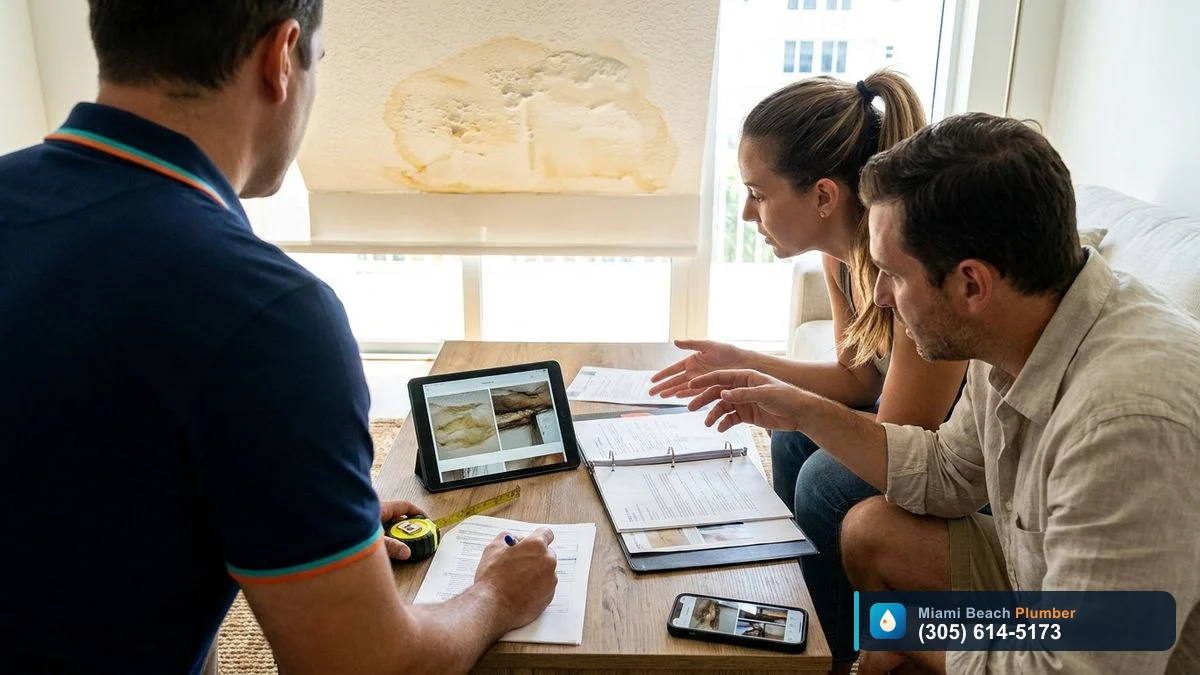
- Document the damage. Take clear photos and short videos of water entry points, wet areas, and any stained ceilings or walls.
- Notify the right people fast. Contact building security or the front desk, your property manager, and the affected neighbor units. Then notify your insurance carrier.
- Call a licensed plumber for leak detection or emergency plumbing service. Fast, accurate diagnosis is crucial in multi-story condos to avoid chasing the wrong source.
In Miami-Dade, serious leaks in high-rises often involve multiple parties at once: the unit owner, upstairs and downstairs neighbors, the property manager, and sometimes the association’s on-call plumbing contractor. A clear report from a licensed plumber that pinpoints the source, such as a failed supply line versus a common riser, is very helpful for settling the "condo water leak who pays" question.
Miami Beach Plumber is frequently called in for Condo Plumbing, Leak Detection, and Emergency Plumbing in situations exactly like this across Miami and Miami Beach. Our day-to-day work includes tracing leaks through concrete slabs, chasing cast iron stack failures in older waterfront buildings, and working around Miami-Dade’s permitting requirements for pipe replacements.
Preventing future condo water leak disputes in South Florida buildings
The best way to avoid a nasty "HOA responsible water leak Florida" fight is to reduce the odds of a leak in the first place and to clarify responsibilities before anyone is standing in water. That is especially true in Miami and Miami Beach, where humidity, hard water, and aging cast iron all work against plumbing systems.
For unit owners, several practical steps help:
- Replace old supply hoses to washing machines, dishwashers, and toilets every 5 to 7 years, and use braided stainless hoses rated for condo use.
- Have an older water heater (10+ years) inspected or proactively replaced. Many Florida condo leaks start at rusted water heaters.
- Clear AC condensate lines annually to avoid pan overflows in our humid climate.
- Do not do DIY plumbing that involves opening walls, modifying common pipes, or tying into building risers. Use a licensed and insured plumber familiar with Miami-Dade condo rules.
For associations and property managers:
- Maintain a written plumbing responsibility matrix and share it with owners.
- Schedule periodic inspections of main risers, cast iron stacks, and mechanical rooms, especially in older Miami Beach buildings.
- Create a clear leak response protocol, including who to call after hours and how to access shutoff valves.
- Review insurance coverage regularly to make sure it aligns with Florida Statute 718.111(11) and the building’s real-world plumbing risks.
Many Miami-Dade condos are now proactive about cast iron replacement and slab leak prevention. Coordinated projects like riser replacement or repiping take planning and permitting, but they also reduce emergency calls and insurance battles later.