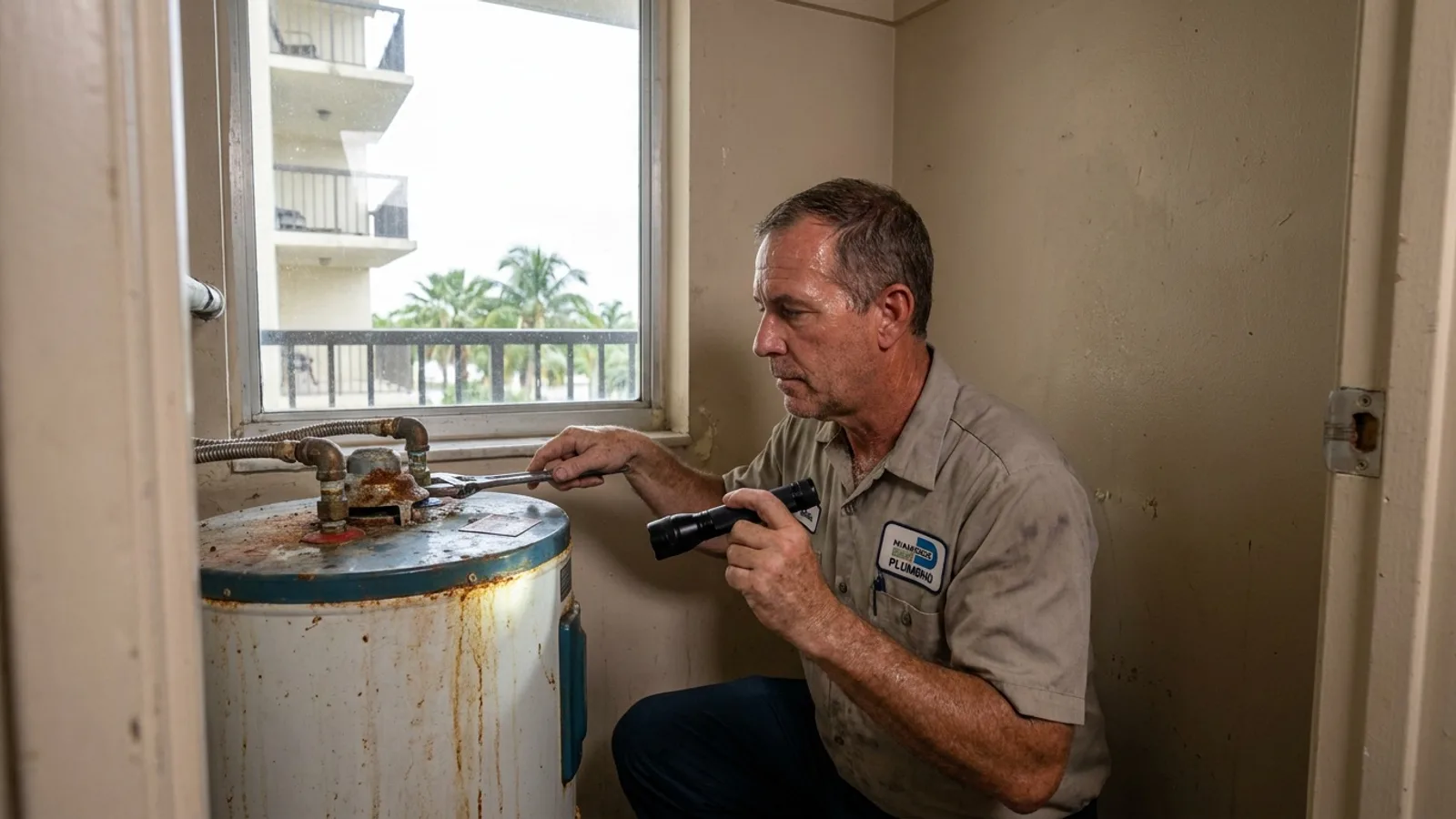
In Florida, most tank water heaters last about 8 to 12 years, shorter than in cooler, drier states. Tankless units often last 15 to 20 years. In Miami’s hard water, humidity and salt air, lifespan depends heavily on annual maintenance, installation quality, and how quickly leaks or corrosion are repaired.
Water heaters in Miami and Miami Beach usually fail faster than the brochures promise. If yours is getting older or acting up, knowing the real Florida lifespan and the warning signs can save you from a flooded condo or surprise cold showers.
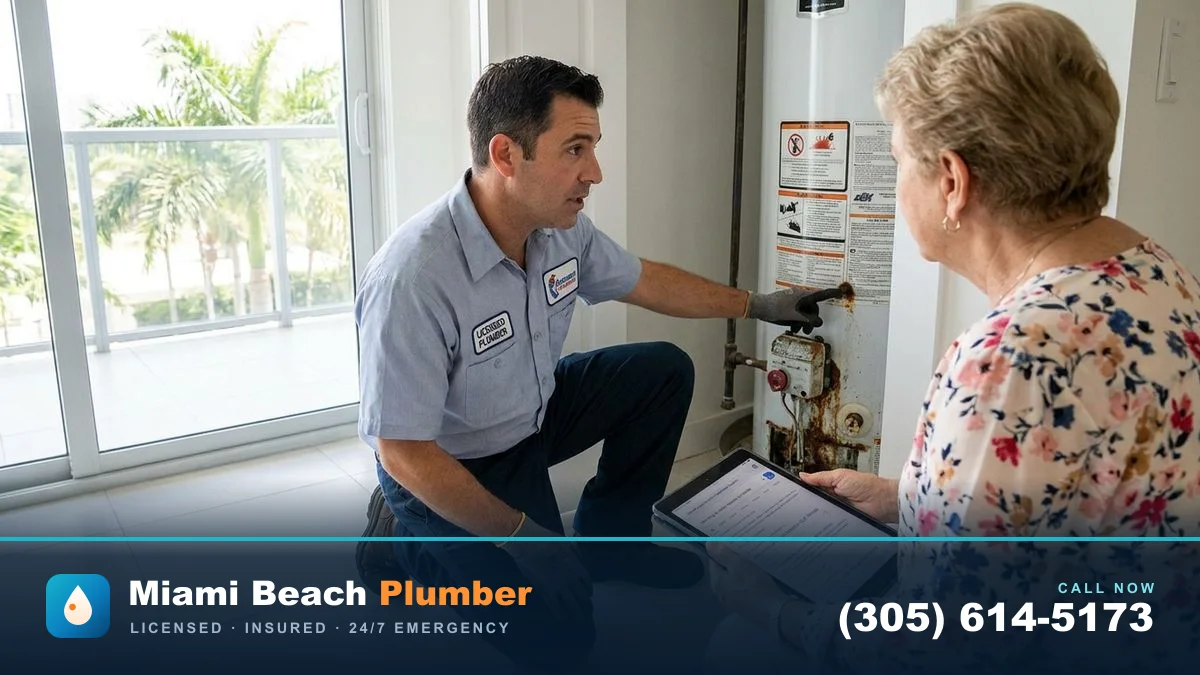
Typical Water Heater Lifespan In Florida vs Other States
The number on the water heater label rarely matches what we see in Miami and Miami Beach homes. Florida’s humidity, salt air, and hard water shorten water heater lifespan compared to drier climates. That applies to both single-family homes and high-rise condos in Miami-Dade.
Most manufacturers talk about 10 to 15 years for a tank-style electric water heater. In real South Florida conditions, a realistic range is usually lower. Gas units, if present, often have more variables and absolutely require a licensed plumber for any work on the gas line.
| Type | Typical lifespan in mild climates | Realistic lifespan in Florida | Notes for Miami-Dade |
|---|---|---|---|
| Standard tank, electric | 10 to 15 years | 8 to 12 years | Hard water and humidity speed up corrosion and sediment buildup. |
| Standard tank, gas | 8 to 12 years | 8 to 10 years | Less common in Miami condos; venting and gas code need close attention. |
| Tankless, electric | 15 to 20 years | 12 to 18 years | Needs descaling in Miami’s 180 to 210 ppm hard water to hit upper range. |
| Tankless, gas | 15 to 20 years | 12 to 18 years | Outdoor units on the beach need corrosion protection and careful installation. |
Most Miami homeowners start seeing more frequent repairs around the 8 to 10 year mark for tank units. For property managers, that is the time to plan replacements before a tank fails and damages neighboring units. In many Miami Beach condo associations, the bylaws set a mandatory replacement age, often 10 years or less, because of flood risk.
Why Florida Conditions Shorten Water Heater Lifespan
If you moved to Miami from a northern state, you may be surprised your water heater is failing at 8 or 9 years instead of 15. The environment here is tough on plumbing systems, especially water heaters tucked into closets or outdoor utility spaces.
First factor is hard water. Much of Miami-Dade has water hardness around 180 to 210 ppm. That creates mineral scale inside the tank, on heating elements and in tankless heat exchangers. Scale makes the heater work harder, raises energy use, and cracks or burns out elements faster. It also creates noise, like popping or rumbling.
Second factor is humidity and salt air. In Miami Beach, outdoor or garage water heaters often sit in constantly humid, salty air. That accelerates corrosion on the tank shell, fittings, and the anode rod. If you see rust on the jacket or under the pan, your tank is already in the danger zone. Older Miami homes with partially open utility rooms are especially vulnerable.
Third factor is usage patterns. In multi-family buildings, hotels and short-term rentals, water heaters run hard, all day. Frequent draw cycles stress the tank and fittings. Property managers in Miami-Dade often see shortened lifespans just from heavy demand, even with newer units.
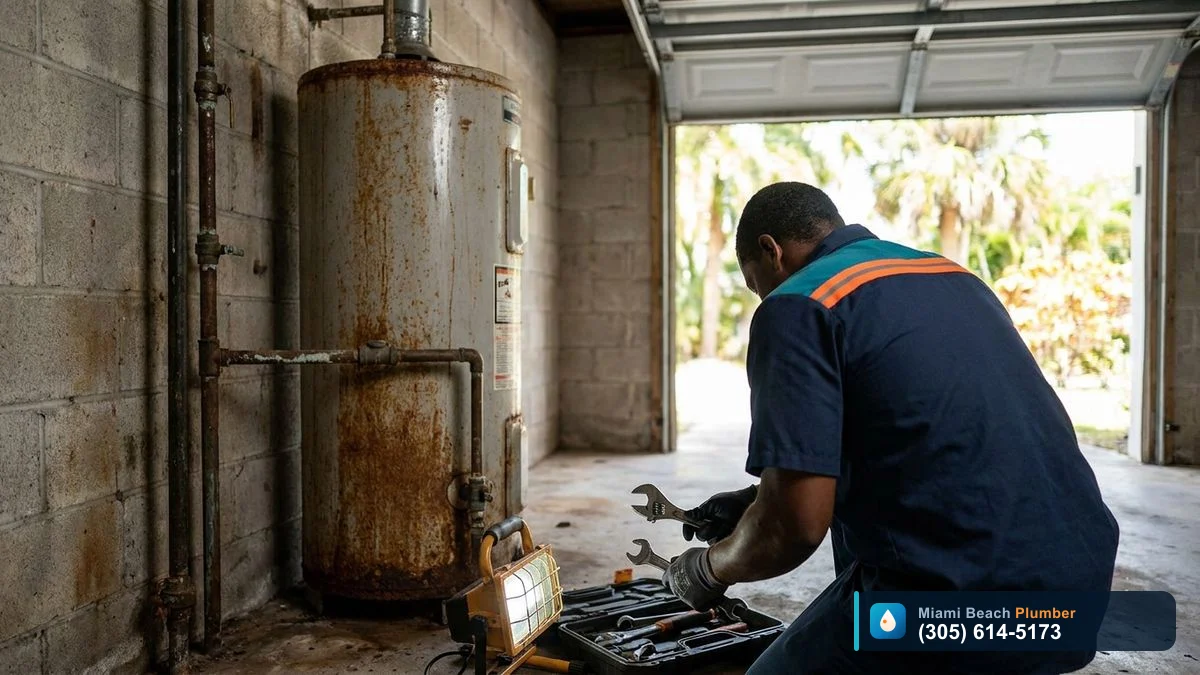
Clear Signs Your Water Heater Needs Replacing, Not Just Repair
Most people do not replace a water heater because of its birthday. They replace it because it starts acting up or leaking. Knowing the early signs a water heater needs replacing lets you act before you are dealing with water damage or angry tenants.
- Age 8+ with other symptoms. In Florida, a tank heater over 8 years old that also shows any of the issues below is usually near the end of its life.
- Rusty or discolored hot water. Brown or yellow water from the hot side only often means internal tank corrosion. That is usually not fixable long term.
- Water around the base of the tank. Dampness or pooling under the heater can be a leaking tank or failing fittings. If the tank itself is seeping, replacement is the only safe option.
- Frequent tripping breaker or reset button. Electric heaters that keep tripping can have failing elements or wiring issues. In an older unit, repeated electrical problems are a red flag for replacement.
- Strange noises. Loud popping, banging or rumbling usually means heavy sediment buildup. A flush might help, but in a 10+ year old tank in Miami hard water, it often signals that you are on borrowed time.
- Inconsistent hot water or sudden temperature swings. On tankless units, this can mean scaling in the heat exchanger or sensor issues. On tanks, it may be element or thermostat failure. Repeated repairs on an older unit are a sign to stop putting money into it.
In condos and high-rises in Miami Beach and Brickell, even a small leak from a water heater can damage multiple units. If you manage property, treat any recurring leak or rust at the base of a heater as a trigger to schedule a professional inspection and likely replacement.
Tankless vs Tank Water Heater Lifespan In Florida
The choice between tank and tankless water heaters in Florida is not just about comfort and efficiency. It also changes what kind of lifespan you can realistically expect in Miami’s climate and water quality. Both can work well, they just have different maintenance needs.
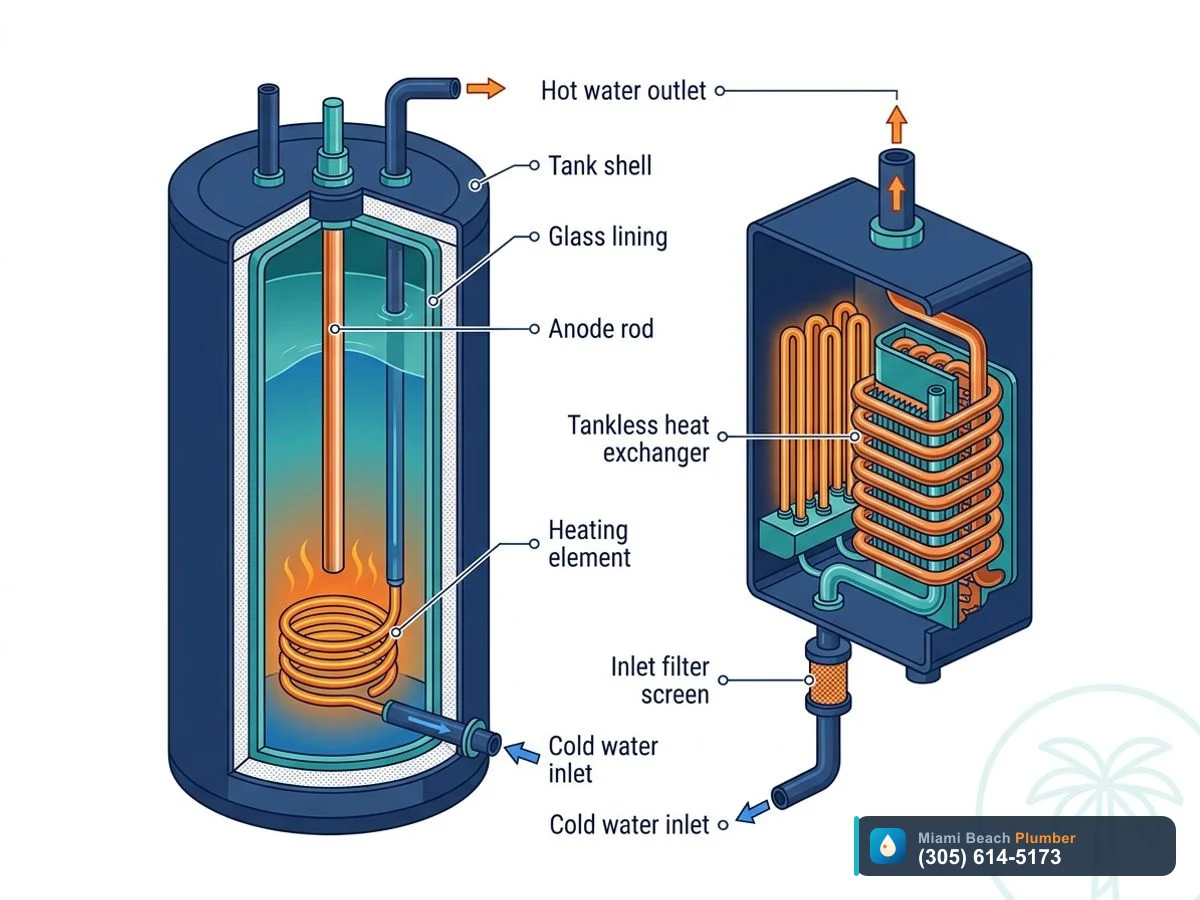
Tank-style heaters are common in older Miami homes and many condos. They are simpler, often cost less upfront, and do not require as much electrical capacity as some tankless systems. Their weakness is corrosion. Once the glass lining and anode rod are used up, Florida humidity and hard water eat the tank from the inside out.
Tankless water heaters usually last longer in Florida, often 12 to 18 years if they are properly sized and descaled regularly. They avoid the standing tank of hot water, so there is no storage tank to rust out. The tradeoff is sensitivity to scale and installation details. Undersized or poorly installed tankless units in Miami condos can fail early or cause frustrating temperature swings.
| Feature | Tank water heater | Tankless water heater |
|---|---|---|
| Typical Florida lifespan | 8 to 12 years | 12 to 18 years |
| Main failure risk | Tank corrosion and leaks | Scale in heat exchanger, electronics failures |
| Hot water supply | Limited by tank size | Continuous within unit capacity |
| Space needed | Larger footprint | Wall-mounted, smaller footprint |
| Maintenance needs | Flush tank, replace anode rod | Regular descaling, cleaning inlet screens |
For oceanfront condos in Miami Beach and homes close to the bay, outdoor or garage-mounted tankless units may need added corrosion protection on fittings and brackets. For larger Miami homes with soaking tubs, a properly sized tankless system can make more sense long term. A licensed plumber can calculate your real demand instead of guessing on size.
Water Heater Maintenance In Miami To Maximize Lifespan
If you want to get the high end of Florida water heater lifespan, maintenance is not optional. Regular water heater maintenance in Miami can be the difference between replacing a tank at 7 years or at 12. For property managers, a simple annual routine often prevents insurance claims.
For tank-style units, the highest impact tasks are flushing sediment and checking or replacing the anode rod. In Miami’s hard water, sediment can build up significantly in just one or two years, especially with heavy use. That sediment acts like an insulation layer on the bottom of the tank and makes the heater run hotter and longer.
Tankless water heaters need regular descaling. That typically means circulating a descaling solution through the heater using a small pump. The interval can range from every 6 months for heavy use and very hard water, to every 18 to 24 months for lighter use with some water treatment. Many Miami Beach condos with in-unit tankless heaters benefit from a descaling service on a set schedule.
Local plumbers that handle water heater repair, leak detection, and emergency plumbing in Miami and Miami Beach can pair maintenance with a safety check. That often includes verifying temperature and pressure relief (T&P) valves, checking expansion tanks where required, and confirming shutoff valves work correctly. Those small details protect both lifespan and safety.
Safe Basic Checks You Can Do Before Calling A Plumber
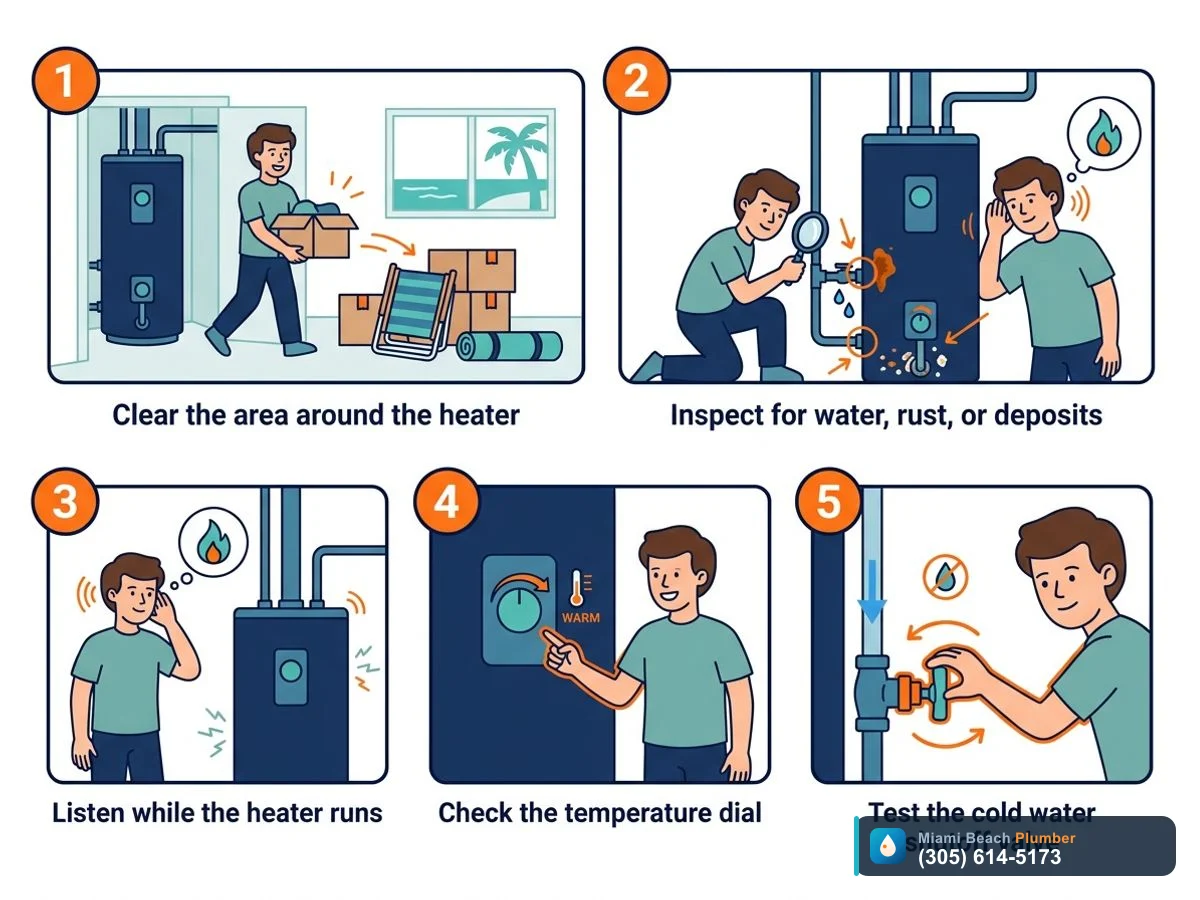
There are a few safe, basic checks that Miami homeowners and condo owners can do on a water heater. These will not replace full maintenance, but they can help you understand if you have a small issue or a problem that needs a licensed plumber right away.
- Look for visible leaks. Check the area around the base of the heater, the drain pan, and the pipes above. Even small rust trails or dried mineral deposits can point to slow leaks.
- Listen while the heater runs. Occasional soft noise is normal. Frequent popping, crackling, or loud bangs suggest heavy sediment buildup or other issues that shorten lifespan.
- Check the temperature setting. On most residential units, 120°F is a safe setting that limits scald risk and reduces scale buildup. If your dial is set very high to make up for poor performance, that is a sign something is wrong.
- Test nearby shutoff valves. Gently turn the cold water shutoff valve to confirm it will move, then return it to the open position. You do not want to discover a frozen valve during an emergency leak.
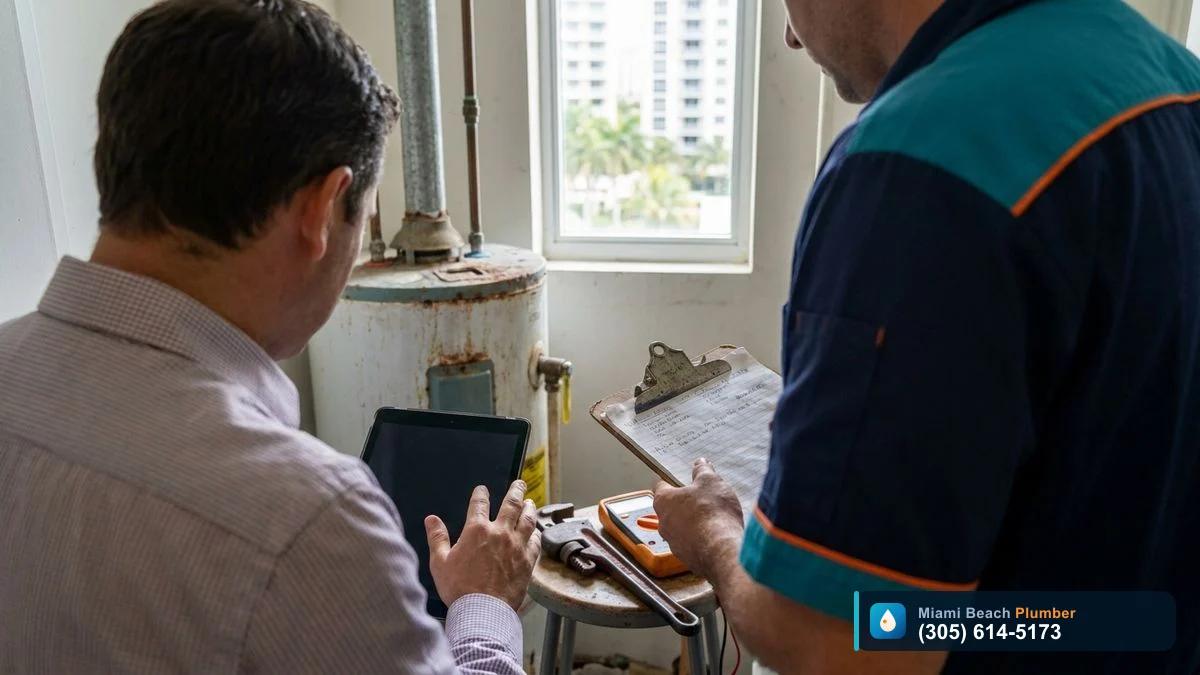
If your checks point to rust, repeated leaks, tripping breakers, or a heater near or past 10 years old, schedule a licensed plumber visit. For Miami-Dade condos and multi-unit buildings, some associations require using approved contractors and may need advance notice for water shutoffs.
Repair Or Replace In Miami-Dade: How To Decide
Deciding whether to repair or replace a water heater in Florida often comes down to age, type of failure, and the building you are in. A small component failure on a newer tank may be worth fixing. A leaking tank in a 9-year-old heater in a Miami Beach condo is not.
Use these quick guidelines as a starting point.
- Age under 6 years, minor issue. A failed thermostat, single burned-out element, or small valve issue is usually worth repairing, especially on newer, efficient models.
- Age 7 to 10 years, first repair. In Miami-Dade, it can go either way. Compare the repair estimate to a ballpark replacement range and consider how critical hot water is in your household or property.
- Age 10+ years or leaking tank. Replacement is almost always the smarter move, particularly in condos, hotels, and rental units with higher risk and liability from leaks.
- Frequent emergency calls. If you have had two or more water heater emergencies in a year, the reliability cost and disruption often outweigh squeezing one more year from an older unit.
| Situation | Repair usually makes sense | Replacement usually makes sense |
|---|---|---|
| 6-year-old tank, one bad element | Yes, if tank is dry and not rusted | Only if you want an efficiency upgrade |
| 9-year-old tank, rusty water and noise | Rarely, may only buy a short time | Yes, plan for replacement soon |
| 12-year-old tank, small leak in pan | No, tank is at or past life | Yes, replace to avoid flood damage |
| 8-year-old tankless, no descaling ever | Maybe, descaling and cleaning first | Replace if major damage to heat exchanger |
Keep in mind that any water damage claim in a Miami or Miami Beach condo can get complicated with multiple units, HOAs, and insurance companies involved. Proactively replacing aging heaters is usually cheaper and less stressful than cleaning up after a failure. Local plumbers that handle emergency plumbing and leak detection see this every week.
Whatever you decide, ask for upfront pricing and clarity on scope. A licensed and insured Miami-Dade plumber should be able to explain whether repair is a short-term patch or a realistic way to get several more years out of the unit.
How to safely check your water heater for basic warning signs in a Miami home or condo
- Locate the heater and clear the area. Find your water heater closet or utility area, then move stored items a safe distance away so you can see the floor, drain pan, and visible piping without forcing or bumping the unit.
- Look for water, rust, or mineral trails. Use a flashlight to inspect the pan, floor, and pipes above the heater. Note any standing water, rust stains, or white crusty mineral deposits around fittings or the base of the tank.
- Listen during a heating cycle. Run hot water at a nearby faucet until the heater turns on, then listen for popping, banging, or crackling that continues more than a few minutes, which may indicate heavy sediment buildup.
- Check the temperature setting. Find the thermostat dial and verify it is set around 120°F if labeled, or at the manufacturer’s recommended normal setting. Avoid cranking it higher to solve hot water problems without a professional evaluation.
- Test the cold water shutoff valve. Gently turn the cold water shutoff valve toward off a small amount, then back on, just to confirm it moves freely. Do not force it. If it is stuck or leaking, make a note to tell your plumber.
If any step involves gas, electrical wiring, sewage or opening a wall, stop and call a licensed pro at (305) 614-5173.