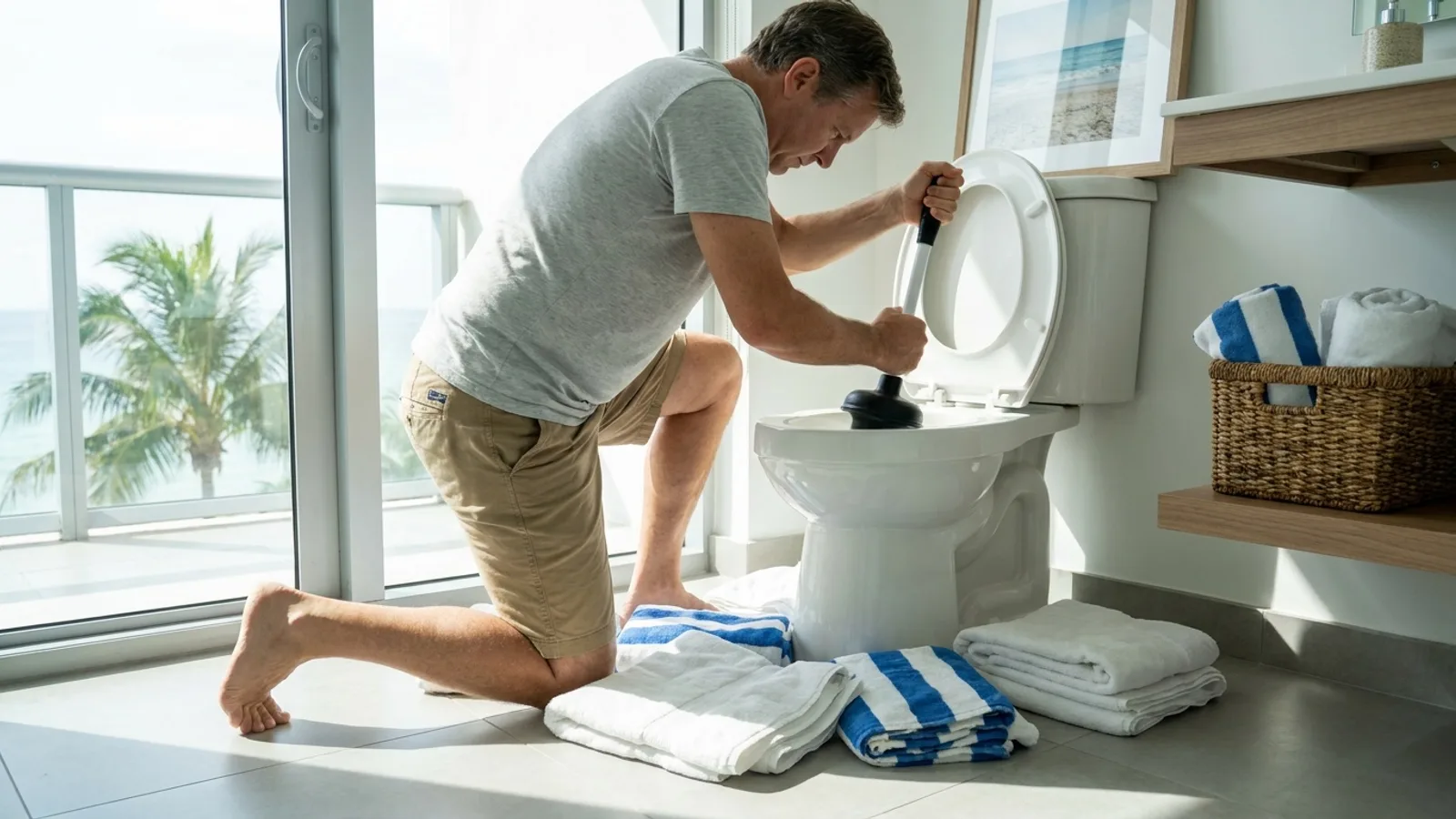
Start by stopping the water at the shutoff valve behind the toilet. Try a plunger with 10 to 20 steady pushes. If that fails, use a toilet auger. Avoid chemical drain cleaners, which damage toilets. If the toilet still backs up or other drains clog too, call a licensed plumber.
Toilet bowl filling up, water swirling but not going down, maybe even close to overflowing. That is one of the most stressful plumbing problems in any Miami home or condo. The good news is most toilet clogs can be cleared safely with a few simple tools and the right technique.
Know what kind of toilet clog you are dealing with
Before you decide how to unclog a toilet, it helps to understand what type of blockage you might have. Miami and Miami Beach homes, condos, and hotels see a few common clog patterns, and they do not all respond to the same fix.
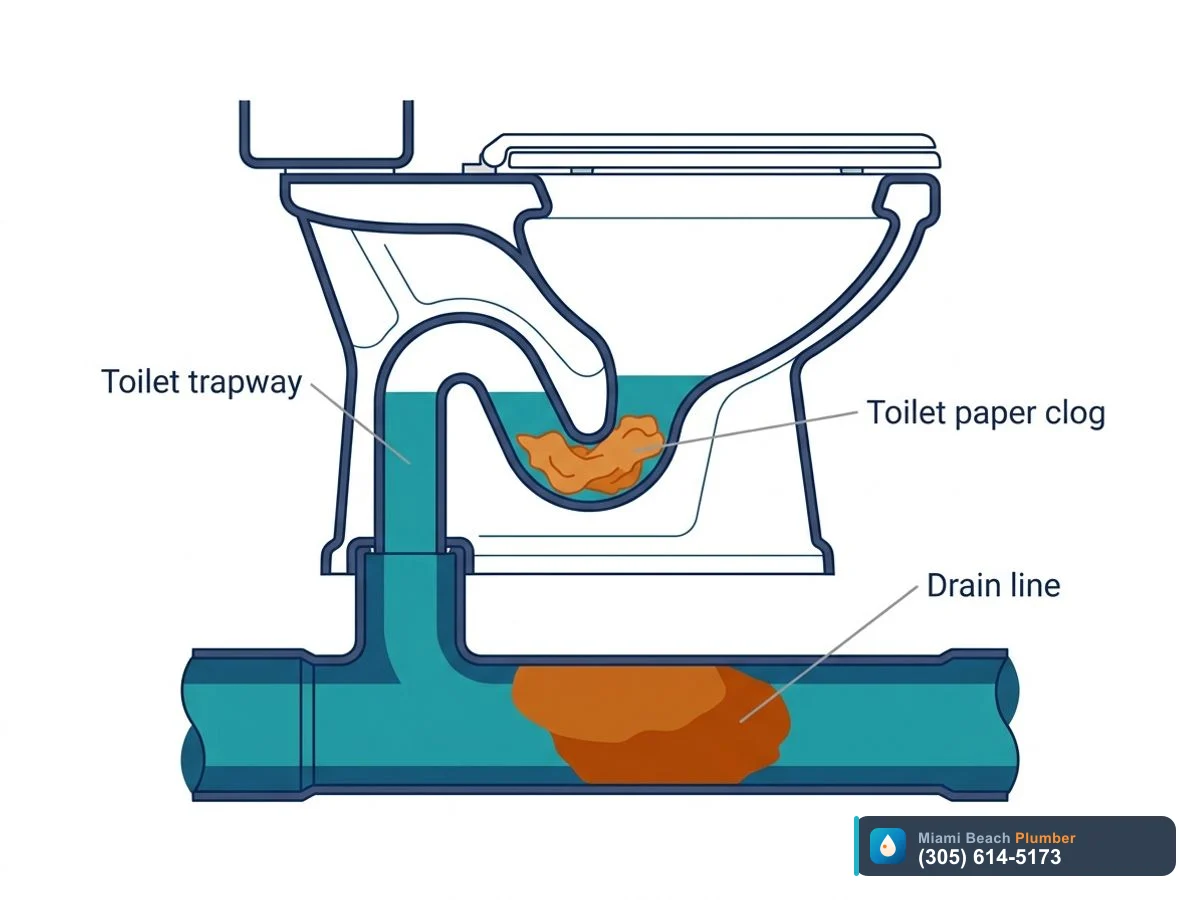
Most simple clogs are right in the trap of the toilet bowl. These are usually caused by too much toilet paper, wipes, or a one-time "oops" item like a toy, makeup wipes, or feminine products. These clogs typically respond well to a plunger or a toilet auger.
More stubborn clogs can be deeper in the line, especially in older Miami-Dade properties with original cast iron or in buildings where multiple units share a stack. If more than one fixture is backing up, for example the toilet and the shower in a South Beach condo, you might be dealing with a partial sewer line blockage, roots, or buildup that needs professional drain cleaning or sewer line repair.
Immediate steps if the toilet is about to overflow
Most people panic when the water level rises, and they keep jiggling the handle or trying to flush again. That makes things worse. The first goal is to stop more water from entering the bowl so you do not flood the bathroom or a neighbor’s ceiling in a condo stack.
As soon as you see the water rising instead of draining, remove the toilet tank lid and set it gently on a towel. Reach into the tank and push the flapper (the rubber valve at the bottom) down to seal it, or lift the float so no more water fills. This will stop the tank from refilling and feeding more water into the bowl.
Next, shut off the water supply valve behind or beside the toilet by turning it clockwise. In some older Miami Beach buildings, valves can be stiff from salt air and humidity. Do not force it to the point of snapping. If it will not turn, controlling the flapper and float inside the tank is your backup.
Once the water supply is stopped and the bowl level stabilizes, you can move on to clearing the clog without worrying about flooding your Miami condo, hotel room, or single-family home.
How to unclog a toilet with and without a plunger
If you are searching "how to unclog a toilet" or "toilet clogged how to fix" you probably want fast options you can try right now. Start with tools that are safe for the toilet and your plumbing system. Avoid shortcuts that cause long term damage.
Using a plunger the right way
A good flange plunger is the simplest way to unblock a toilet bowl. The flange is the narrow extension that fits into the toilet drain opening and creates a solid seal. Cup-shaped sink plungers do not work as well on toilets.
- Make sure there is enough water in the bowl to cover the plunger cup. Add a small bucket of water if needed.
- Insert the plunger so the flange sits snugly in the drain opening. Press down gently first to get a solid seal.
- Use firm, steady pushes and pulls, about 10 to 20 times. Focus on moving water, not just air. Keep the seal in place.
- After a series of plunges, quickly pull the plunger up to break the seal. If water suddenly drains, the clog likely moved.
- Wait a moment, then try one test flush. Keep your hand near the shutoff valve in case the water starts to rise again.
How to unclog a toilet without a plunger
If you are in a short term rental, hotel room, or just do not own a plunger, you still have a few safe options to clear a clogged toilet.
| Method | Best for | How long it takes | Pros | Cons |
|---|---|---|---|---|
| Hot (not boiling) water and dish soap | Soft clogs from paper and waste | 15 to 30 minutes | Gentle, uses common items | May not work on solid objects |
| Toilet-safe enzyme cleaner | Organic buildup in slow drains | Several hours or overnight | Safe for septic and older pipes | Too slow for emergencies |
| Manual removal with a disposable scoop | Visible objects in the bowl or trap | 5 to 10 minutes | Immediate, very targeted | Messy, requires strong hygiene |
Here is a basic "unclog toilet without plunger" approach using soap and hot water:
- Stop the water and let the bowl level drop if it is very full. You may need to remove some water with a disposable cup into a bucket.
- Squeeze in a half cup of liquid dish soap or a small amount of shampoo. Let it sit 5 to 10 minutes to lubricate the clog.
- Heat a gallon of water until hot but not boiling. Boiling water can crack porcelain, especially with Miami’s frequent temperature swings from AC to outdoor heat.
- From waist height, slowly pour the hot water into the bowl. Aim for a steady, gentle pour, not a hard blast.
- Wait another 10 to 20 minutes. Often the combination of heat and soap helps paper and waste break apart and slide through.
- Try a flush. If the water drains better but not perfect, you can repeat once.
When and how to use a toilet auger safely
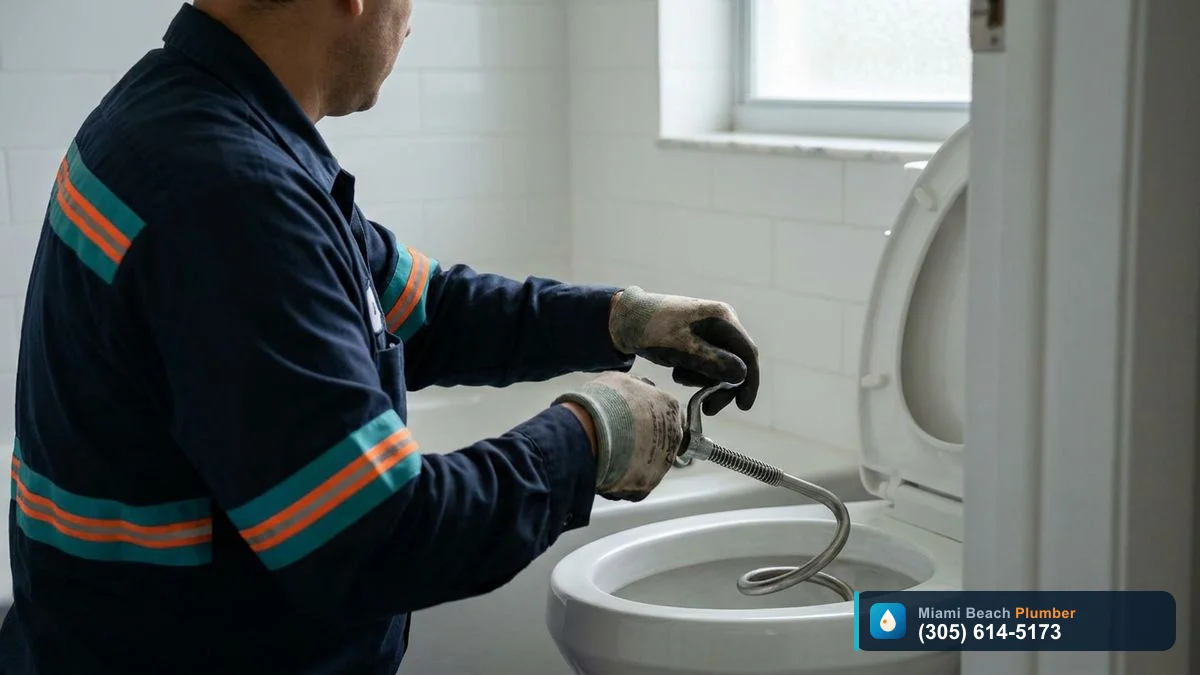
If plunging and basic "how to unblock a toilet bowl" tricks fail, a toilet auger (also called a closet auger) is the next step that many handy owners can use safely. It is designed specifically for toilet drains, with a protective cover to avoid scratching the porcelain.
A toilet auger is different from a long drain snake. It has a short, stiff cable with a crank handle and a curved tube that fits into the toilet bowl. This helps it move through the trapway and hook or push through clogs just beyond the bowl.
- Put on gloves and eye protection.
- Insert the curved tube into the toilet bowl so the tip points into the drain opening.
- Feed the cable in until you feel resistance.
- Turn the handle clockwise while gently pushing forward. Do not force it.
- Once you feel the cable move past the resistance or hook something, slowly pull it back while cranking.
- Remove the auger and check if any material came back with it. Discard waste in a trash bag.
- Try a test flush. If flow improves but is not perfect, you can make a second pass.
If the toilet auger reaches its full length and the clog does not clear, the blockage is likely further down the line, or there is a larger issue like a broken pipe, tree roots, or heavy buildup. At that point you are out of safe DIY territory and into professional drain cleaning and possibly sewer line repair.
Signs the clog is a bigger sewer or drain problem
Many Miami and Miami Beach property owners assume every toilet issue is just about the toilet itself. In reality, a lot of "toilet clogged how to fix" calls we take are symptoms of a larger drain or sewer problem that starts showing up at the lowest fixtures first.
Watch for these red flags that point beyond the toilet bowl:
- Multiple fixtures are slow or backing up. If flushing the toilet makes water bubble in a shower, tub, or floor drain, your main drain line is probably restricted.
- Gurgling sounds from other drains. Gurgling in a sink or tub when you flush can mean the vent or main line is partially blocked.
- Frequent clogs in the same bathroom. If you clear the clog and it returns within days, there may be a deeper restriction, rough cast iron, or a misaligned pipe.
- Bad odors near floor drains or outdoors. Sewage smells in a yard, parking area, or around a cleanout can signal a sewer line issue.
In Miami-Dade, especially older neighborhoods and many Miami Beach multi-story buildings, shared stacks, cast iron drain lines, and ground movement in wet soil all contribute to recurring drain problems. Heavy rain, king tides, and high groundwater can also slow sewer flow.
Professional services like hydro-jetting, camera inspections, and sewer line repair are better suited for these problems than consumer tools. Miami Beach Plumber provides drain cleaning and emergency plumbing across Miami-Dade, and we always give upfront pricing so you know what to expect before any work starts.
Special toilet clog issues in Miami homes and condos
Living and working in Miami and Miami Beach adds a few local twists to the usual "how to clear a clogged toilet" advice. Building type, age, and even hurricane season can influence your plumbing.
Older homes with cast iron. Many single-family homes and duplexes in Miami-Dade still have original cast iron drain lines. Inside those pipes, decades of rust and scale create rough surfaces that catch wipes, thicker toilet paper, and hygiene products. Even a basic clog can be a warning sign that those lines are narrowing and may eventually need professional descaling or replacement.
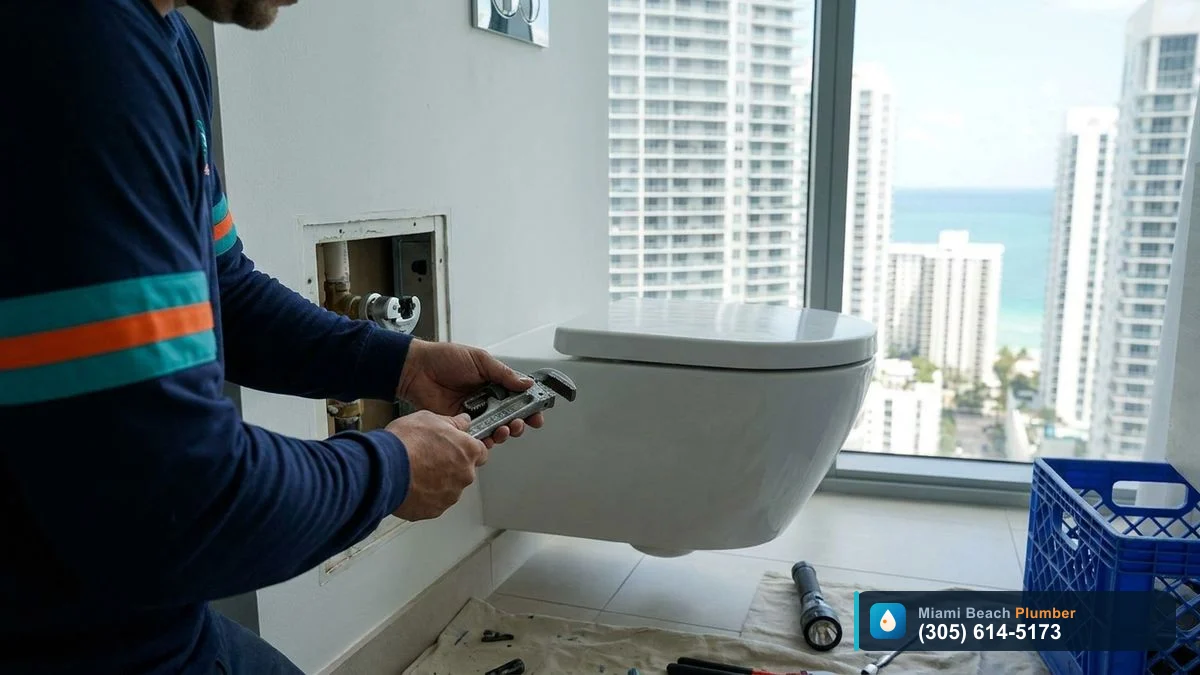
High-rise condos and hotels. In Miami Beach and Brickell style towers, your toilet ties into a shared vertical stack. A clog on a lower floor can be affected by what units above you are flushing. In these buildings, do not use homemade tools like wire hangers that can break off inside the trap and cause building-wide headaches.
Humidity and salt air. Miami’s humidity and salt air are rough on shutoff valves, filler valves, and rubber components inside toilets. A partially open or failing fill valve can keep water running and make clogs more likely by constantly feeding water into a weak flush. If your toilet runs or hisses after flushing, it is smart to repair that soon, not only for water bills but also to keep the flush strong enough to clear the line.
Preventing future clogs and knowing when to call a pro
Once you get through a stressful clog, the next question is how to avoid a repeat. Most toilet blockages in Miami-Dade are preventable with a few simple habits.
To reduce the chances of another "how to unblock a toilet bowl" emergency:
- Flush human waste and toilet paper only. No wipes, even if the package says "flushable", no paper towels, cotton pads, or feminine products.
- Teach kids and guests. In condos and vacation rentals, a small sign near the toilet can save you from late-night calls and expensive cleanup.
- Use moderate amounts of paper. Extra thick paper, especially in large wads, is a very common cause of clogs.
- Keep a proper plunger and, if you are handy, a toilet auger on site. Hotels, restaurants, and property managers in Miami should have these accessible on every floor or key area.
- Address slow drains early. A toilet that has been flushing slowly for weeks is warning you. Do not wait until it fully blocks during a holiday or storm.
So when is it time to stop DIY and call a licensed, insured plumber?
- You have tried plunging and a toilet auger and the clog keeps coming back.
- Multiple fixtures in your home, condo, or commercial space are draining slowly or backing up.
- You see sewage backing up into tubs, showers, or floor drains.
- You manage a building or restaurant and cannot risk downtime or water damage.
At that point you likely need professional drain cleaning, sewer line inspection, or emergency plumbing service. A licensed Miami-Dade plumber can use camera scopes and proper equipment to see exactly what is happening in the lines and clear them safely, without guessing or damaging older piping.
Miami Beach Plumber is fully licensed and insured, and we handle residential, condo, hotel, and restaurant plumbing across Miami, Miami Beach, and greater Miami-Dade. If your toilet problem turns out to be part of a larger drain or sewer issue, we can provide same-day service with upfront pricing and no hidden fees. Call Now at (305) 614-5173 or Request Service online if you need help beyond the DIY steps in this guide.
How to safely unclog a toilet yourself
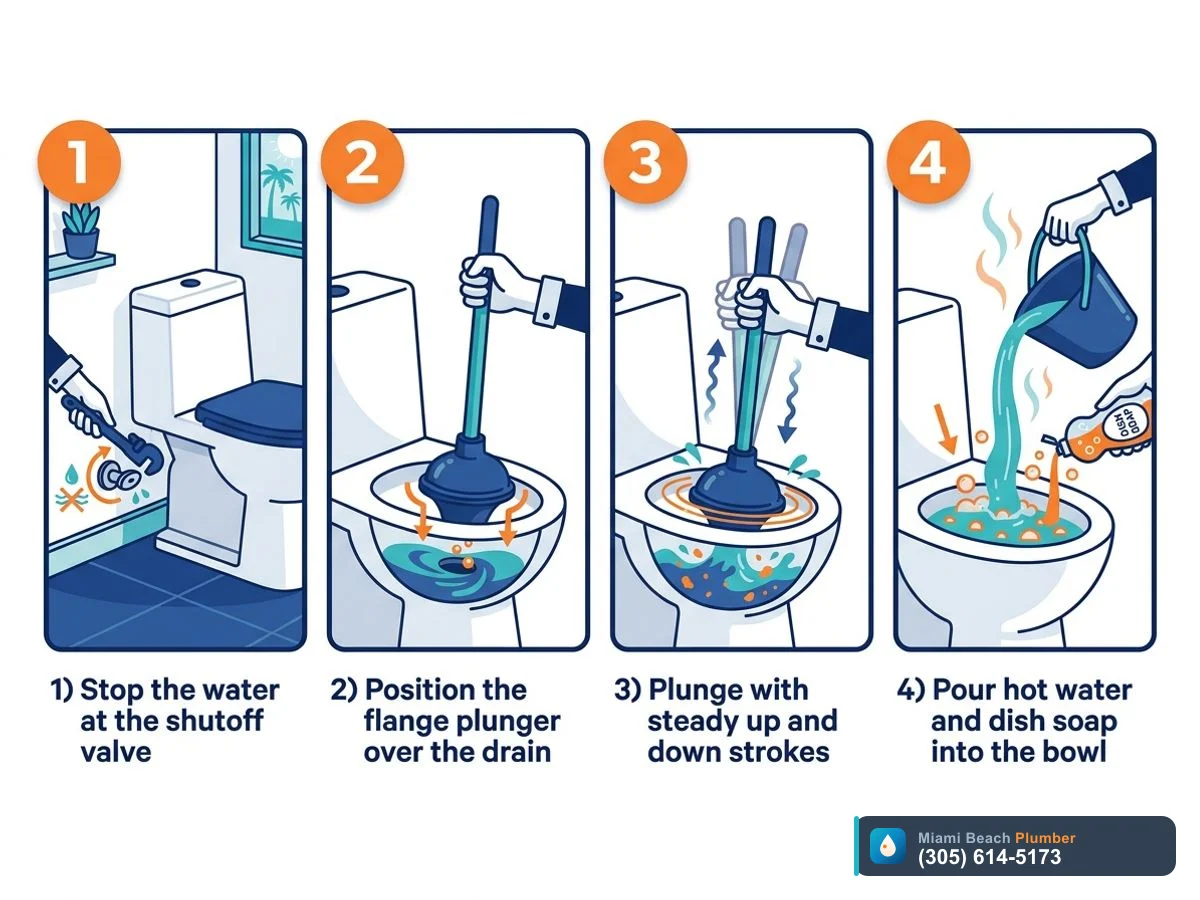
- Stop the water and prevent overflow. Remove the tank lid and press the flapper down or lift the float to stop refilling. Turn the shutoff valve behind the toilet clockwise until it stops. Let the bowl water level stabilize before doing anything else.
- Prepare the area and protect yourself. Put on disposable gloves, lay towels or rags around the toilet base, and keep a trash bag or bucket nearby. If the bowl is very full, carefully remove some water with a disposable cup into the bucket to avoid spills.
- Plunge the toilet using proper technique. Use a flange plunger. Submerge the plunger head fully in water, seat the flange into the drain opening, then push and pull firmly 10 to 20 times without breaking the seal. Afterward, pull up sharply to break the seal and see if water drains.
- Try hot water and dish soap if you have no plunger. Squirt about half a cup of dish soap into the bowl and let it sit 5 to 10 minutes. Slowly pour in a gallon of hot (not boiling) water from waist height. Wait another 10 to 20 minutes, then try a flush. Repeat once if needed.
- Use a toilet auger for stubborn clogs. Insert the curved end of a toilet auger into the bowl and feed the cable until it stops. Crank the handle clockwise while gently pushing until you feel the clog break or hook. Retract the cable, dispose of any debris, then test flush.
- Know when to stop and call a plumber. If plunging and an auger do not restore normal flushing, other drains are backing up, or sewage appears in tubs or floor drains, stop DIY attempts. Contact a licensed plumber for professional drain cleaning and inspection.
If any step involves gas, electrical wiring, sewage or opening a wall, stop and call a licensed pro at (305) 614-5173.