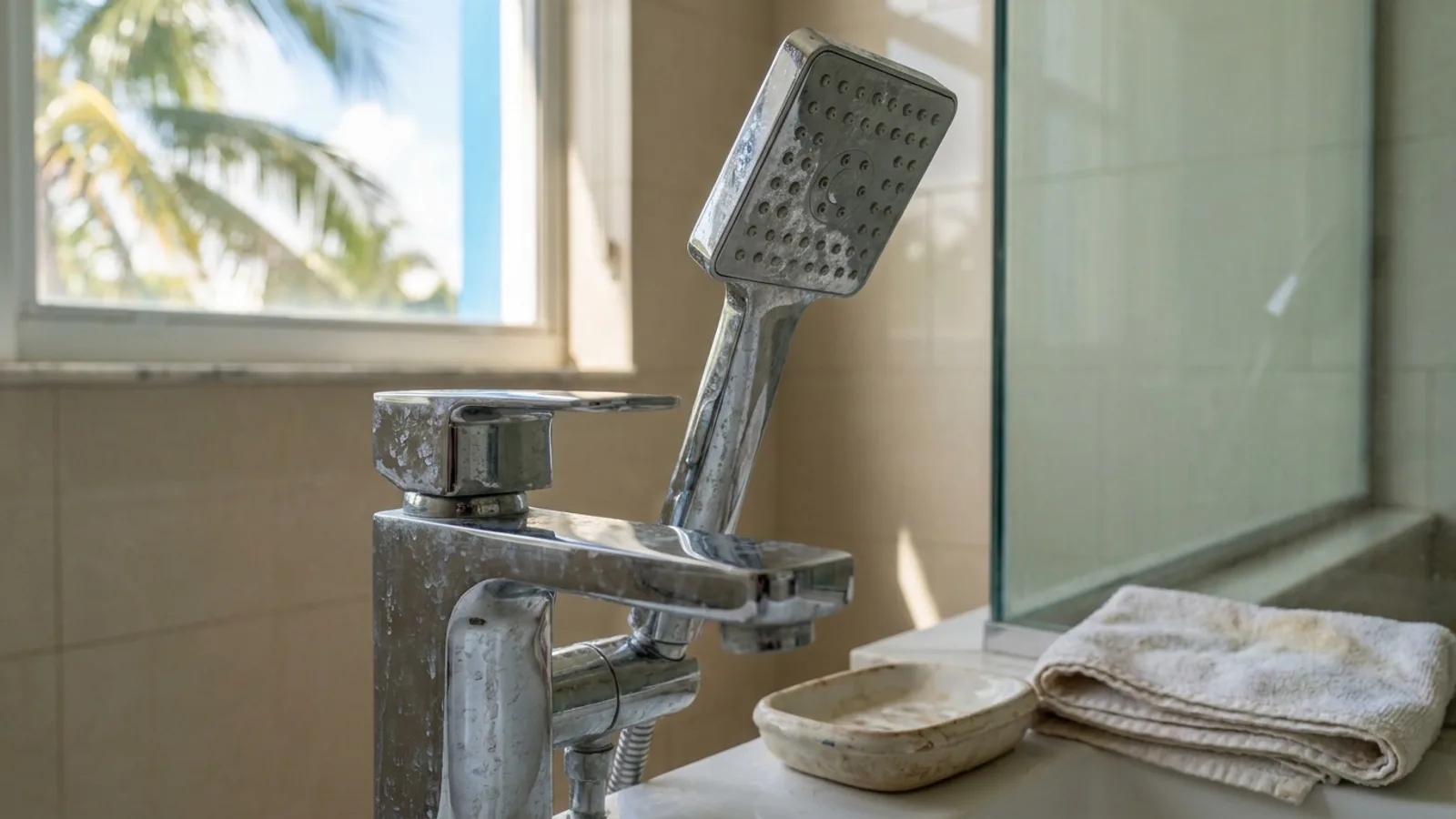
Miami and most of South Florida have moderately hard water, around 180 to 210 ppm. Hard water is safe to drink, but mineral deposits from calcium and magnesium slowly clog pipes, stain fixtures, and shorten the life of water heaters and appliances. Filtration or softening protects plumbing and keeps fixtures cleaner.
White crust on your faucets, cloudy glassware from the dishwasher, and a ring in the toilet that never seems to scrub off are all classic signs of hard water in Miami and Miami Beach. It is more than a cosmetic issue, it slowly wears on your plumbing system too.
How Hard Is Miami And South Florida Water Really?
People in Miami and Miami Beach often assume we have soft water because we are surrounded by the ocean. The reality is the opposite. South Florida pulls most of its water from the Biscayne Aquifer, which picks up calcium and magnesium as it moves through limestone. That creates moderately hard to hard water in many parts of Miami-Dade.
City reports for Miami and surrounding areas typically show hardness in the range of roughly 180 to 210 parts per million (ppm), which is about 10 to 12 grains per gallon. On standard hardness charts, that falls into the "hard" category. Some pockets of the county and private well systems can be even higher.
Even though this level of hard water is considered safe to drink, it slowly leaves calcium and magnesium behind in your plumbing. Over time, that scale is what starts to cause problems in pipes, valves, water heaters and fixtures all across South Florida.
Common Signs Of Hard Water In Miami Homes And Condos
Most Miami homeowners and condo owners first notice hard water effects on fixtures and surfaces, not inside the pipes. The symptoms tend to show up in kitchens and bathrooms, especially in Miami Beach units close to the ocean where salt air joins the mix.
- White or green crust on faucets and showerheads. This is calcium buildup on plumbing fixtures, often mixed with copper corrosion that gives it a green tint.
- Spots and film on glass shower doors and dishes. Hard water leaves mineral spots after each drying cycle or shower, even right after cleaning.
- Soap that does not lather well. You may feel like you need extra shampoo or body wash, and your skin can feel dry or tight after a shower.
- Stubborn toilet rings and sink stains. Light brown, tan or chalky rings that come back quickly after scrubbing are usually mineral deposits, sometimes mixed with iron.
- Slow performance from water-using appliances. Dishwashers, washing machines and especially tank and tankless water heaters lose efficiency as scale builds up on heating elements and inside lines.
In Miami condos and older homes, another sign is frequent issues with cartridges and valves. Scale can clog shower valves and faucet cartridges so they get stiff or start to drip. Property managers often see this in high-traffic units, such as short-term rentals, hotel rooms and restaurant restrooms.
These are not just cosmetic annoyances. They are early warning signs that calcium buildup in plumbing is starting to collect inside the system, not only on surfaces you can see.
Hard Water Effects On Pipes, Water Heaters And Building Plumbing
Hard water does its worst damage slowly, inside your plumbing where you cannot see it. Miami and South Florida buildings are already dealing with aging cast iron drains, slab leaks and high humidity. Hard water adds another stress that can shorten the life of your system.
Here are the main hard water effects on pipes and equipment in Miami-Dade properties:
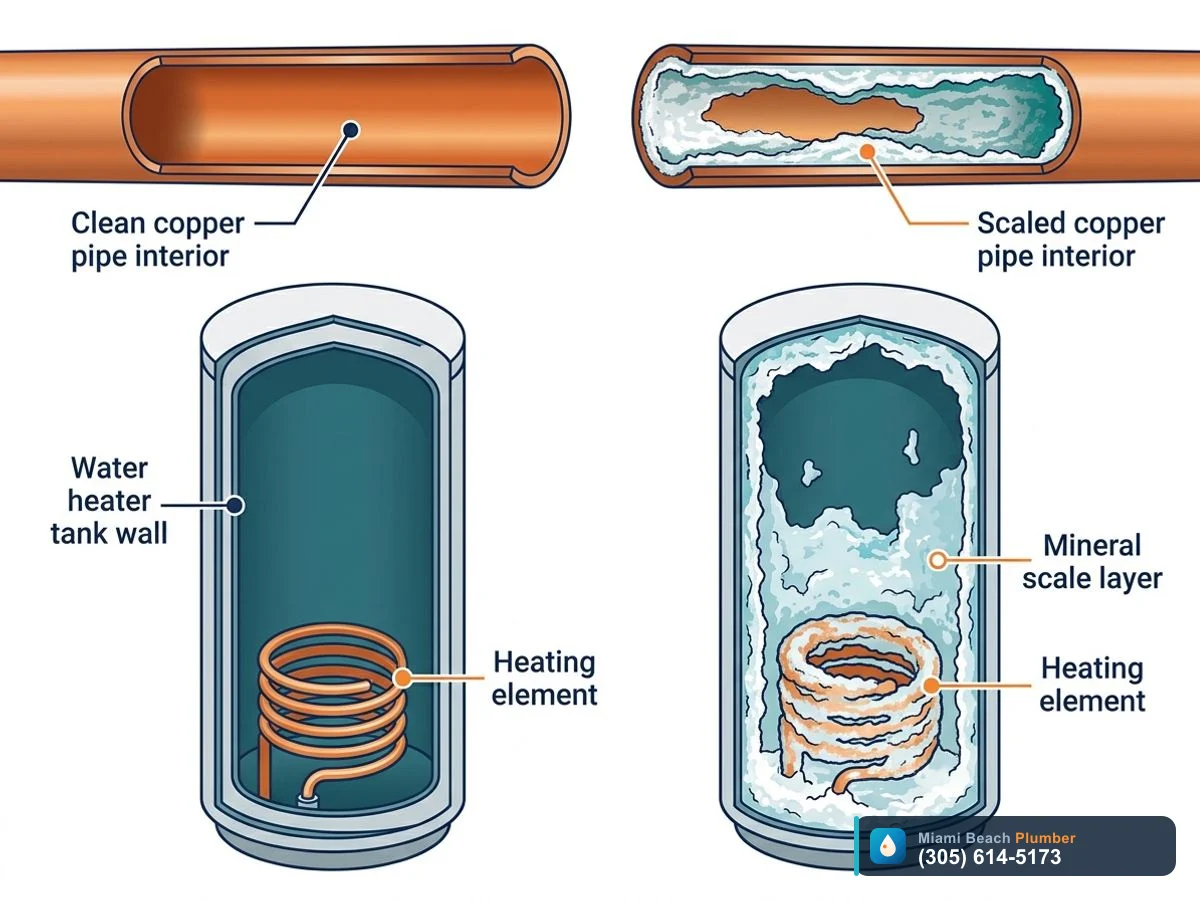
- Scale narrowing copper and PEX supply lines. Over time, minerals deposit on the inside walls of hot water piping, especially near elbows, valves and water heaters. This can reduce water flow and create pressure differences between fixtures.
- Extra stress on aging cast iron and galvanized lines. Many older Miami homes and Miami Beach multifamily buildings still have cast iron drains or galvanized water lines. While hard water minerals mostly affect supply lines, scale and corrosion together can roughen the inside of old pipes and speed up deterioration or clogging.
- Water heater efficiency loss. In both tank style and tankless heaters, South Florida hardness causes scale to form on heating elements and in the bottom of tanks. That forces the heater to work harder, increases energy use and can shorten the unit's life by several years if it is never flushed or descaled.
- Valve and cartridge failures. Shower valves, angle stops under sinks, commercial flushometers and mixing valves in hotels and restaurants can all stick or leak as scale builds up inside small passages.
- Ice maker and coffee machine problems. In condos, restaurants and hotels, mineral buildup can clog small lines and nozzles, affecting ice quality and equipment life.
Over many years, this combination of scale, corrosion and South Florida humidity can lead to leaks in walls or ceilings. That is why leak detection and regular water heater maintenance are especially important for Miami Beach condos and older Miami homes.
How To Tell If Hard Water Is Damaging Your Plumbing System
By the time a pipe clogs completely from scale, you have usually seen warning signs for a while. In Miami and Miami Beach, watching for these patterns can help you act before you end up with leaks or major downtime in a condo stack or commercial building.
Pay attention to these clues that hard water is starting to cause more than just spots on glass:
- Hot water flow is weaker than cold. If sinks or showers have strong cold water but noticeably weaker hot, scale may be building in the water heater outlet or hot supply risers.
- You hear popping or rumbling from the water heater. A tank heater in a closet or mechanical room that makes crackling or popping sounds while heating can have a layer of hardened mineral at the bottom.
- Frequent cartridge or fixture replacements. If you are changing shower cartridges, fill valves or flush valves every year or two, minerals may be shortening their service life.
- Uneven water temperature. Sudden shifts from hot to lukewarm during a shower can happen when scale affects tankless heater sensors or mixing valves.
- Appliance issues. Dishwashers that leave heavy residue, or washing machines that show error codes related to fill problems, can both be tied to hardness and scale.
You can also do a simple hardness test at home. Hardware stores and online retailers sell test strips that give a rough ppm reading in a minute or two. For condos and commercial properties in Miami-Dade, many property managers ask a lab or water treatment company for a more formal test, especially before installing a water softener or filtration system.
| Sign | Likely Cause | Who Should Handle It |
|---|---|---|
| White crust on faucets and showerheads | Surface scale from hard water | Safe DIY cleaning, call a plumber if aerators stay clogged |
| Hot water pressure much lower than cold | Scale in heater or hot lines | Licensed plumber inspection |
| Popping noises from water heater | Mineral layer at bottom of tank | Plumber flush or water heater service |
| Frequent leaks at valves and fittings | Scale, corrosion or age | Licensed plumber, may need repiping or upgrades |
| Cloudy dishes and shower doors | Hard water spots and film | DIY cleaning, consider water softener or conditioner |
Water Softener Miami Options And Other Ways To Reduce Hard Water Problems
Once you know hard water is an issue, the next question is what actually works in a Miami or Miami Beach property. With our humidity, condo risers and Miami-Dade permit rules, the right solution depends on the building, not just the hardness number.
Here are the main approaches used in South Florida to deal with hard water effects on pipes and fixtures:
- Traditional salt-based water softeners. These systems swap calcium and magnesium for sodium using resin and salt. They are very effective at preventing scale but add a small amount of sodium to the water and need regular salt refills and maintenance.
- Salt-free conditioners. Often called "descalers" or "conditioners", these treat minerals so they are less likely to stick to surfaces. They do not actually remove hardness but can reduce new scale in some situations without adding sodium.
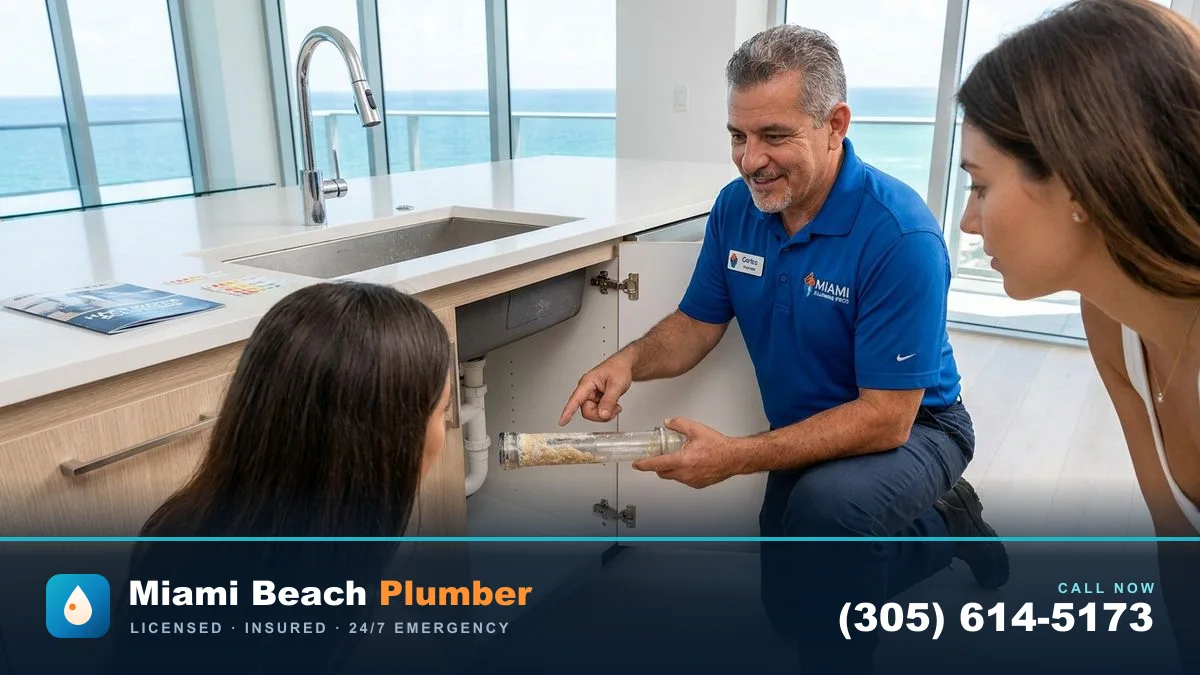
- Point-of-use filters and cartridges. Under-sink filters, shower filters and appliance cartridges target specific fixtures. They are helpful if you mainly care about drinking water taste, coffee equipment, or one problem shower, but they do not protect the whole plumbing system.
- Regular descaling and flushing. Even without a softener, routine water heater flushing, tankless descaling and professional scale removal from fixtures can greatly slow down damage from hard water.
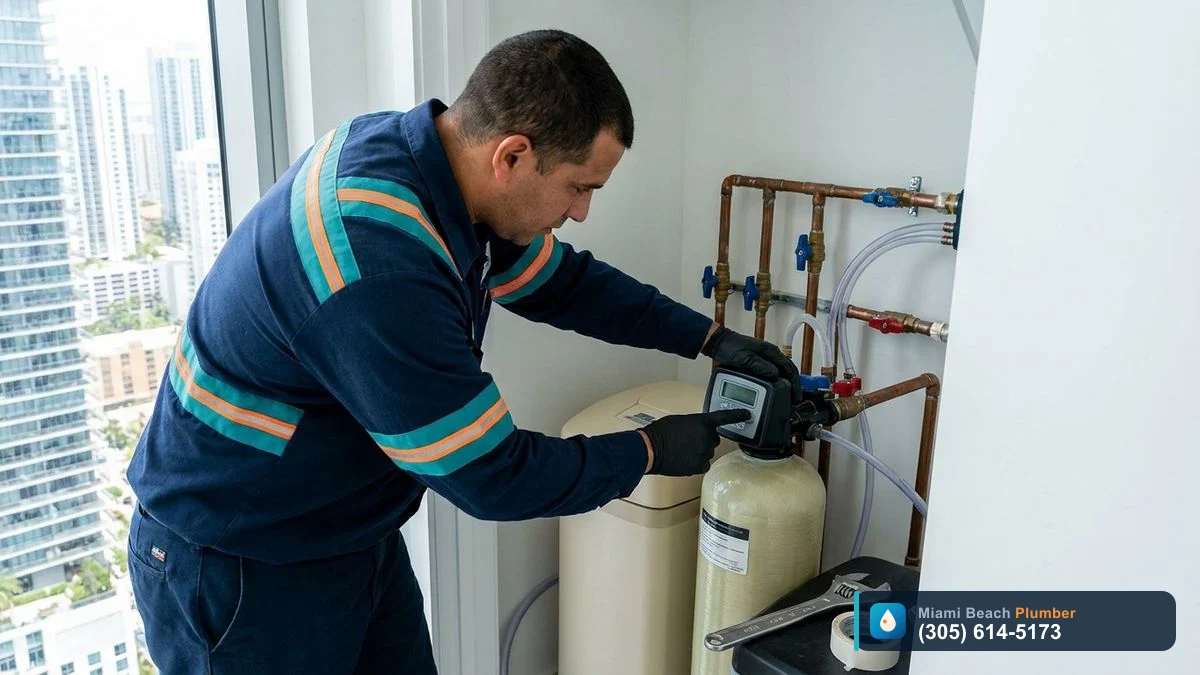
In Miami-Dade, installation of a whole-home water softener or any system tying into main supply lines must follow plumbing code, and in many cases needs a permit. Condos and high-rises often require association approval, especially if the system ties into a shared riser or mechanical room.
A licensed Miami plumber can walk you through placement options, drain requirements for softener backwash, and how a system will affect your existing water heater, leak detection setup and any existing filtration that might already be in the unit or building.
Safe DIY Maintenance To Limit Hard Water Damage Between Service Visits
You cannot change Miami hard water at the city level, but you can do some safe maintenance tasks that reduce mineral buildup in fixtures and appliances between professional plumbing visits. These are especially helpful in Miami Beach condos where access to main plumbing is limited and space is tight.
Here are practical steps that are generally safe for homeowners, condo owners and property managers:
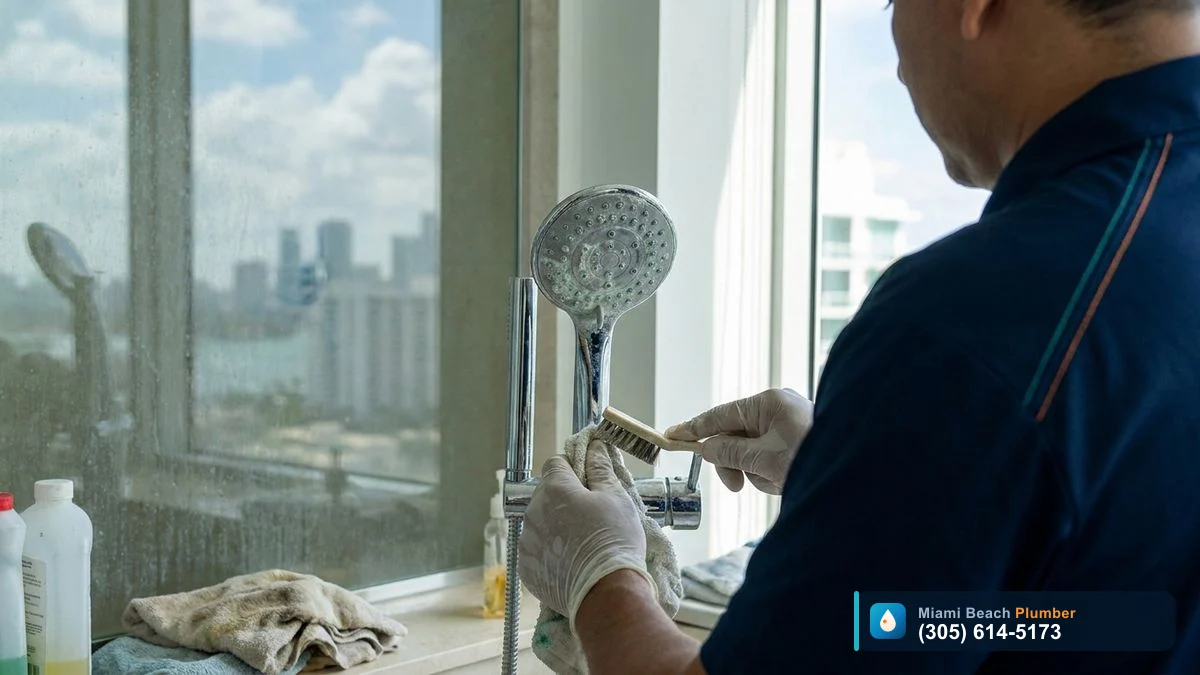
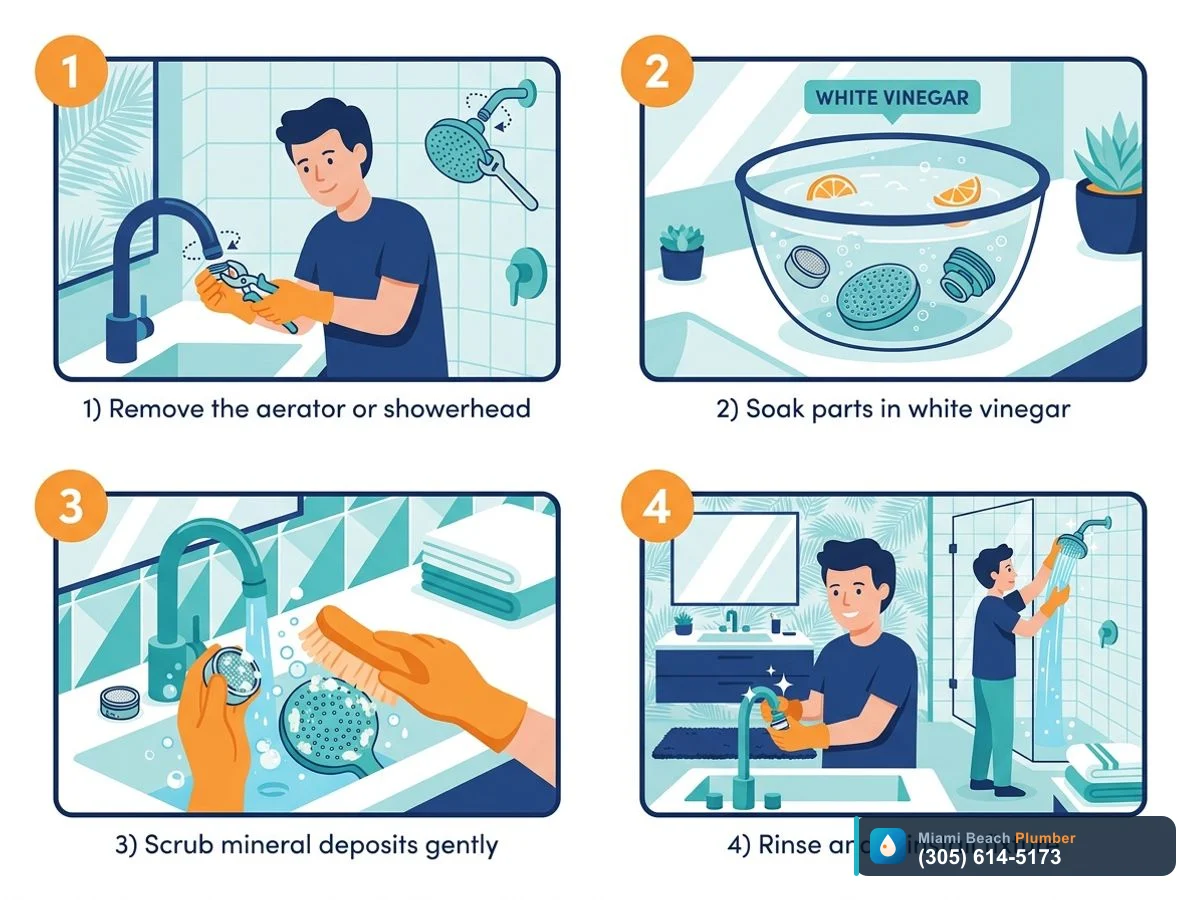
- Clean aerators and showerheads. Unscrew faucet aerators and showerheads, soak them in white vinegar for 30 to 60 minutes, then gently scrub with a soft brush. This removes a lot of surface scale.
- Wipe down glass and fixtures after use. Squeegeeing shower doors and quickly drying chrome fixtures can slow down spotting and crusty buildup.
- Use appliance cleaners. Run dishwasher and washing machine cleaners that are designed to remove mineral deposits as often as the manufacturer recommends, especially in areas with hard water south Florida levels.
- Check visible plumbing for white or green buildup. Look under sinks and around water heater connections. Early mineral buildup around joints can point to a very small seep or sweat fitting that needs a plumber before it turns into a leak.
If you manage multiple units or a commercial building, keeping a simple log of which fixtures need frequent cleaning or replacement can help your plumber spot patterns. For example, repeated scale issues at the top floors of a high-rise or one branch of a restaurant may show circulation or balancing problems that deserve a closer look.
When To Call A Licensed Miami Plumber About Hard Water Issues
Not every hard water problem needs a major system. Sometimes, a good cleaning or a single new valve solves the issue. Other times, hard water is just one piece of a bigger plumbing picture that includes aging pipes, cast iron drains or hidden leaks in walls or slabs.
It is smart to involve a licensed and insured local plumber in Miami or Miami Beach if you notice any of these:
- Recurring low hot water pressure at multiple fixtures, or in a vertical stack of a condo building.
- Water heaters older than 8 to 10 years in a hard water area that have never been flushed, especially if you are already hearing noises or seeing rusty or cloudy hot water.
- Repeated leaks or failures at supply lines, valves or heater connections. Hard water may be part of the problem, but there could also be corrosion, improper materials or high pressure at play.
- Visible scale plus other symptoms like hot spots on floors, wall discoloration or a sudden increase in your water bill, which can point to slab leaks or hidden line failures.
- Managing condos, hotels or restaurants. In high-use buildings, the combination of hard water, constant flow and Miami humidity makes proactive maintenance critical to avoid shutdowns and water damage.
A local licensed plumber who works in Miami-Dade every day understands how hard water interacts with our specific construction styles, from 1950s Miami Beach garden apartments with cast iron, to new Brickell high-rises with complex recirculation systems, to single-family homes in Westchester or Kendall.
At Miami Beach Plumber, we routinely see hard water showing up together with other issues during Water Heater Repair, Drain Cleaning and Leak Detection visits. That gives us a chance to point out practical steps you can take, from simple fixture changes to discussing whether a whole-home water softener or conditioner makes sense for your property and your water usage.
How to safely remove hard water deposits from faucets and showerheads in a Miami home
- Gather supplies. Get white vinegar, a small bowl or plastic bag, a rubber band or zip tie, an old toothbrush or soft brush, and a soft cloth.
- Remove or wrap the fixture. If possible, unscrew the aerator or showerhead. If it will not come off easily, fill a bag with vinegar and wrap it around the fixture so the nozzle area is submerged, then secure it with a rubber band.
- Soak in vinegar. Let the fixture or bagged area soak for 30 to 60 minutes. For heavier scale, you can extend soaking up to 2 hours, checking periodically.
- Scrub gently. Use the toothbrush or soft brush to gently scrub loosened mineral deposits from the screens, nozzles and threads. Avoid using metal tools that can scratch chrome or finishes.
- Rinse and reinstall. Rinse thoroughly with clean water, then reinstall the aerator or showerhead if you removed it. Turn the water on slowly and flush for 20 to 30 seconds to clear any remaining debris.
If any step involves gas, electrical wiring, sewage or opening a wall, stop and call a licensed pro at (305) 614-5173.