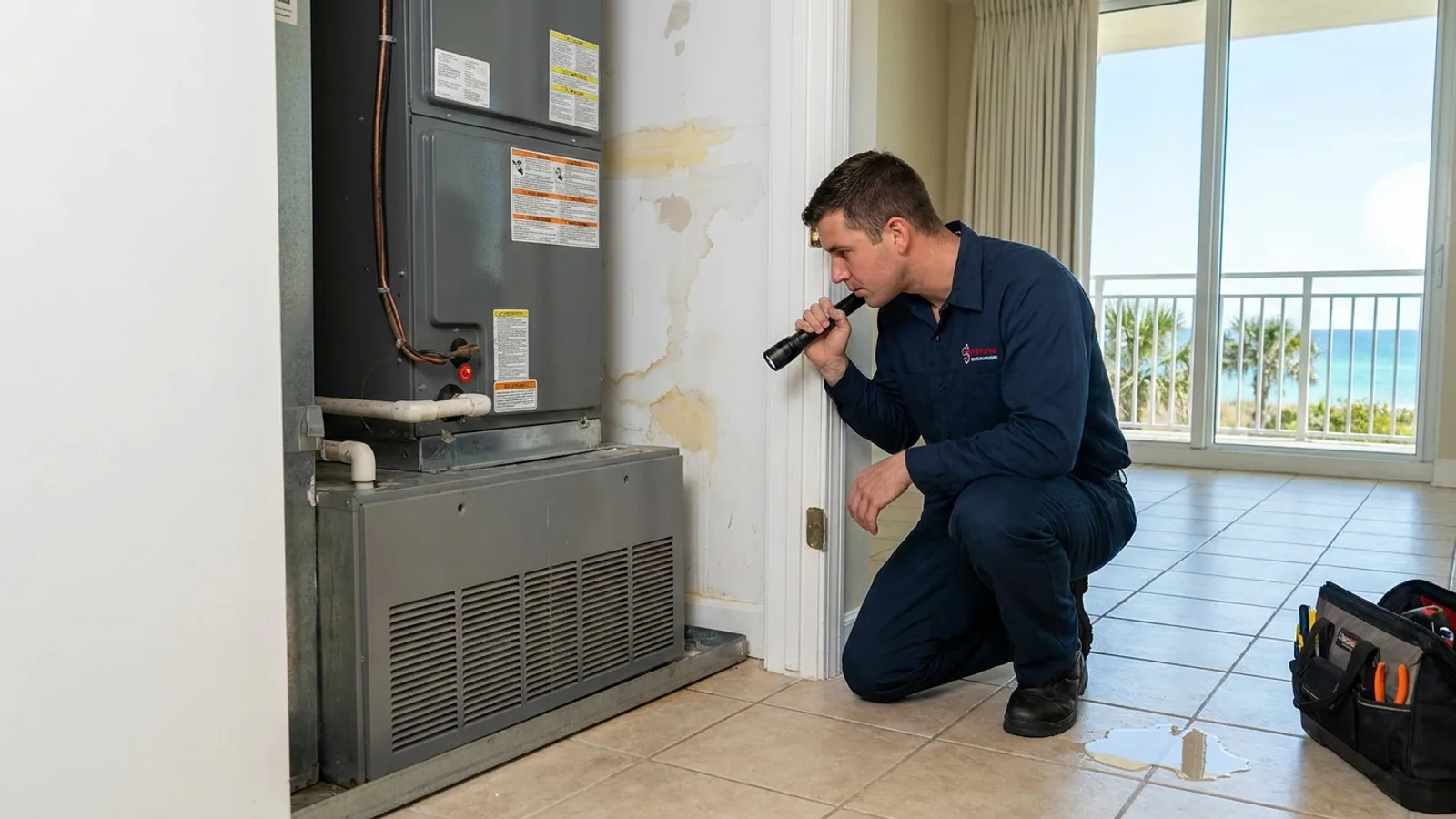
An AC leaking water inside usually means a clogged condensate drain, a rusted or overflowing drain pan, a frozen evaporator coil, or improper installation. Turn the system off, clean up water, check the air filter, then call a licensed HVAC or plumbing pro if water keeps dripping or you see ceiling damage.
If your AC is leaking water inside your Miami home or condo, you need answers fast. Water near a vent or indoor unit can stain ceilings, damage drywall, drip into neighbors’ units, and hide mold growth in our humid Miami-Dade climate.
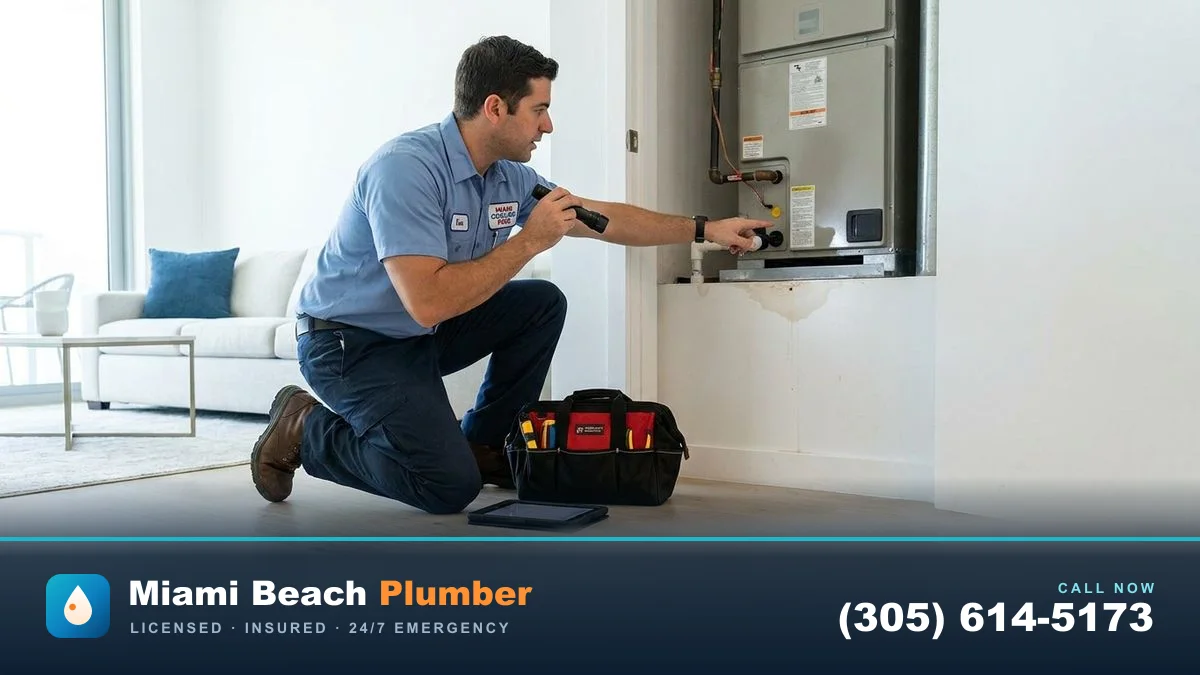
Common reasons your AC is leaking water inside in Miami-Dade
Most calls about an AC leaking water inside start the same way. Someone notices a brown ceiling spot, water dripping from an AC vent, or a puddle under a closet air handler. In Miami and Miami Beach, that indoor leak can escalate quickly because of high humidity and constant AC use.
Here are the most common causes of an air conditioner leaking water indoors in Miami-Dade:
- Clogged condensate drain line from algae, slime, or debris, especially with our 180 to 210 ppm hard water mixing with dust and condensate.
- Rusty or cracked drain pan, very common in older Miami homes and Miami Beach condos with original air handlers.
- Frozen evaporator coil that melts and overwhelms the pan, often from low refrigerant, very dirty filters, or low airflow.
- Improperly sloped or installed unit, so water cannot flow to the drain and instead spills over the edge.
- Blocked or disconnected condensate drain pipe, sometimes damaged by other trades or during renovations.
- Condensation on ducts or vents because of poor insulation, air leaks, or very cold supply air hitting hot humid Miami air.
In two-story homes and condos, these problems often show up as water leaking from an AC vent or around a ceiling grille. In high-rise Miami Beach buildings, an AC dripping water inside can also violate HOA rules if it damages units below. That is why it is important to quickly figure out if the leak is from the drain, the pan, the coil, or duct condensation.
How your AC should drain water and why clogs are so common here
To understand why your air conditioner is leaking water, it helps to know how the system is supposed to drain. In Miami’s heat and humidity, your AC is a dehumidifier that pulls pints of water out of the air every hour during summer.
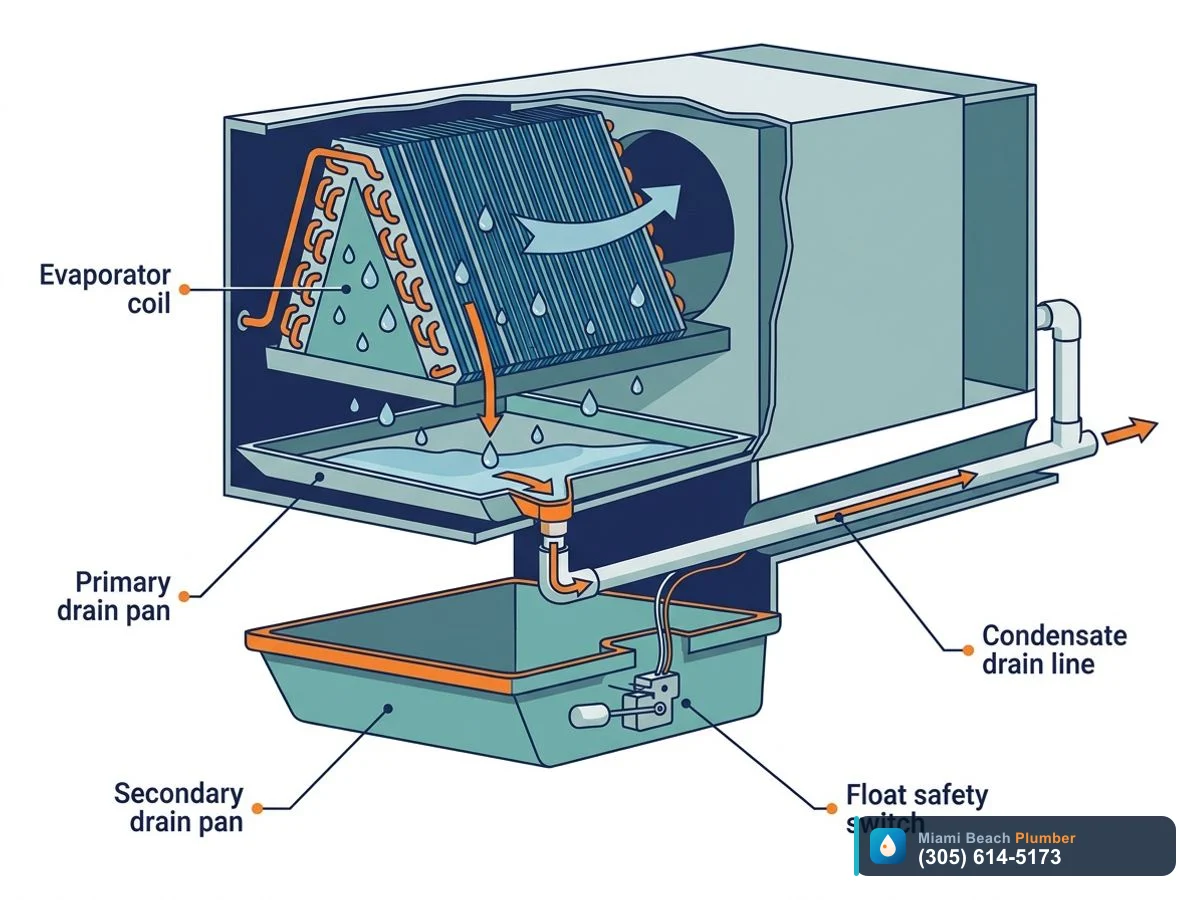
Here is the normal path that water should take:
- Warm humid air passes over the evaporator coil in the air handler and moisture condenses on the coil.
- Water drips into a drain pan beneath the coil.
- The pan connects to a condensate drain line (usually PVC) that slopes to a safe discharge point outside.
- On many Miami installations, there is also a secondary pan or float switch designed to shut the unit off if the drain backs up.
In Miami-Dade, condensate lines clog faster because:
- The line stays wet most of the year, perfect for algae and slime.
- Dust, pet hair, and construction debris enter the air handler and end up washing into the pan and drain line.
- Hard water deposits and salt air (in areas closer to Miami Beach) can roughen internal pipe surfaces and collect more buildup over time.
When the drain line clogs, water has no path out. It fills the pan, then spills over into your ceiling, closet, or hallway. That is usually the first thing a licensed plumber or HVAC tech checks during a leak inspection in Miami or Miami Beach.
Signs your AC leak is an emergency in a Miami home or condo
Not every AC leaking water inside means you must rip open ceilings right away, but some signs in Miami-Dade absolutely call for an emergency visit. The goal is to stop structural damage and avoid fights with your HOA or neighbors over water damage.
Pay attention to these warning signs:
- Active dripping from a ceiling vent or grille, especially on a lower floor of a condo or townhome.
- Large or rapidly growing brown stains on drywall near the air handler or AC supply vents.
- Soft, sagging, or bubbling drywall around a ceiling, closet, or chase where AC lines run.
- Water near electrical components like breakers, outlets, smoke detectors, or recessed lights.
- Persistent musty or moldy smell around the indoor unit, vents, or in a specific room.
- Downstairs neighbor reporting water coming from their ceiling shortly after your AC runs.
Property managers in Miami Beach and Brickell also have to think about sprinkler systems, fire alarms, and high-rise risers hidden in ceilings. An AC leaking water might trigger corrosion or damage to those systems if ignored.
Any time you suspect water has been leaking for more than a day or two, consider it urgent. Our humid climate allows mold to start quickly behind walls and under floors, especially around existing plumbing and old cast iron drain lines. A professional leak detection visit can rule out other plumbing issues that might be hiding behind what looks like an AC problem.
DIY checks you can safely do before calling a licensed pro
You can safely handle a few basic checks before you call for help. These steps apply to central AC systems with indoor air handlers commonly found in Miami homes and condos. If anything feels unsafe, stop and contact a licensed technician.
- 1. Turn the thermostat to "Off" and set the fan to "Auto"
Stopping the system prevents more water from forming and lets a frozen coil thaw slowly. - 2. Replace or clean the air filter
A clogged filter can cause the evaporator coil to freeze and later leak when it thaws. In Miami-Dade, filters usually need changing every 1 to 2 months during heavy use. - 3. Visually check the drain line and drain pan
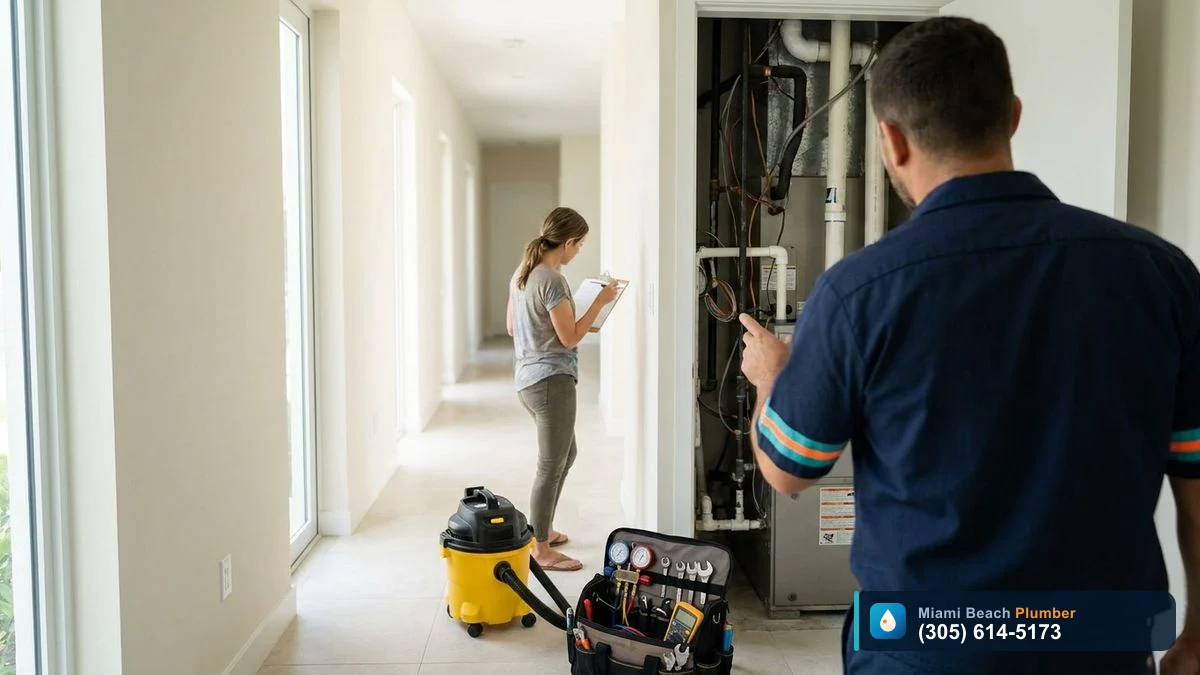
If your air handler is in a closet, attic, or inside your condo, look for a white PVC pipe at the bottom or side. See if the pan under the unit is full of water. If you are comfortable, you can gently use a wet/dry vacuum on the outside drain line outlet to try to clear a minor clog. - 4. Clean up standing water quickly
Use towels or a wet/dry vacuum to remove water from floors, especially on wood, laminate, or around baseboards. This helps limit swelling and mold.
If you have access to the outside condensate drain, you can usually identify it as a small pipe dripping water near the outdoor condenser unit or close to the house foundation. In Miami Beach condos, this line may terminate in a common area or mechanical room, so access may require building staff or a contractor.
After these steps, if your AC is still leaking water inside or the system shuts off repeatedly, you have moved beyond what is safe DIY. At that point, a licensed technician needs to check for a deeper blockage, a bad float switch, improper slope, or a refrigerant issue.
Why water is leaking from your AC vent or ceiling grille
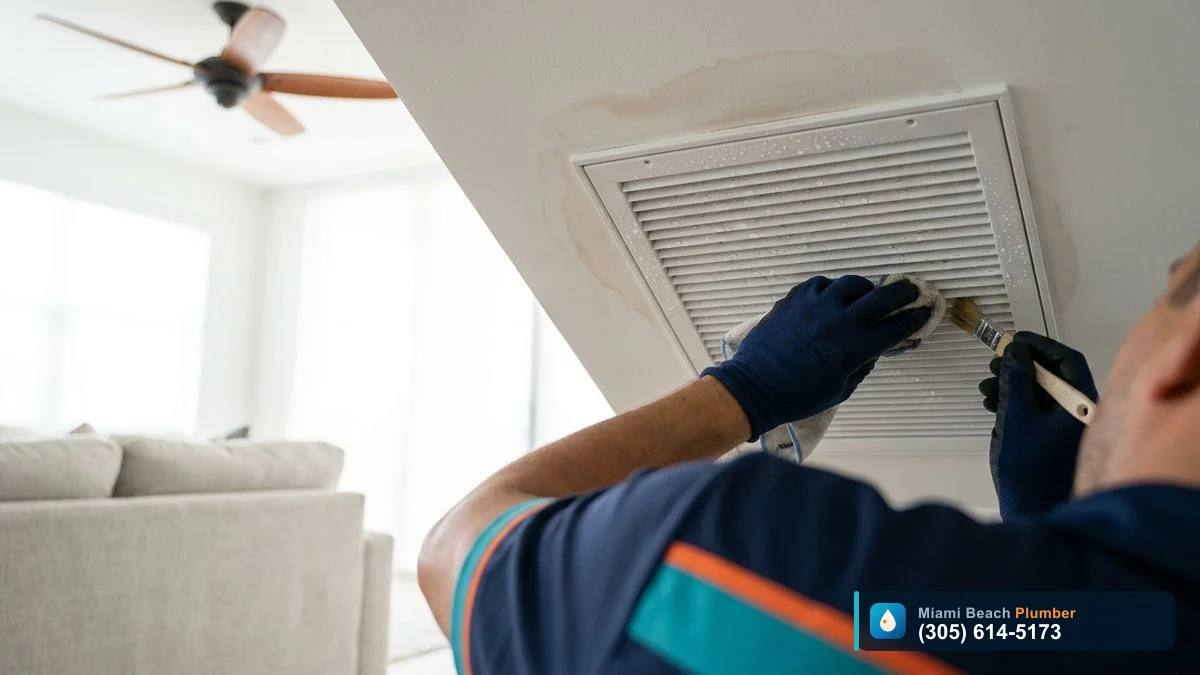
Water leaking from an AC vent in the ceiling looks different from a puddle under the air handler. In Miami-Dade, this often shows up in bedrooms or living rooms far from the main unit and can confuse homeowners and property managers.
The most common reasons for water leaking from an AC vent are:
- Condensation on cold metal vents when very cold air hits hot humid room air, especially after the system has been off and then kicks on hard.
- Wet duct insulation above the ceiling because of a roof leak or attic moisture that then drips out of the lowest point, often a vent.
- Condensate backup in a horizontal air handler located above the ceiling that spills along ductwork and finds the vent opening.
- Poorly sealed or uninsulated supply ducts running through hot attics in older Miami homes, which causes constant sweating on the duct exterior.
In Miami Beach and coastal areas, salt air corrosion can shorten the life of duct insulation and metal vent boots. That makes sweating and leaks more common, especially in units that rarely get their ductwork inspected.
Because these issues involve hidden spaces above the ceiling, a licensed plumber or HVAC contractor usually needs to inspect. They may use leak detection equipment, moisture meters, or even small camera scopes to determine if the water source is the AC condensate, a roof leak from a past storm, or another plumbing line in the same chase.
Repair options, ballpark cost ranges, and response time in Miami-Dade
Once a technician finds out why your AC is leaking water inside, the next questions are usually about repair options, cost ranges, and how fast it can be done in Miami or Miami Beach. Exact pricing depends on access, building rules, and how much damage has already happened, but there are some typical patterns.
| Issue | Typical Repair | Ballpark Cost Range* | Typical Time |
|---|---|---|---|
| Clogged condensate drain line | Flush or clear line, check float switch, test drain | $120 to $350 | Same-day, about 1 to 2 hours |
| Minor drain pan overflow, no structural damage | Clear drain, dry pan, adjust slope, check safety switch | $150 to $400 | Same-day, about 1 to 3 hours |
| Rusted or cracked primary drain pan | Replace pan, re-seal connections, test drain | $300 to $800 | Same or next day, 2 to 4 hours |
| Frozen coil from airflow issues | Thaw coil, correct airflow, replace filter, inspect duct | $180 to $450 | Same-day, may require multi-hour thaw period |
| Condensation on ducts or vents | Seal leaks, add or repair insulation, adjust airflow | $250 to $900+ | Half-day or more depending on access |
| Water damage to drywall or ceilings | Plumbing/HVAC repair plus separate drywall remediation | $400 to several thousand | Multi-day with drying and repairs |
*These are general ballpark ranges in Miami-Dade. Always get an upfront quote for your specific system and building conditions.
In high-rise Miami and Miami Beach condos, access and building rules can add time. Coordinating with property management, using service elevators, and working inside mechanical rooms or tight closets all affect the final price. Hotels, restaurants, and commercial buildings with multiple air handlers often schedule leak repairs during low-traffic hours.
A licensed and insured contractor should give you clear, upfront pricing before work starts and explain any additional costs if more damage is discovered. For complex cases, especially where plumbing and AC share chases, it is common to combine air conditioning service, drain cleaning, and leak detection in one visit to rule out multiple sources of moisture.
Preventing future AC water leaks in Miami’s heat and humidity
After dealing with an AC leaking water inside once, most Miami homeowners and property managers want to avoid a repeat. With our long cooling season and high humidity, prevention is less about luck and more about consistent maintenance.
Here are practical steps that work well in Miami-Dade:
- Change filters on schedule
During peak season, plan on every 1 to 2 months for standard 1 inch filters, or follow the manufacturer’s instructions for thicker media filters. - Have the condensate drain inspected and flushed
At least once a year, often twice for systems that run non-stop. This helps keep algae and slime from building up in the line. - Test and maintain float switches and safety devices
These are your backup defense against an overflowing pan. A simple, inexpensive device can prevent a ceiling collapse. - Seal and insulate ducts, especially in attics
For older Miami homes with attic ducts, proper insulation reduces sweating and keeps supply air at the right temperature. - Schedule a full AC check before hurricane season
Power outages and voltage dips can stress equipment and affect condensate pumps and controls. A pre-season check helps catch problems early.
Property managers in Miami Beach and downtown Miami often roll AC leak prevention into their regular building maintenance plans. This might include periodic drain cleaning on shared condensate lines, leak detection checks on problem stacks, and scheduled air conditioning service for common-area units.
In a hot, coastal climate like ours, treating AC drainage as a plumbing and mechanical system together is the best way to keep ceilings dry and tenants, guests, and neighbors happy.
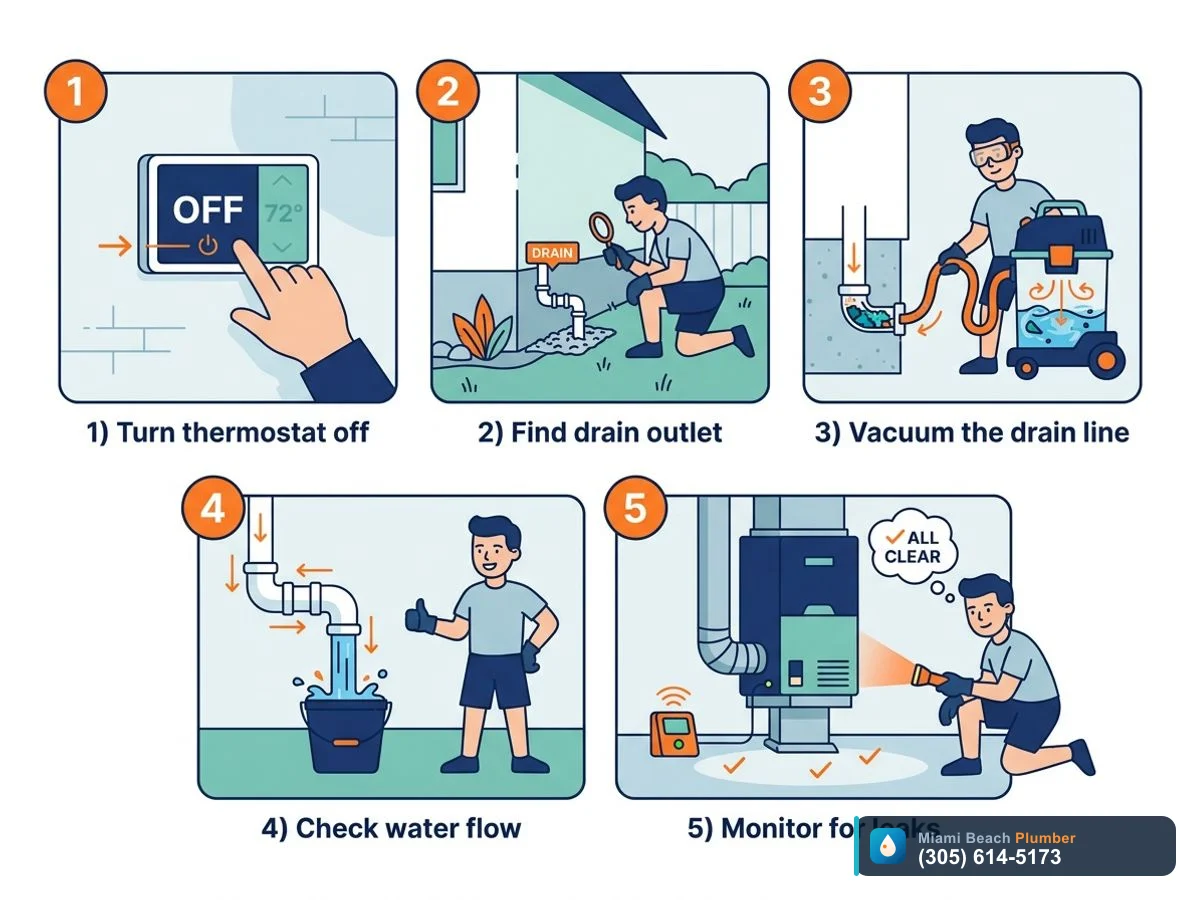
How to safely clear a minor AC condensate drain clog in Miami-Dade
- Turn off the AC at the thermostat. Set the thermostat to Off and fan to Auto so the system stops producing condensate while you work.
- Locate the outdoor condensate drain outlet. Find the small PVC pipe near the outdoor unit or building exterior where condensate normally drips out.
- Use a wet/dry vacuum on the drain outlet. Place the vacuum hose over the drain pipe outlet, seal it with a rag or your hand, and run the vacuum for 30 to 60 seconds to pull out slime and debris.
- Check for steady drainage. After vacuuming, pour a small amount of water into the indoor drain pan access (if available) and make sure it flows freely from the outdoor outlet.
- Restart the AC and monitor for leaks. Turn the thermostat back on and watch the unit for 30 to 60 minutes. If water still backs up or leaks appear, stop and call a licensed professional.
If any step involves gas, electrical wiring, sewage or opening a wall, stop and call a licensed pro at (305) 614-5173.