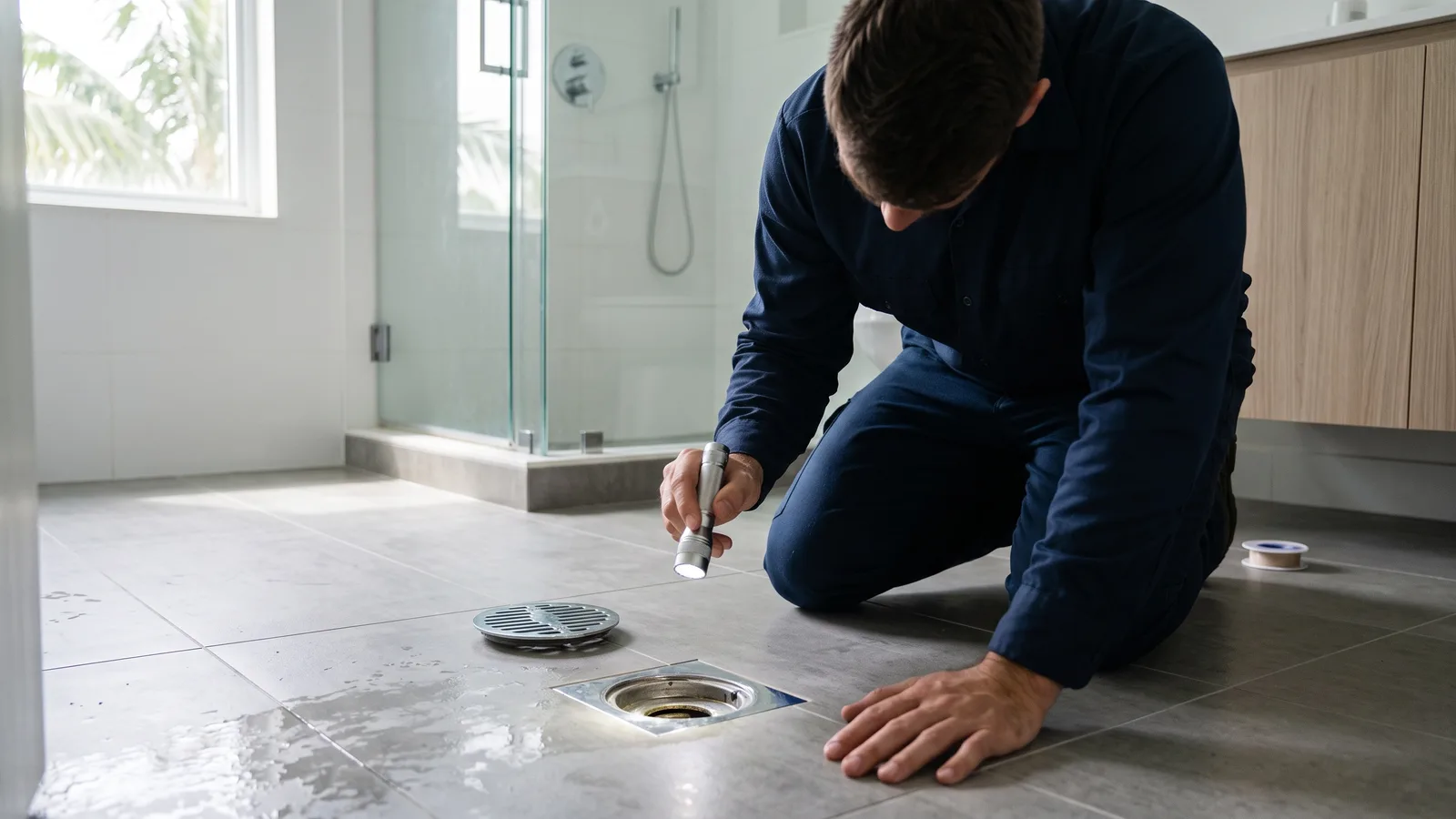
A sewer smell in a house usually comes from an empty P-trap, a dirty drain, a failed toilet wax ring, a blocked vent, or a damaged sewer line. Refill unused traps first, then check each fixture. Leave immediately if the odor is intense, causes symptoms, or could be natural gas.
A sewage odor near one sink calls for a different response than a smell throughout the house. Note where it is strongest, when it appears, and whether any drain is slow, gurgling, or backing up before you start troubleshooting.
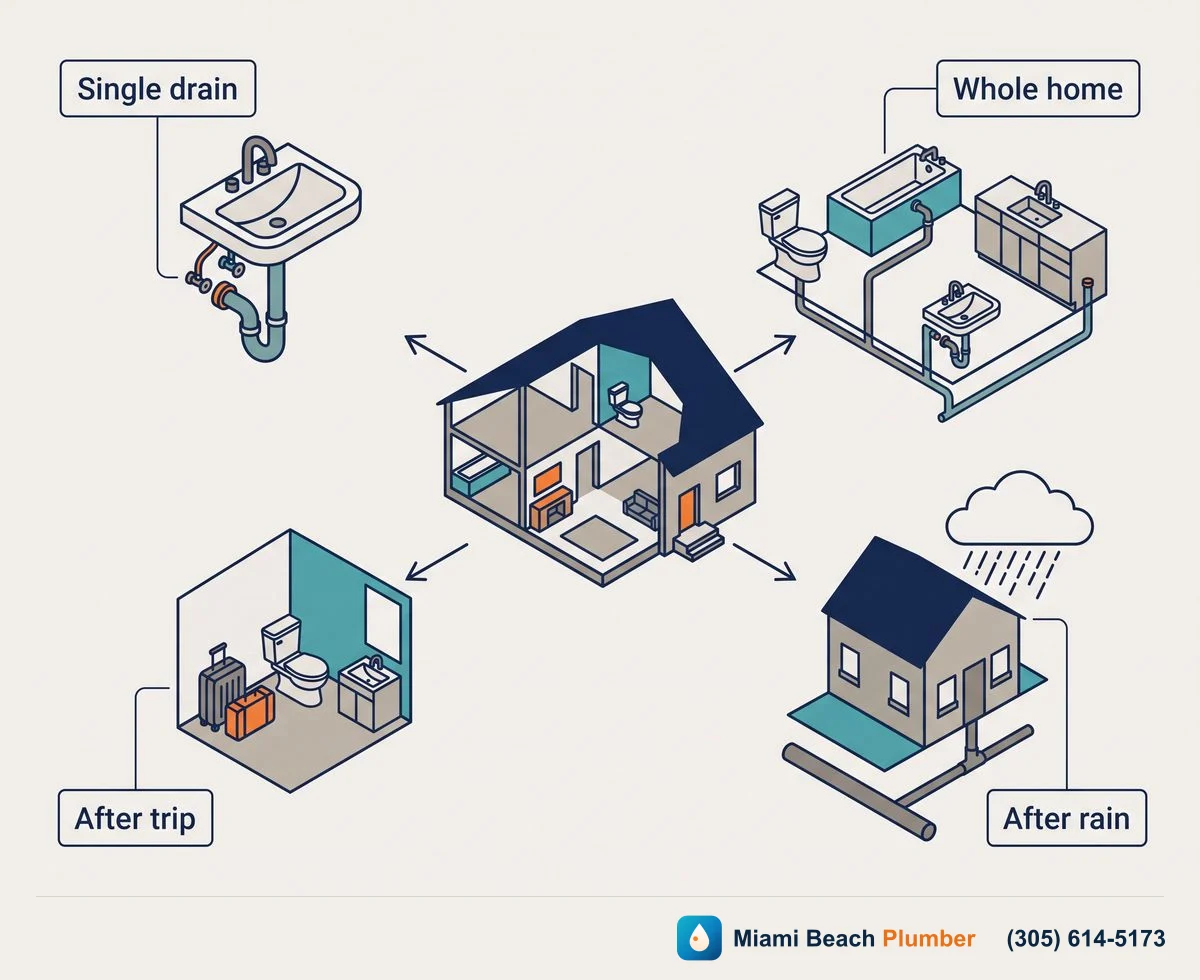
Match the odor to its location and timing
Do not assume every sulfurous odor means the main sewer is broken. If the odor is intense, causes symptoms, or could be natural gas, leave immediately instead of investigating. Otherwise, close interior doors for a short period, then walk through the home and note where the smell is strongest. Check bathrooms, the kitchen, laundry area, air conditioning closet, floor drains, and the area around each toilet. Avoid placing your face directly over a drain.
| Where or when it smells | Likely first check | What to do next |
|---|---|---|
| One unused sink, shower, or floor drain | Dry P-trap | Refill the trap with water and check again later. |
| At the toilet base, especially after flushing | Failed wax ring or loose toilet | Check for movement, moisture, and odor without removing the toilet. |
| Several drains with gurgling or slow flow | Vent or main drain problem | Stop heavy water use and arrange a professional inspection. |
| After rain or throughout a condo building | Shared stack, cleanout, vent, or sewer issue | Ask whether nearby units or common areas have the same symptom. |
| After returning from a trip | Evaporated trap water | Run water through every fixture, including floor drains and laundry connections. |
Timing adds useful evidence. An odor that appears only while a toilet flushes points toward a seal or vent issue. A smell accompanied by rising water, bubbling toilets, or several blocked fixtures suggests a main drain problem. An odor that disappears after unused drains receive water was probably caused by an empty trap.
Do these safety checks before troubleshooting
A mild odor isolated to one drain can usually be investigated safely. A strong odor throughout the property requires more caution. Sewer gas can contain irritating and flammable gases, and smell is not a dependable measure of concentration. People can also become less able to notice an odor after continued exposure.
If the smell is mild and localized, follow this order:
- Open a window or exterior door if it is safe to do so.
- Confirm that no toilet, tub, shower, or floor drain is backing up.
- Keep children and pets away from the affected drain.
- Do not light a match or use a flame to test airflow.
- Do not combine bleach, acids, ammonia, or drain opening chemicals.
- Stop running water if multiple fixtures begin bubbling or draining slowly.
Visible sewage is not a DIY cleaning task. Avoid contact, shut off access to the area, and do not open a cleanout because wastewater may be under pressure. Our emergency plumbing service in Miami handles active backups, overflowing fixtures, and urgent sewer failures.
If the odor comes from one drain, refill and clean the trap
Every properly trapped fixture holds water in a curved section of pipe. That water seal blocks gases from the drainage system. If a sink, shower, tub, laundry standpipe, or floor drain sits unused, the water can evaporate and create a dry P-trap smell. This is a common first cause to test in seasonal condos after they have sat unused for months.
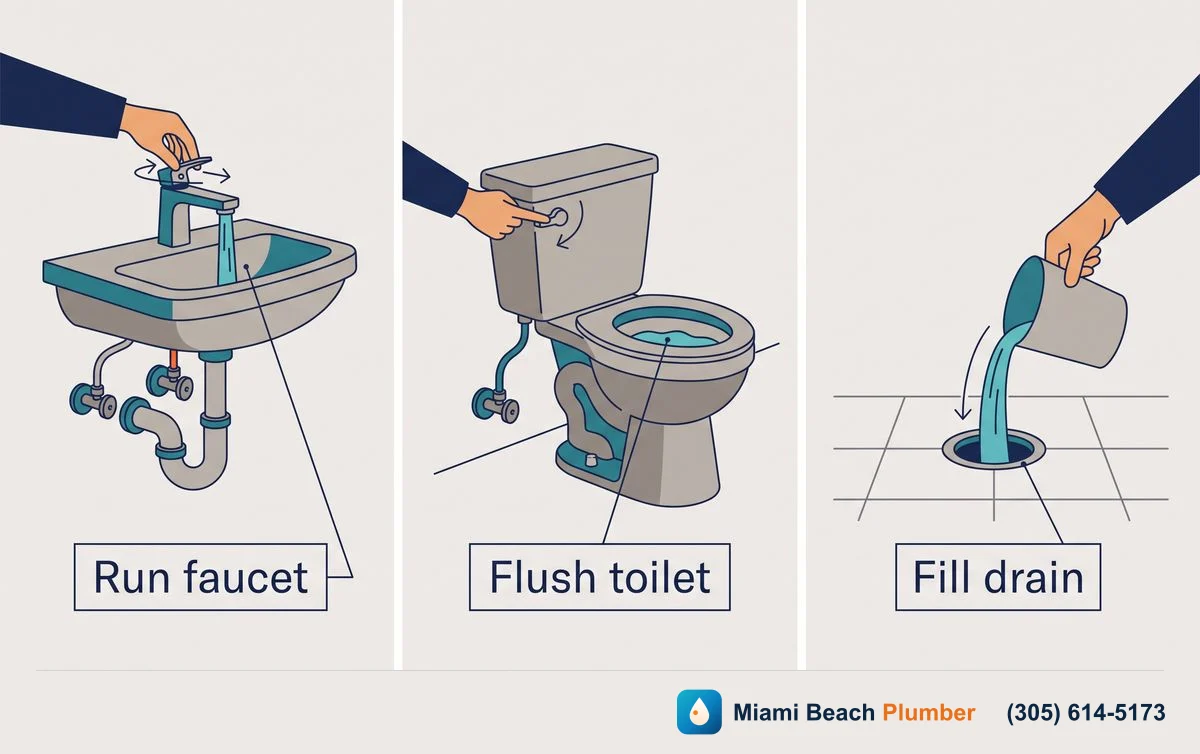
- Run a sink or tub faucet for about a minute. For a shower or floor drain, pour water slowly into the opening until the trap has had time to fill.
- Flush an unused toilet and confirm that water remains in the bowl.
- Wait about ten minutes, ventilate the room, and check the odor from a normal standing position.
- Repeat the process at laundry drains, guest bathrooms, wet bars, and mechanical room floor drains.
If the sewer smell after vacation disappears and does not return, evaporation was the likely cause. For an infrequently used floor drain, a thin layer of food grade mineral oil placed on top of the trap water can slow future evaporation. Never substitute cooking oil, automotive antifreeze, or chemical drain opener.
A sink can smell even when its trap contains water. Hair, soap residue, and organic buildup around a stopper or overflow passage can produce an odor similar to sewage. Remove and wash an accessible stopper, scrub reachable surfaces with a nylon brush and mild dish soap, then rinse with hot tap water. Do not pour boiling water into plastic piping, and never mix cleaning products.
If water drains slowly, the trap will not stay filled, or the odor quickly returns, the branch drain may be obstructed or improperly vented. A licensed plumber can provide drain cleaning in Miami without relying on repeated chemical treatments.
Check the toilet base and wax ring without removing it
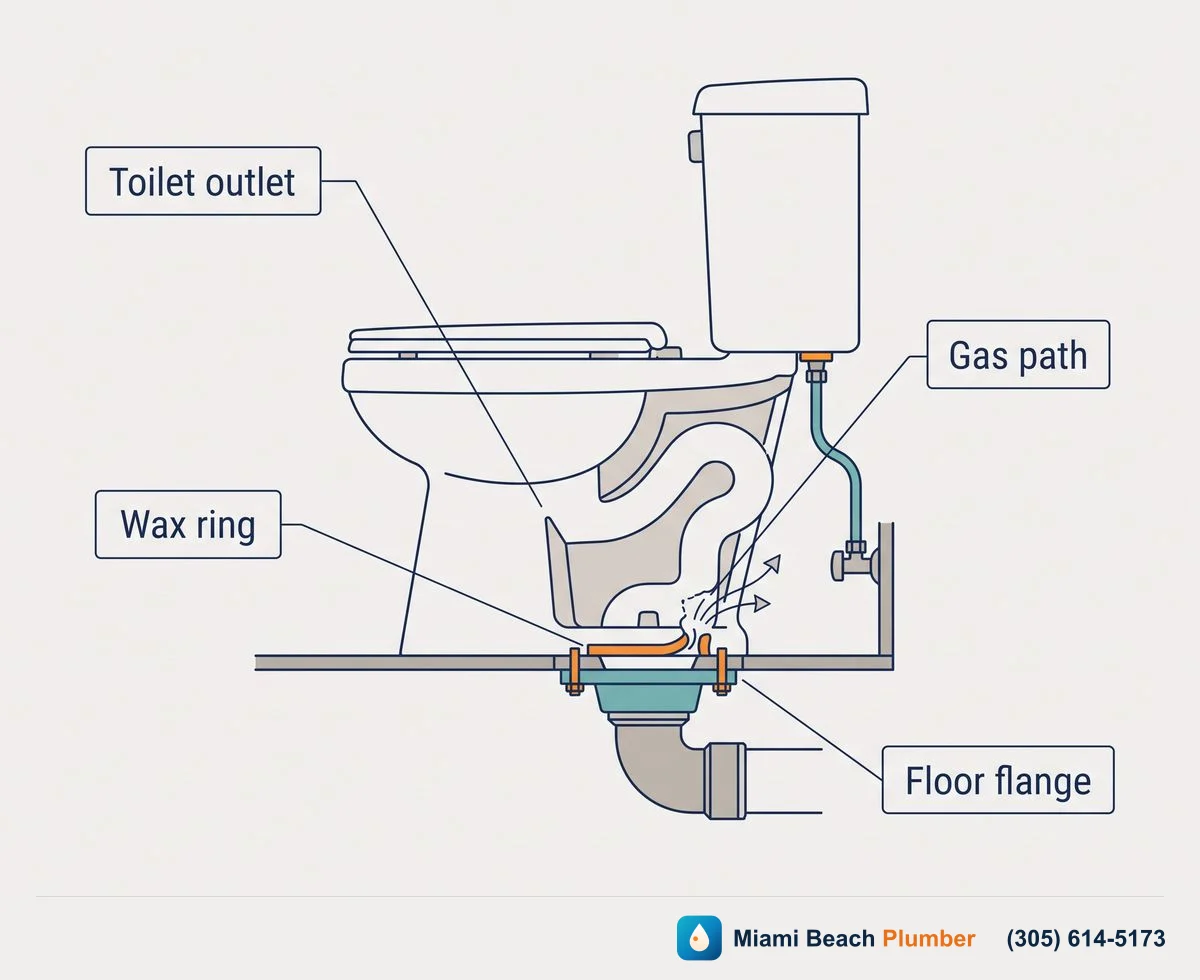
A toilet has its own internal water trap, but it also depends on a sealed connection where the outlet meets the floor flange. A wax ring or compatible toilet seal closes that joint. If the seal fails, a sewer gas smell in the bathroom may escape around the base even when no water is visible.
Start by drying the floor completely. Inspect the water supply connection, shutoff valve, tank bolts, and the joint between the tank and bowl. Clean water running down from one of these areas can collect at the base and be mistaken for a failed floor seal. Place dry paper towels around the toilet base, flush once, and check for moisture. Do not repeatedly flush if water appears.
Notice whether the odor becomes stronger immediately after flushing. Also note any movement during normal use, but do not intentionally rock the toilet. A loose toilet can compress or split the seal and may damage the flange. Tightening exposed base nuts is not a reliable repair because excess force can crack the porcelain.
Do not use caulk to hide an odor or leak. Caulk is not a repair for a failed toilet seal and may delay detection of floor damage. In a condo, notify management if the toilet is loose, the flange may be part of a shared assembly, or a building water shutdown is needed. A condo plumber in Miami Beach can coordinate access requirements and protect common plumbing areas.
Treat a whole house odor as a vent or sewer warning
A sewer smell throughout the house is less consistent with one dry sink trap. Look for a pattern across the drainage system. Toilets may bubble when another fixture drains, sinks may gurgle, or several fixtures may become slow at the same time. These symptoms indicate that air and wastewater are not moving normally.
- Blocked or damaged vent: Plumbing vents admit air and release sewer gases above the roof. A restriction can create pressure changes that pull water from fixture traps.
- Main drain obstruction: Wastewater may move slowly through a partial blockage and displace air through the nearest fixture.
- Loose cleanout cap: A missing, cracked, or unsealed cap can release odor inside a utility area or near the building.
- Damaged drain pipe: Cracks, failed joints, or corrosion can allow gas to escape even before wastewater becomes visible.
From the ground, you can look for obvious storm debris near a visible roof vent, but do not climb onto a wet or steep roof. Vent clearing, smoke testing, camera inspection, hydro-jetting, and main sewer cable work are professional procedures. Smoke testing should also be coordinated in condos, hotels, and commercial buildings so alarms and occupied spaces are managed correctly.
Older Miami and Miami-Dade properties may have cast iron drainage that is heavily scaled or deteriorated. Our guide to cast iron pipe problems in older Miami homes explains the warning signs and inspection options without assuming that every old pipe needs replacement.
A licensed plumber can identify the failure before recommending professional sewer line repair in Miami. The diagnosis should come before excavation, relining, or opening any wall or slab.
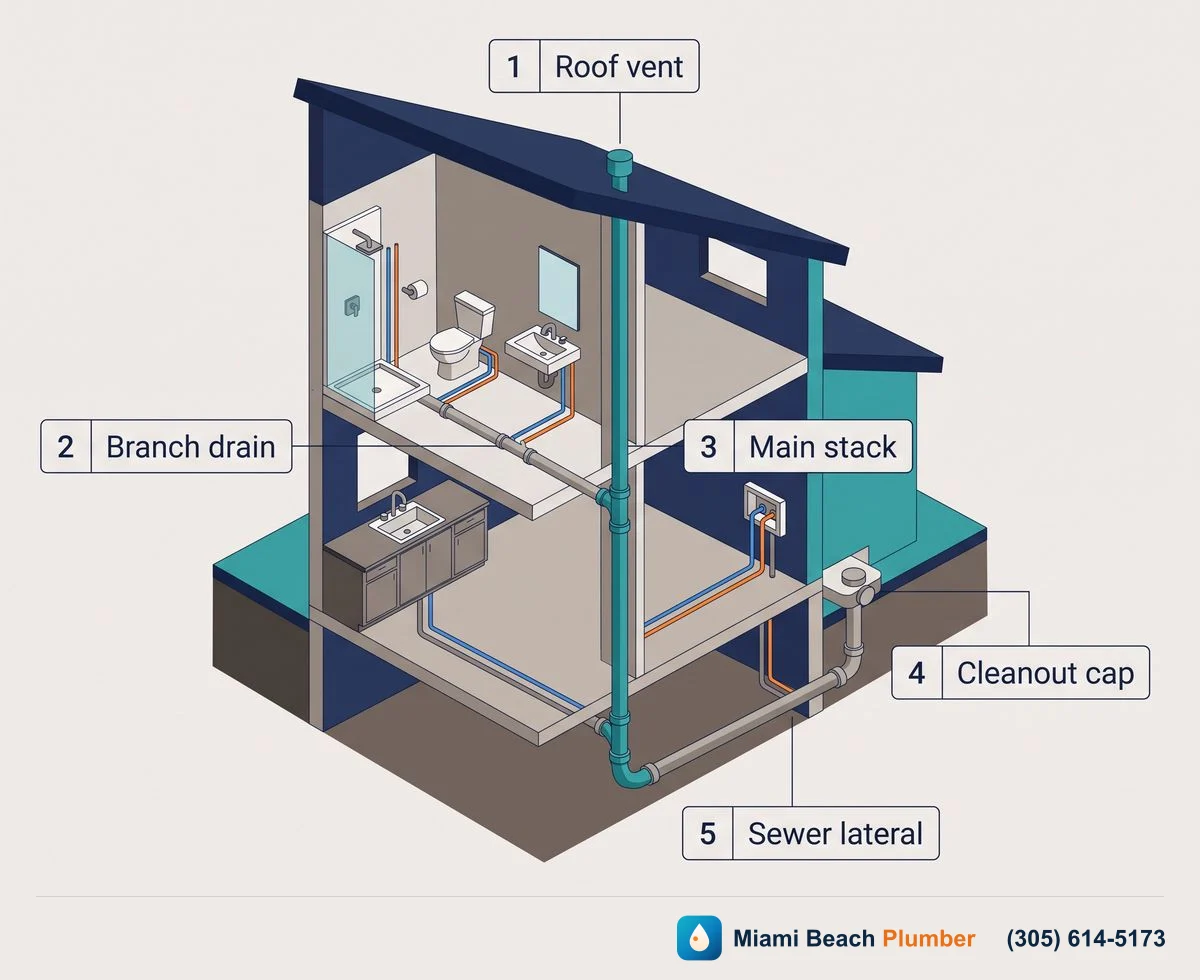
Investigate odors after rain and in shared buildings
A sewer odor after heavy rain does not automatically mean rainwater entered your plumbing. The smell may be coming from an exterior cleanout, a roof vent, a stressed public sewer, or a private drain defect that becomes noticeable when flows increase. Wind and air pressure can also carry an outdoor odor toward open windows, balconies, or air intakes.
Walk the property only when conditions are safe. Check for odor near visible cleanout caps, low plumbing areas, and exterior drains. Inspect caps visually, but do not loosen or remove them. Standing wastewater, sewage around a cleanout, or water rising inside the building requires a licensed professional. Storm drains and sanitary sewers serve different purposes, so avoid pouring chemicals or attempting to redirect water between them.
In a Miami Beach condo, one unit may smell because of a dry fixture trap, while odors across several floors can point to a shared stack, vent, common drain, or building cleanout. Ask the property manager to record:
- Which units and floors are affected
- When the odor began and whether rain was occurring
- Which fixtures gurgle, drain slowly, or back up
- Whether work was recently performed on a shared plumbing line
Hotels, restaurants, and other commercial properties should also check seldom used floor drains, mop sinks, grease waste connections, and closed rooms. Staff should not open interceptors or sewage piping without the correct protective equipment and training.
Hurricanes and severe storms can move debris, damage rooftop components, and interrupt building operations. After a storm, property managers should arrange a ground level visual survey before authorizing roof or sewer work. Repairs that alter piping, venting, walls, slabs, or shared systems may require building approval and Miami-Dade permits. A licensed contractor should verify current requirements through the official local permitting source before work begins.
Confirm the fix and prevent the smell from returning
A successful diagnosis should explain both the odor and its timing. If filling one unused drain removes the smell and it remains gone after normal fixture use, a dry trap was the probable cause. If the odor returns the next day, spreads to another room, or appears with gurgling, slow drains, moisture, or toilet movement, the source has not been corrected.
Safe DIY maintenance
- Run water through guest sinks, showers, tubs, and floor drains every few weeks during extended vacancies.
- Flush unused toilets and confirm that each bowl retains water.
- Clean accessible stoppers and drain surfaces with mild soap rather than mixed chemicals.
- Ask a caretaker to check for odors, standing water, and slow drains in seasonal properties.
- Keep notes about rain, fixture use, and where the odor is strongest.
Work for a licensed plumber
- Removing a toilet or replacing its wax ring
- Opening a cleanout or working on the main sewer
- Clearing or repairing a roof vent
- Smoke testing or camera inspection
- Opening walls, ceilings, floors, or slabs
- Repairing shared condo or commercial drainage
Miami Beach Plumber is licensed and insured for residential and commercial plumbing across Miami, Miami Beach, and Miami-Dade. Same-day service is available for homes, condos, hotels, restaurants, and properties managed on behalf of owners. We provide upfront pricing with no hidden fees before approved work begins. For a persistent sewer odor, active backup, or suspected broken drain, call (305) 614-5173. Call Now or Request Service.
How to find and fix a sewer smell safely
- Check for immediate danger. Leave the property if the odor is intense, causes symptoms, or could be natural gas. Do not operate switches, flames, appliances, or phones inside.
- Locate the strongest odor. Check each bathroom, sink, shower, floor drain, laundry connection, toilet base, and utility area without placing your face over an opening.
- Look for a backup. Stop running water if several drains are slow, a toilet bubbles, or wastewater rises from a tub, shower, toilet, or floor drain.
- Refill unused traps. Run water into unused sinks, tubs, and showers. Pour water slowly into floor drains and flush toilets that have been sitting unused.
- Clean accessible drain surfaces. Wash removable stoppers and reachable drain surfaces with mild dish soap and a nylon brush. Do not mix chemicals or use boiling water on plastic piping.
- Inspect the toilet base. Dry the floor, place paper towels around the base, flush once, and check for moisture or a stronger odor. Do not remove or deliberately rock the toilet.
- Check the result. Ventilate the room and check again later. If the smell stays gone, an evaporated trap was likely. If it returns, note any gurgling, slow drainage, or moisture.
- Call for unsafe or concealed work. Use a licensed plumber for toilet removal, sewage exposure, roof vents, cleanouts, shared stacks, main sewer work, smoke testing, or opening walls and slabs.
If any step involves gas, electrical wiring, sewage or opening a wall, stop and call a licensed pro at (305) 614-5173.