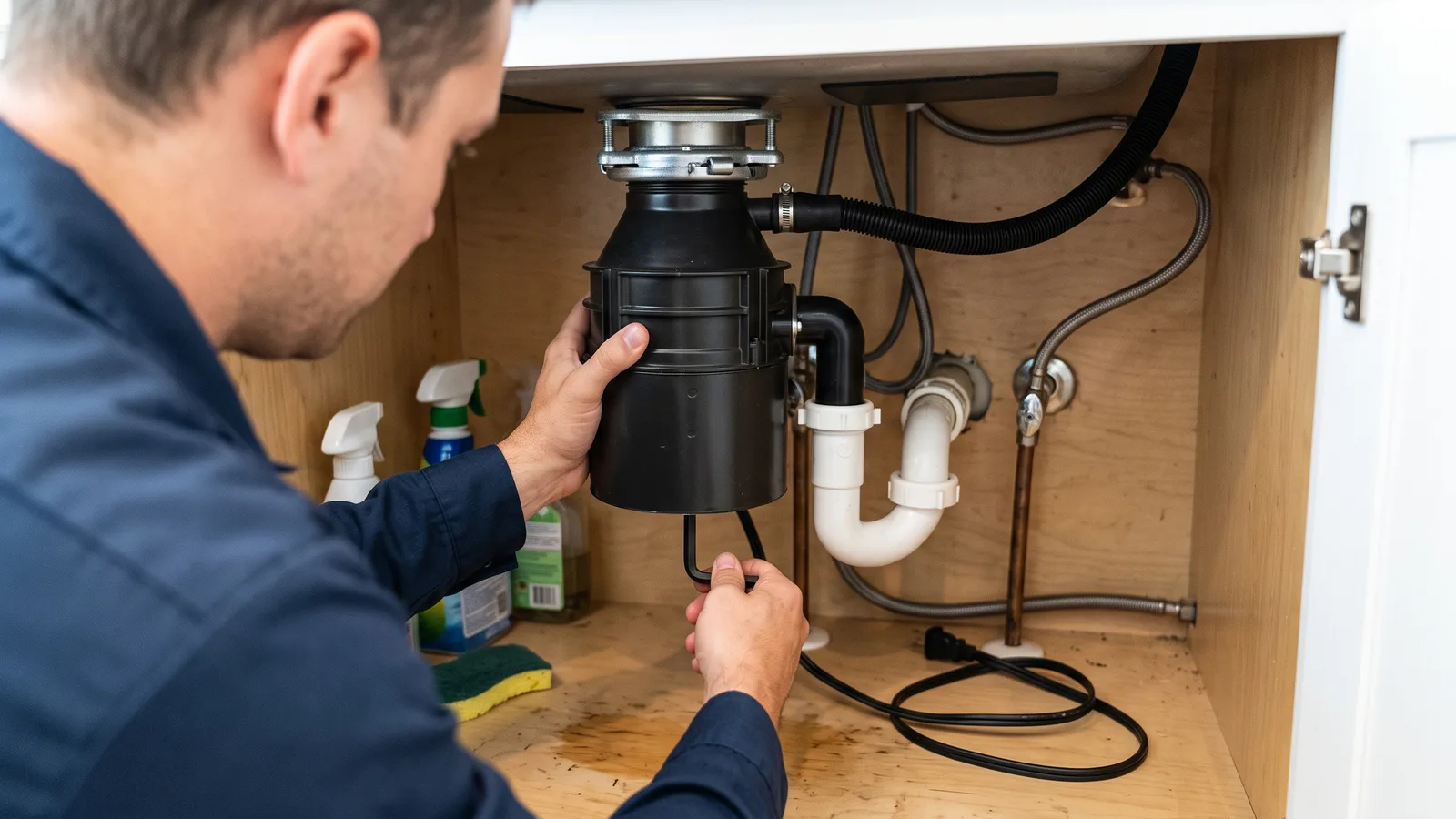
If your garbage disposal is not working, turn the wall switch off, then unplug the unit or shut off its breaker. Remove visible debris with tongs, free a jam with the bottom hex socket, press the reset button, and test with cold water. Stop for leaks, repeated trips, smoke, or damaged wiring.
A disposal that stops during Thanksgiving meal preparation may be overloaded, jammed, overheated, or blocked farther down the kitchen drain. Do not keep flipping the switch. Identify the symptom first, isolate the power, and follow the matching steps below.
Garbage disposal symptoms and what they mean
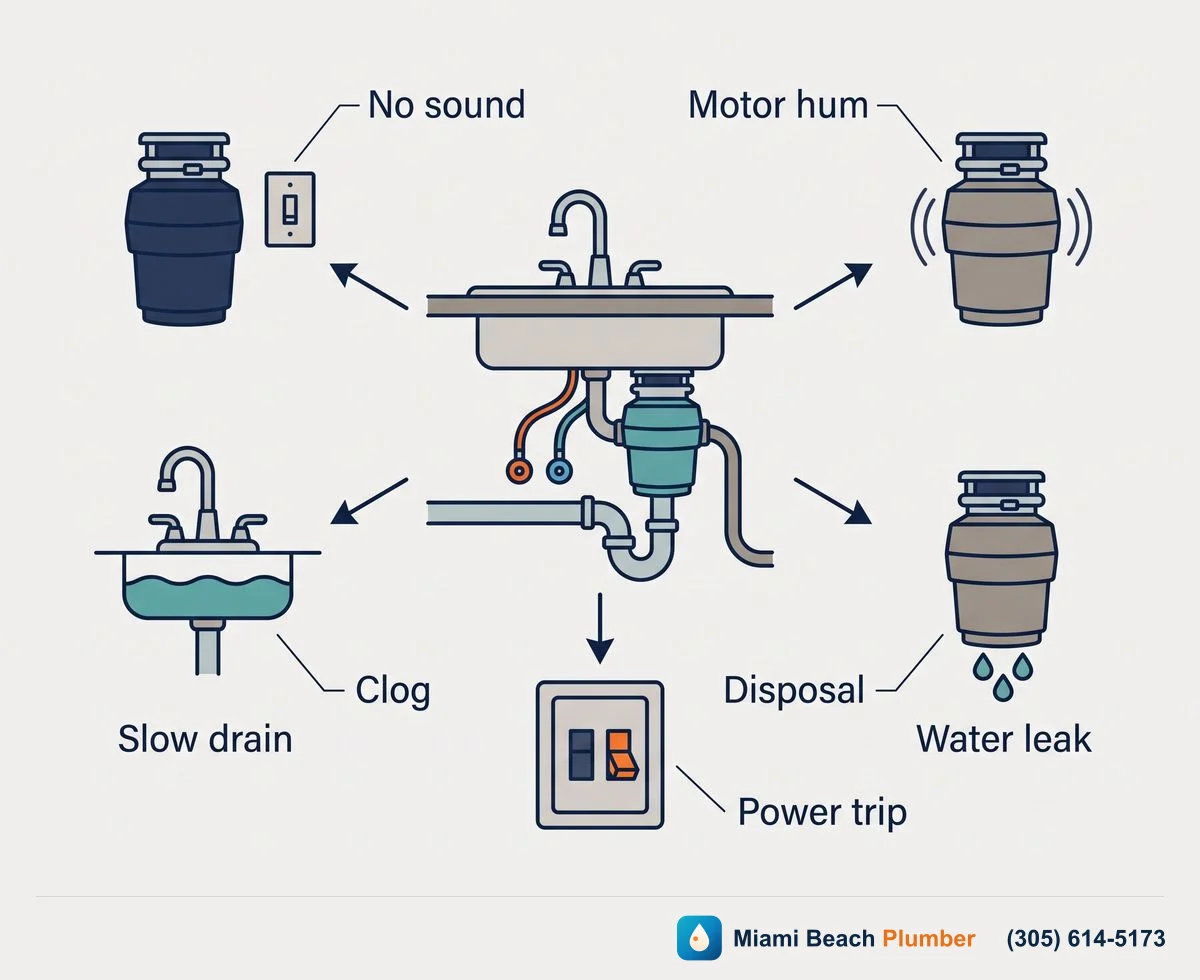
The sound, drainage pattern, and leak location provide useful clues. A humming motor usually has power but cannot rotate. Complete silence points toward an overload, tripped breaker, failed switch, loose plug, or dead motor. Slow drainage usually involves the trap or branch drain rather than the disposal motor.
Use this comparison to choose the first safe check. Do not repeatedly operate a humming unit because the stalled motor can overheat.
| Symptom | Likely cause | First move | Stop point |
|---|---|---|---|
| Hums without spinning | Jammed turntable | Disconnect power and use the bottom hex socket | Motor remains seized or hum returns |
| Completely silent | Overload or lost power | Cool the motor, press reset, and check the outlet | Breaker trips again or wiring is damaged |
| Trips during use | Jam, overload, or electrical fault | Clear the chamber and reset once | A second trip occurs |
| Leaks underneath | Loose drain connection or internal seal failure | Dry the unit and trace the highest wet point | Water emerges from the housing bottom |
| Drains slowly | Trap or branch drain blockage | Clear the trap and accessible drain | Several fixtures back up |
Look into the chamber with a flashlight only after power is isolated. The rotating plate and impellers are not sharp blender blades, but they can still cause a serious hand injury if the motor starts unexpectedly.
- Burning odor or smoke: Leave the power off.
- Water near an outlet: Do not touch the plug or wet cabinet. Turn off the breaker from a dry location.
- Sewage backing up: Keep people away and use a licensed plumber.
How to reset a silent garbage disposal
A reset button protects the motor after an overload or prolonged jam. It is usually a small button on the bottom or lower side of the disposal. Resetting can restore operation, but it will not remove an object that is physically preventing rotation.
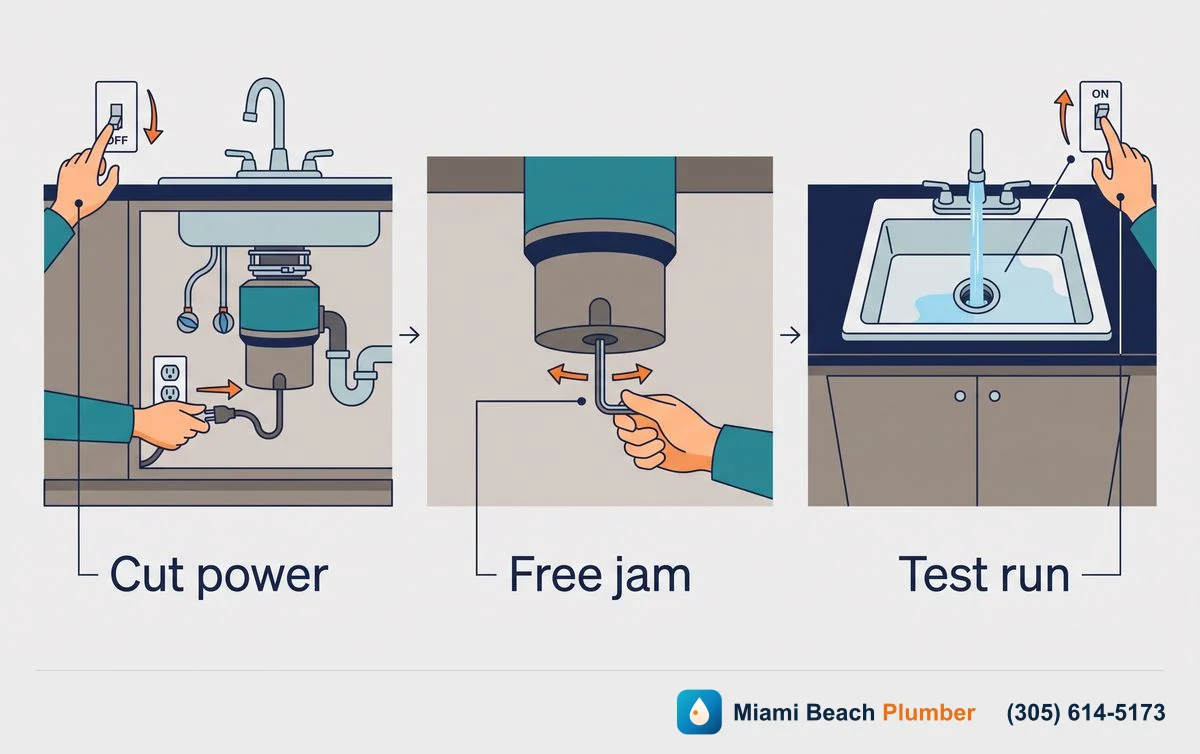
- Turn the wall switch off. Unplug the disposal or turn off its breaker before inspecting the chamber.
- Wait until an overheated motor has cooled, following the manufacturer's instructions.
- Use a flashlight to check for utensils, bones, glass, or other debris. Remove visible material with long handled tongs or pliers. Never put your hand inside.
- Confirm that the rotating plate can move. If it is stuck, use the jam clearing procedure in the next section before resetting.
- With power still disconnected, press the reset button firmly. A tripped button may click or remain seated after being pressed.
- Restore power, run cold water, and switch the disposal on briefly while standing clear of the cabinet.
Check the electrical panel next. Move the identified breaker fully to the off position, then back on once. A breaker that immediately trips again indicates a jam, motor fault, wet connection, damaged cord, or wiring problem. Leave it off. Do not remove electrical covers or test exposed conductors.
Garbage disposal humming but not spinning
A garbage disposal humming but not spinning usually has a jammed rotating plate. Common Thanksgiving causes include poultry bones, fibrous celery, metal ties, and too many potato peels at once. Act quickly by turning it off. Leaving a stalled motor energized can damage it.
- Isolate both controls. Put the wall switch in the off position, then unplug the disposal. If it is hardwired or the plug cannot be reached safely, turn off the breaker instead.
- Inspect from above. Shine a flashlight through the rubber splash guard. Use long handled tongs or pliers to remove visible objects. Do not reach inside, even with the switch off.
- Find the bottom socket. Many disposals have a hex shaped opening at the center of the bottom plate. Insert the correctly fitting disposal wrench or hex key.
- Work the jam loose. Move the key back and forth rather than forcing a full rotation. Continue until the motor shaft turns freely in both directions.
- Check the chamber again. Remove the key, then use tongs to retrieve anything loosened inside. Confirm that no tool remains in or beneath the unit.
- Press reset and test. Press the overload reset while power remains disconnected. Reconnect power, start cold water, then operate the disposal briefly.
If the plate moves freely but the unit still hums, the motor or starting components may have failed. If it jams again immediately, an object may remain beneath the rotating plate. Those conditions justify professional diagnosis or replacement rather than repeated resets.
Finding a garbage disposal leak
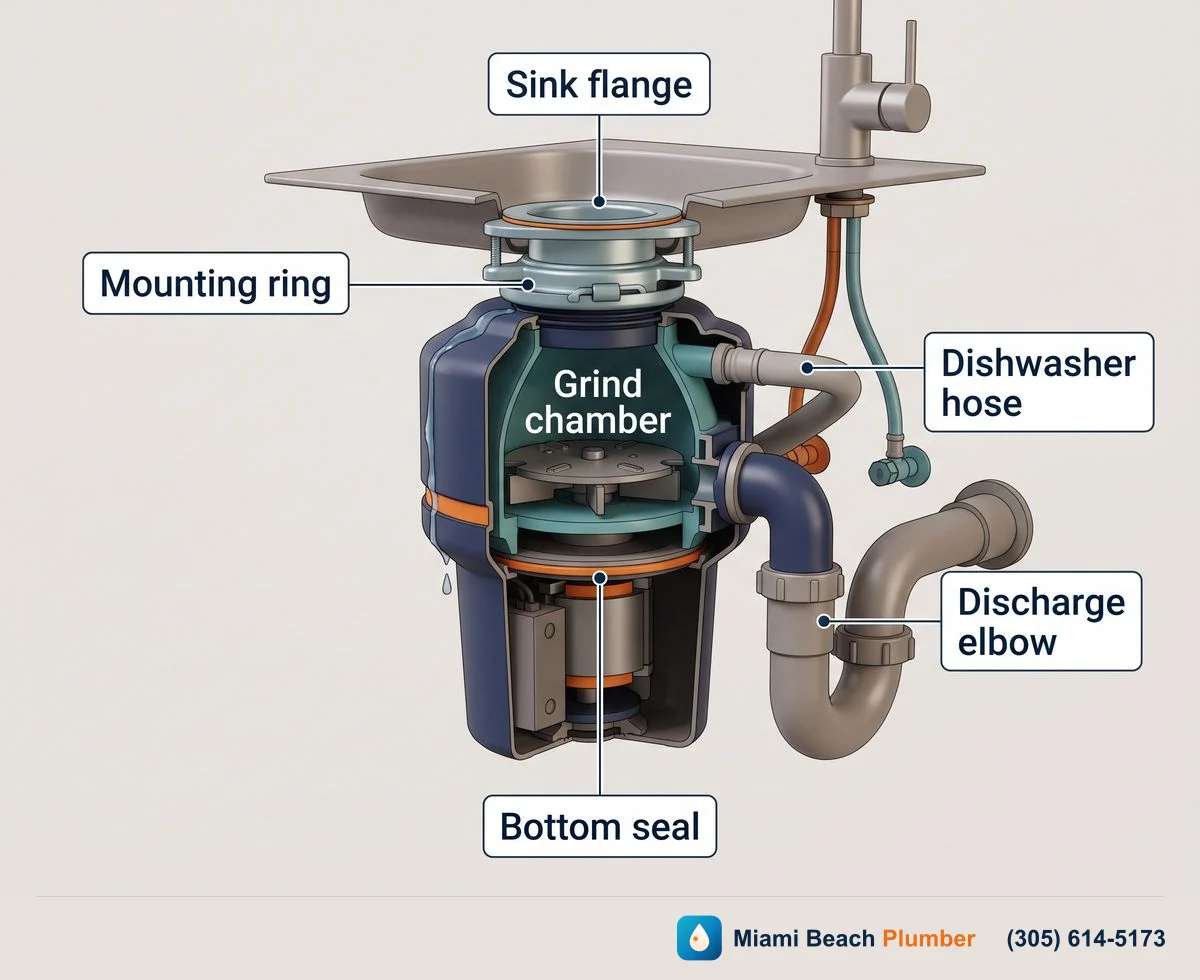
Water beneath a disposal does not always mean the housing has failed. A sink flange, dishwasher hose, or discharge elbow can leak and allow water to travel down the outside of the unit. Drying everything first helps identify the highest wet point.
- Unplug the disposal or switch off its breaker. Remove stored items and dry the sink bottom, hoses, disposal, and cabinet floor.
- Place dry paper towels around the sink flange, dishwasher hose connection, discharge elbow, and bottom housing.
- With the disposal off, run a small amount of water into the sink. Moisture directly beneath the sink opening suggests a failed flange seal.
- Watch the discharge elbow and its gasket as water drains. A loose connection, cracked elbow, or flattened gasket can leak from the side.
- Run the dishwasher only if the cabinet and electrical connections remain completely dry. Water at the small inlet hose points to a loose clamp or damaged hose.
- Check the lowest part of the housing. Water emerging through the bottom shell or around the electrical area usually indicates an internal seal or corrosion failure.
An accessible discharge gasket or hose clamp can be replaced by a capable homeowner after power is disconnected. Resealing the sink flange requires supporting and removing the heavy disposal. Internal housing leaks are not repaired with caulk, tape, or sealant. A garbage disposal leaking from the bottom normally needs replacement.
What to do when the sink drains slowly
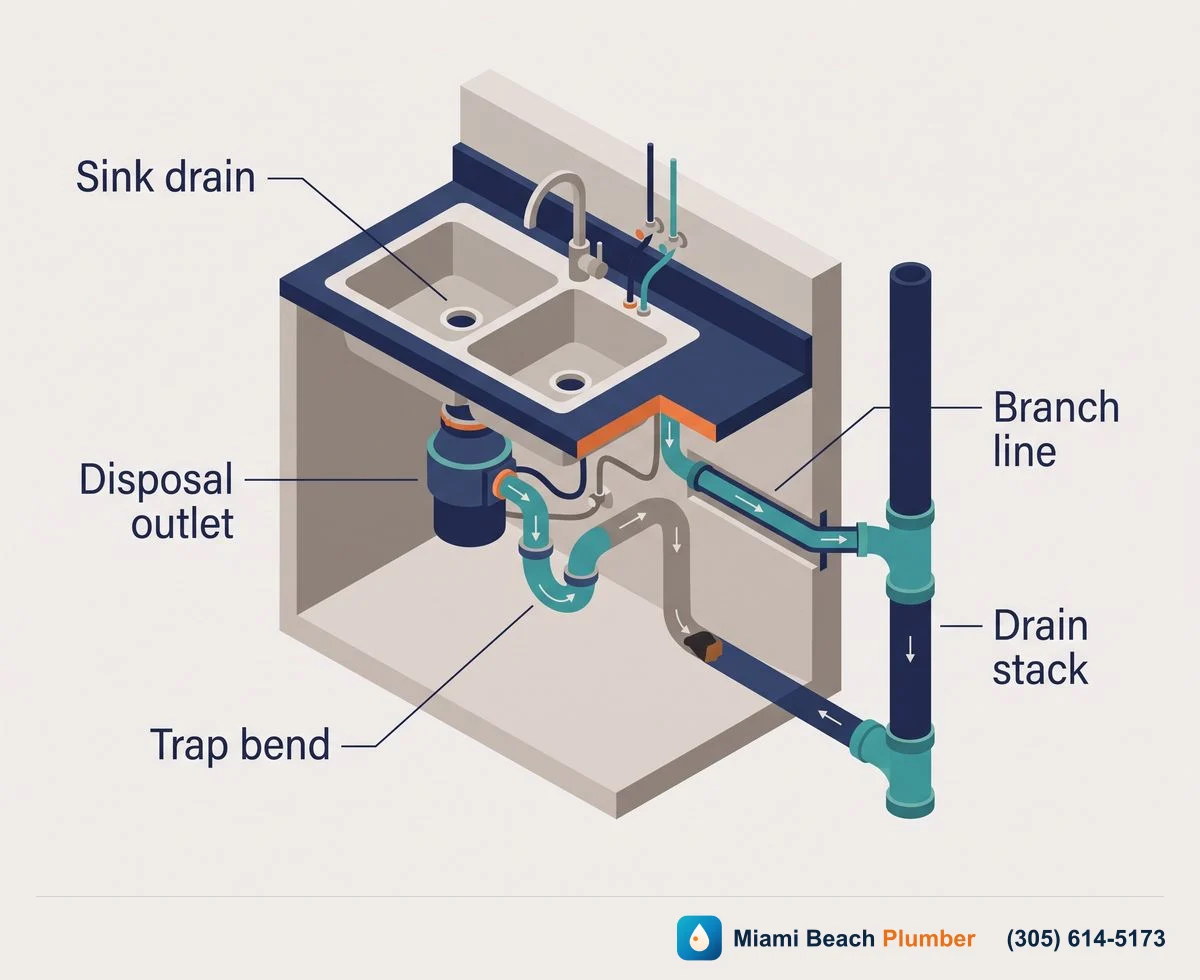
If the motor spins normally but water remains in the sink, resetting the disposal will not solve the problem. Ground food may be packed in the discharge elbow, trap, or kitchen branch drain. In Miami condos, a blockage beyond the unit can also affect another sink connected to the same branch.
- Turn off and disconnect power to the disposal.
- Remove standing water with a cup or small container. Do not send more water into a fully blocked sink.
- For a double sink, seal the second drain tightly and plunge the disposal side with steady strokes. Switch sides if needed while keeping the opposite opening sealed.
- Place a bucket under the trap. If there is no chemical drain cleaner in the sink, loosen the slip nuts, remove the trap, and clear it. Reassemble the washers in their original direction and check carefully for drips.
- If the trap is clear, a hand operated drain auger can be fed into the wall drain. Rotate gently, retrieve debris, and avoid forcing the cable around a hard obstruction.
Use our complete guide to unclog a kitchen sink for the full plunger, trap, and hand auger sequence. Do not put an auger through the disposal chamber or run the disposal while a drain tool is connected.
- A blockage limited to the disposal side often sits in the discharge elbow.
- Both bowls backing up points toward the trap or branch drain.
- Several fixtures gurgling or backing up suggests a deeper building or sewer problem.
For a blockage beyond the accessible trap, professional drain cleaning in Miami can clear and assess the line while reducing the risk of damage from inappropriate equipment.
What should never go into a garbage disposal
A disposal is designed for small amounts of soft food residue, not bulk food waste. Holiday cooking creates a concentrated mix of grease, fibers, peels, bones, and starches that can overwhelm both the motor and the drain.
- Fats, oil, and grease: They cool inside the drain and hold other debris.
- Fibrous scraps: Celery, corn husks, onion skins, and similar fibers can wrap around moving parts.
- Expandable starches: Rice, pasta, flour, and large quantities of potato peel can form a dense paste.
- Bones and hard shells: These can wedge beneath the rotating plate or damage components.
- Coffee grounds: They collect in traps and mix with grease.
- Nonfood objects: Glass, foil, metal ties, utensils, paper, and plastic never belong in the unit.
- Drain chemicals: They can remain in the chamber, damage components, and create a splash hazard during repair.
Scrape plates into the trash or compost container first. Feed only small amounts of suitable residue while cold water is already flowing. Continue the water briefly after the chamber sounds clear so the material moves through the trap.
- Cut poultry grease and skin into the trash, not the sink.
- Collect peels and fibrous vegetables in a separate bowl while preparing food.
- Check serving utensils before moving scraps toward the drain.
Good disposal habits matter beyond Thanksgiving week. They reduce odors, prevent repeated jams, and keep food residue from collecting in older kitchen drain lines.
When replacement makes more sense than repair
Resetting, clearing a simple jam, replacing an accessible drain gasket, and cleaning the trap are reasonable repairs. Internal leaks, electrical faults, and a seized motor change the calculation because the main assembly is generally replaced rather than rebuilt in the cabinet.
- Replace the unit if water is confirmed to be coming through the bottom housing or electrical area.
- Consider replacement if the shaft remains locked after safe jam clearing or the motor only hums while the plate turns freely.
- Stop troubleshooting if the breaker or ground fault outlet trips again after one reset.
- Replace damaged parts or the unit if the cord, plug, mounting assembly, chamber, or discharge connection is cracked or badly corroded.
- Investigate the drain if a working disposal repeatedly backs up. A new motor will not correct a blocked branch line.
Older Miami and Miami Beach buildings may have deteriorated kitchen drainage that contributes to recurring backups. Our guide to cast iron pipe problems in older Miami homes explains warning signs that extend beyond one kitchen appliance.
Condo owners should notify building management before work that affects shared piping, requires a water shutdown, or is restricted by association rules. A Miami Beach condo plumbing service can coordinate with management and protect adjacent units. Confirm permit requirements with the official Miami-Dade or applicable city authority before altering plumbing or electrical connections.
Miami Beach Plumber provides licensed and insured residential and commercial service for homes, condos, hotels, restaurants, and property managers across Miami-Dade. Same-day service may be available, with upfront pricing and no hidden fees. For an active leak, smoke, sewage backup, or water near electrical components, our emergency plumbing service in Miami can assess the situation. Call Now or Request Service.
How to reset and clear a jammed garbage disposal
- Turn off the switch. Put the disposal wall switch in the off position and keep it off throughout the inspection.
- Disconnect the power. Unplug the disposal beneath the sink. If it is hardwired or the plug is inaccessible, turn off the correct breaker.
- Inspect the chamber. Use a flashlight to locate debris. Remove visible material with long handled tongs or pliers, never your hand.
- Free the rotating plate. Insert the correct hex key into the bottom socket and move it back and forth until the shaft rotates freely.
- Remove loosened debris. Take out the hex key, inspect from above again, and retrieve any loosened object with tongs.
- Press the reset button. Allow an overheated motor to cool according to the manufacturer's instructions, then press the reset button while power remains disconnected.
- Restore power. Confirm that all tools are removed, reconnect the plug or breaker, and stand clear of the cabinet.
- Test with cold water. Start cold water and operate the disposal briefly. Turn it off immediately if it hums, trips, leaks, smokes, or makes a harsh mechanical sound.
If any step involves gas, electrical wiring, sewage or opening a wall, stop and call a licensed pro at (305) 614-5173.